

On This Day in Science: July 28, 1976
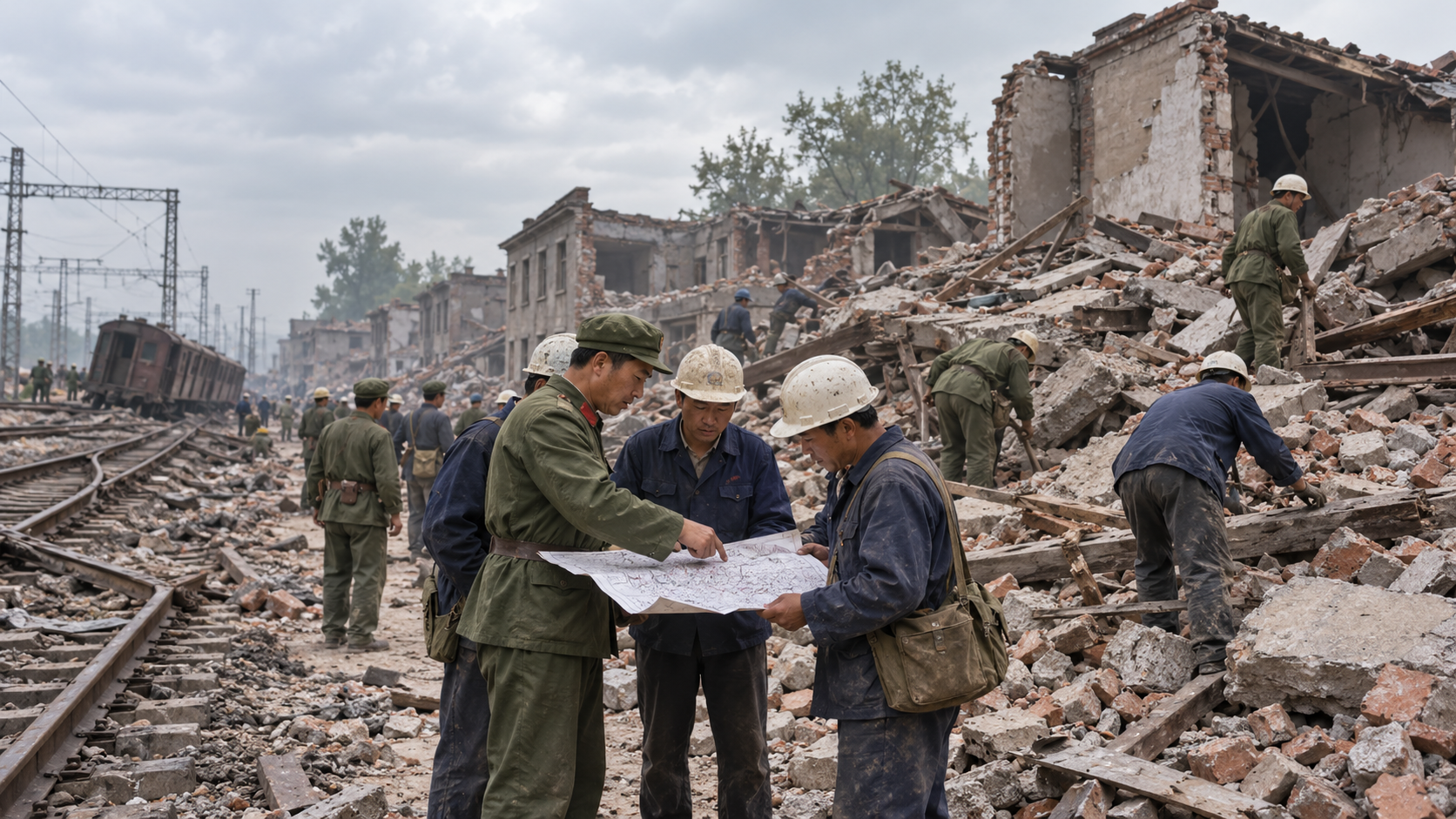
On July 28, 1976, a major earthquake struck near the industrial city of Tangshan in northeastern China before dawn. The U.S. Geological Survey lists the main shock at magnitude 7.5. Violent ground motion collapsed homes, factories, railways, bridges, and services across a densely populated area.
The disaster killed hundreds of thousands of people, although reported totals vary and early information was limited. A powerful aftershock later the same day caused additional collapses and complicated rescue. Many buildings were unreinforced masonry or otherwise poorly able to withstand strong lateral shaking, turning the physical event into a far greater human catastrophe.
The earthquake occurred within a broad zone of continental deformation rather than at a simple ocean-plate boundary. Fault movement released accumulated crustal stress beneath the region. Scientists studied surface rupture, aftershocks, ground failure, and the uneven pattern of damage to better understand both the source and the built environment’s vulnerability.
Tangshan profoundly influenced Chinese earthquake engineering, monitoring, emergency response, and reconstruction. It also remains a reminder that precise short-term prediction is extraordinarily difficult. Risk reduction depends on resilient construction, hazard mapping, drills, communication, and recovery planning rather than confidence that a warning will always arrive. Its calendar date is an entry point, not an endpoint. The people involved worked with the instruments, assumptions, and social conditions of their time, and later research has both extended and corrected their conclusions. Separating what was known that day from what became clear afterward protects the history from myth and shows how cumulative evidence turns an episode into lasting scientific knowledge. For science history, the event also shows how evidence moves from an observation or engineered test into a durable body of knowledge. Instruments supplied measurements, specialists debated interpretation, and later work refined what the first result could mean. Archives preserve the early record while new methods let researchers ask different questions of it. That continuing revision is the process through which a dated milestone remains scientifically useful. Seen across a longer timeline, scientific milestones are junctions rather than isolated beginnings. Earlier experiments, tools, and institutions made the work possible, while later teams tested limits and carried the result into new settings. What survives is a traceable chain of evidence, correction, and application that allows one moment to remain relevant as knowledge and technology continue to change. The anniversary highlights the difference between a first result and a finished understanding. A successful observation can settle one question while opening several harder ones, and even a failed objective can reshape later designs. Preserved data, specimens, photographs, and hardware allow new generations to revisit the work with better tools. Science advances through that continuity rather than stopping on a memorable date.
The main shock occurred while most residents were indoors and asleep.
Building collapse, damaged transport, and disrupted communications hampered rescue.
Ground shaking intensity varies with distance, soils, and rupture.
Construction quality and population exposure strongly shape human consequences.
Earthquakes cannot yet be predicted with reliable exact timing.
Codes, retrofits, mapping, education, and emergency systems reduce avoidable losses.
Explore more of "On This Day ..."
Discover more events from the same date across news, politics, technology, sports, and other fields. Each link highlights significant moments that shaped history on different fronts.