

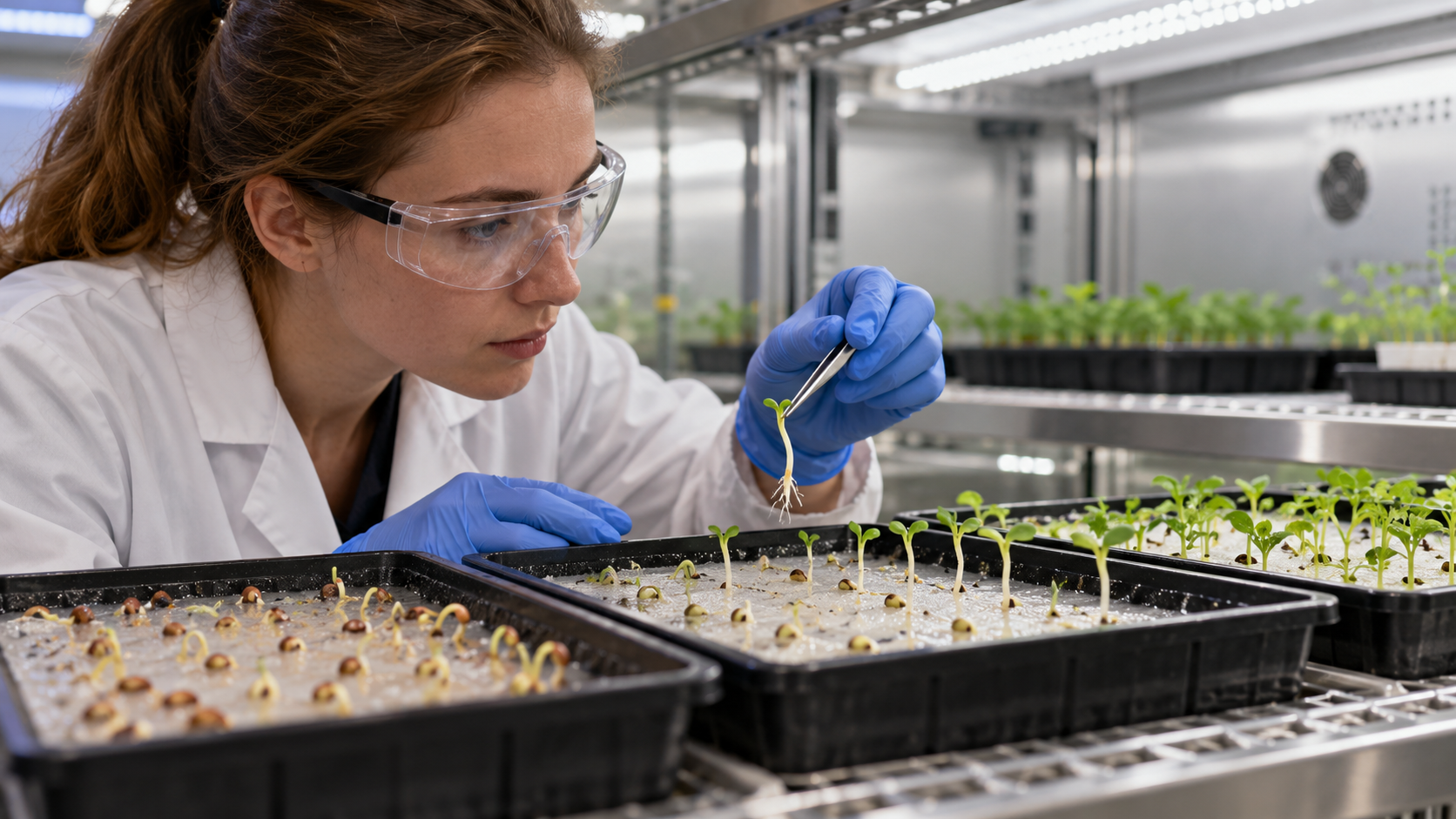
How Seeds Germinate Explainer
A seed contains a living embryo, stored nutrients, and protective tissues in a state of greatly reduced activity. Germination begins when conditions allow the embryo to resume growth and ends when a root or shoot emerges beyond the seed covering. A seed may be alive yet fail to germinate immediately because it is dormant, damaged, immature, or missing a required environmental cue.
Water uptake, called imbibition, is usually the first visible step. Dry seed tissues absorb water and swell, membranes reorganize, and enzymes regain activity. Water also softens some seed coverings and helps dissolve stored materials. Too little water prevents metabolism, while waterlogged soil can exclude oxygen. The moisture requirement therefore concerns availability and aeration, not simply soaking every seed.
The embryo needs energy before it has functional leaves. Oxygen supports cellular respiration, which releases usable energy from stored oils, starches, or proteins. Enzymes mobilize those reserves and move soluble products toward the growing embryo. Temperature changes reaction rates and membrane behavior, so each species has a range within which germination proceeds and extremes that slow or injure it.
Dormancy prevents germination even when ordinary moisture and temperature seem favorable. A hard coat may block water or gases, while chemical or physiological controls inside the embryo may require time, cold stratification, heat, light, darkness, or passage through an animal. These mechanisms spread risk and help seeds begin growth in a season or habitat more likely to support survival.
The embryonic root, or radicle, commonly emerges first and anchors the seedling while taking up water. The shoot axis then elongates, and seed leaves either rise above the soil or remain below it, depending on the species. Once true leaves expand and photosynthesis supplies more energy than stored reserves, the young plant has passed from germination into seedling establishment.
Germination percentage measures how many tested seeds complete the process under specified conditions; it does not guarantee field establishment. Soil crusting, pathogens, salinity, planting depth, temperature swings, and competition can kill seedlings after emergence. Understanding germination connects cell metabolism with ecology and agriculture, but the exact cues, timing, and vulnerability differ substantially among plant species and seed lots.
A viable seed contains a living embryo, stored food, and protective tissues.
Imbibition restores water to dry tissues and reactivates cellular machinery.
Oxygen supports respiration while temperature controls the rate of many reactions.
Dormancy can require physical, chemical, seasonal, or light-related cues to be released.
The radicle usually emerges first, followed by shoot growth and functional leaves.
Laboratory germination and successful field establishment are related but different outcomes.
Explore more "Explainers"
Discover additional explainers across politics, science, business, technology, and other fields. Each explainer breaks down a complex idea into clear, everyday language—helping you better understand how major concepts, systems, and debates shape the world around us.