

How Electric Generators Produce Current Explainer
An electric generator converts mechanical energy into electrical energy through electromagnetic induction. When the magnetic flux linked with a conductor changes, an electromotive force appears. In practical machines, a turbine, engine, wind rotor, or other prime mover turns part of the generator so that conductors and magnetic fields move relative to one another.
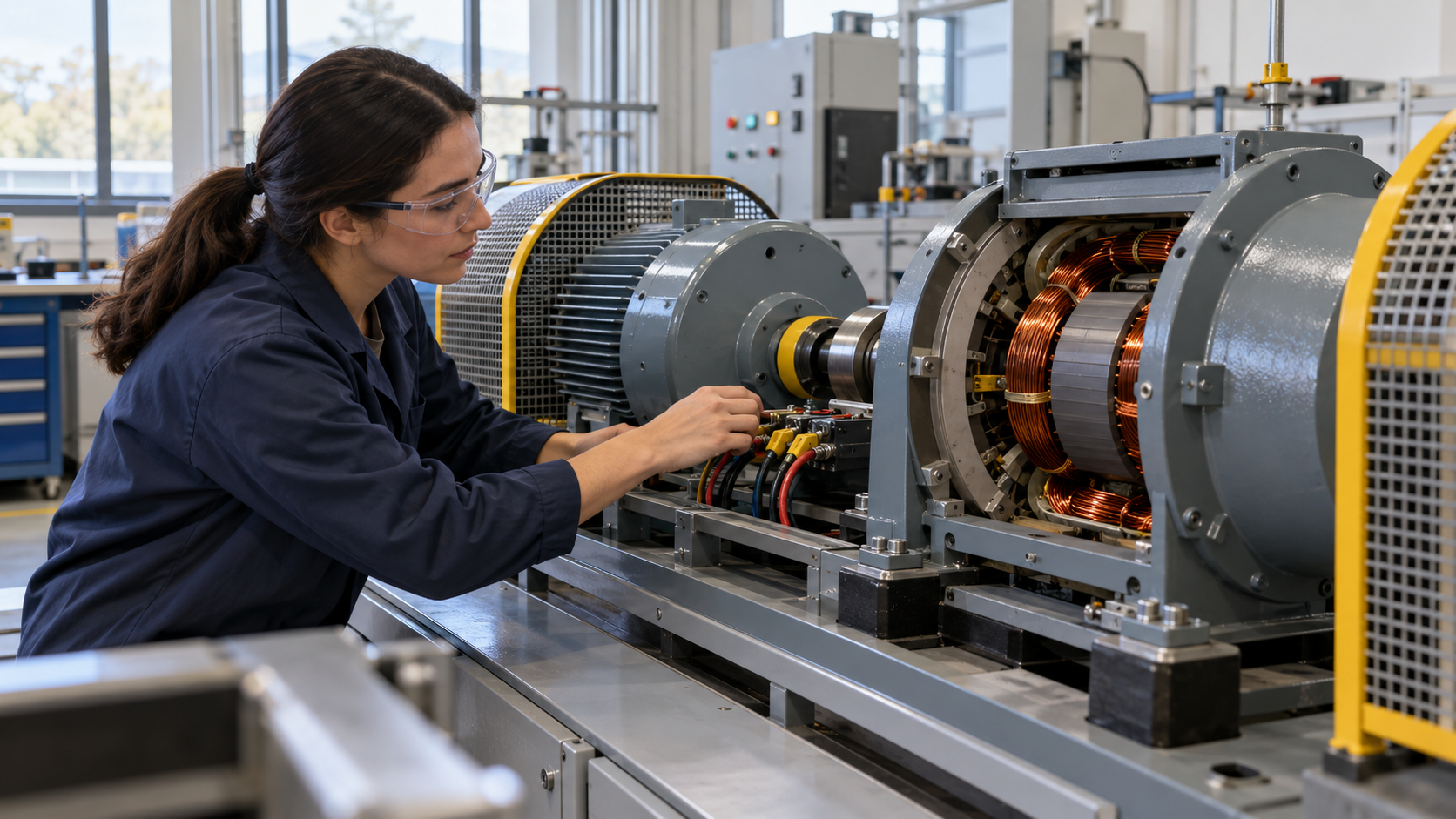
A simple demonstration rotates a coil between magnet poles, causing the flux through the coil to rise, fall, and reverse. The induced voltage therefore alternates. Large generators often keep the output windings stationary in the stator while a magnetized rotor turns inside. The rotor field may come from electromagnets supplied with direct current or from permanent magnets.
Connecting a load allows current to flow. The current creates its own magnetic field that opposes the change producing it, an expression of Lenz’s law. As electrical load increases, the prime mover must supply more torque to maintain speed. The generator does not multiply energy: electrical output is limited by mechanical input minus losses in resistance, friction, magnetic materials, ventilation, and auxiliary systems.
Voltage depends on magnetic field strength, winding geometry, turns, and speed. Frequency in a synchronous alternating-current generator depends on rotational speed and the number of magnetic poles. Before connection to an AC grid, voltage, frequency, phase sequence, and phase angle must be matched. Once synchronized, grid conditions and machine controls constrain how it operates.
Excitation controls help regulate terminal voltage and reactive power, while governors adjust mechanical input and real power. Induction generators and inverter-connected machines use different control arrangements. Small portable units may regulate less precisely than utility machines. Protective relays disconnect equipment during faults, abnormal frequency, overheating, loss of cooling, or other unsafe conditions.
Generators range from bicycle dynamos to machines weighing hundreds of tons, yet all depend on changing magnetic flux and a source of mechanical work. Batteries and solar cells produce electricity without a rotating generator, and motors run the energy conversion in the opposite direction. Understanding the energy path prevents the common misconception that spinning a magnet creates free electrical power.
Changing magnetic flux through a conductor induces an electromotive force.
Rotating coils or magnetic fields usually create alternating voltage.
Electrical load produces opposing torque, so mechanical input must increase.
Speed, pole count, field strength, and windings determine frequency and voltage.
Grid connection requires synchronization and coordinated machine controls.
Output always remains below mechanical input because real machines have losses.
Explore more "Explainers"
Discover additional explainers across politics, science, business, technology, and other fields. Each explainer breaks down a complex idea into clear, everyday language—helping you better understand how major concepts, systems, and debates shape the world around us.