

On This Day in Science: October 17, 1956
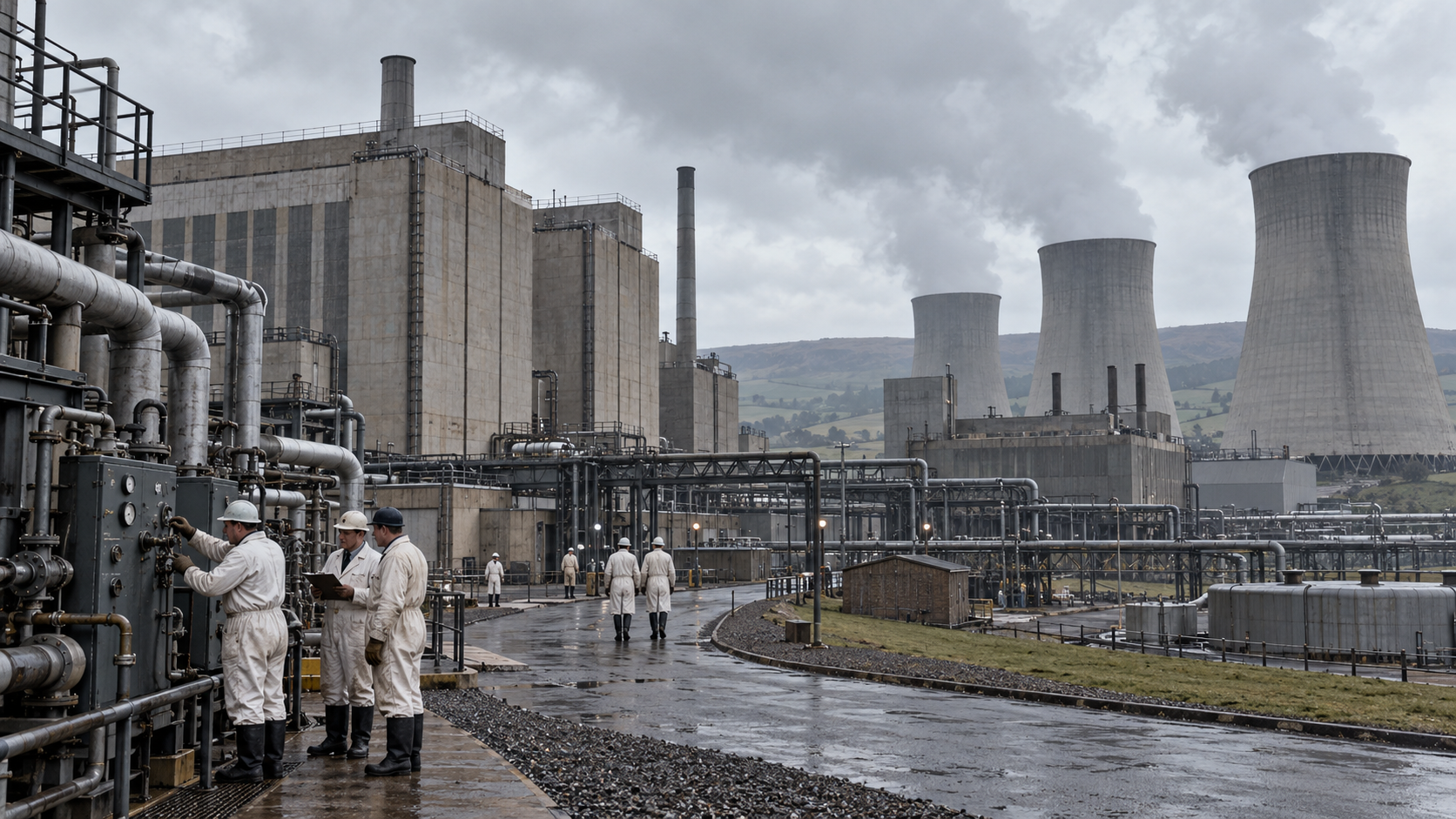
On October 17, 1956, Queen Elizabeth II officially opened Calder Hall at Windscale in Cumbria, England. The station’s first reactor had already begun supplying electricity to the national grid, and the ceremony presented a new industrial use of nuclear energy to the public.
Calder Hall used gas-cooled, graphite-moderated Magnox reactors fueled with natural uranium. Carbon dioxide carried heat to boilers that produced steam for turbines. The plant also produced plutonium for Britain’s nuclear program, so electricity generation was not its only purpose.
The Soviet Obninsk plant had connected nuclear electricity to a grid in 1954, making simple “first” claims misleading. Calder Hall is better described as the first full-scale nuclear power station to deliver electricity commercially in substantial quantities. Four reactors eventually operated at the site.
The opening helped launch Britain’s civil nuclear industry and influenced reactor development abroad. Calder Hall generated power until 2003, while its mixed civil and military origins remain essential context for understanding the early nuclear age. What makes the event scientifically important is not only priority, but the ability of others to check, repeat, compare, or build on the result. That process can reveal limitations hidden by the excitement of a first success. It also explains why careful archives and transparent measurements matter as much as the date remembered by the public. Modern interpretations benefit from evidence that the original participants did not possess. New instruments and analytical methods can recover additional detail, while historical scholarship clarifies questions of credit, context, and consequence. Holding the original achievement and those later corrections together produces a more accurate account than either celebration or dismissal alone. The anniversary also illustrates how a scientific milestone becomes useful through records that later researchers can inspect. Instruments, notebooks, images, specimens, and engineering reports preserve more than a celebratory date: they show what was actually measured, what remained uncertain, and how conclusions changed as better methods became available. Placed in a longer timeline, the event was a junction rather than a finished answer. Earlier discoveries and technical work made it possible, while later teams tested its limits and applied the result in new settings. That traceable sequence of evidence and revision is what turns one day into a durable part of scientific history. The episode also separates a first demonstration from mature understanding. A successful observation or flight can settle one question while exposing harder problems in reliability, interpretation, safety, and scale. Preserved data allow later generations to revisit the achievement without confusing what was known on the date with what became clear afterward.
Graphite moderated the chain reaction while carbon dioxide removed heat.
Steam turbines converted reactor heat into electrical power for the grid.
Obninsk had supplied nuclear electricity two years earlier.
Calder Hall's distinction lies in its scale and commercial generating role.
The reactors produced electricity and plutonium.
That dual mission complicates any simple story of peaceful atomic power.
Explore more of "On This Day ..."
Discover more events from the same date across news, politics, technology, sports, and other fields. Each link highlights significant moments that shaped history on different fronts.