

On This Day in Science: October 18, 1967
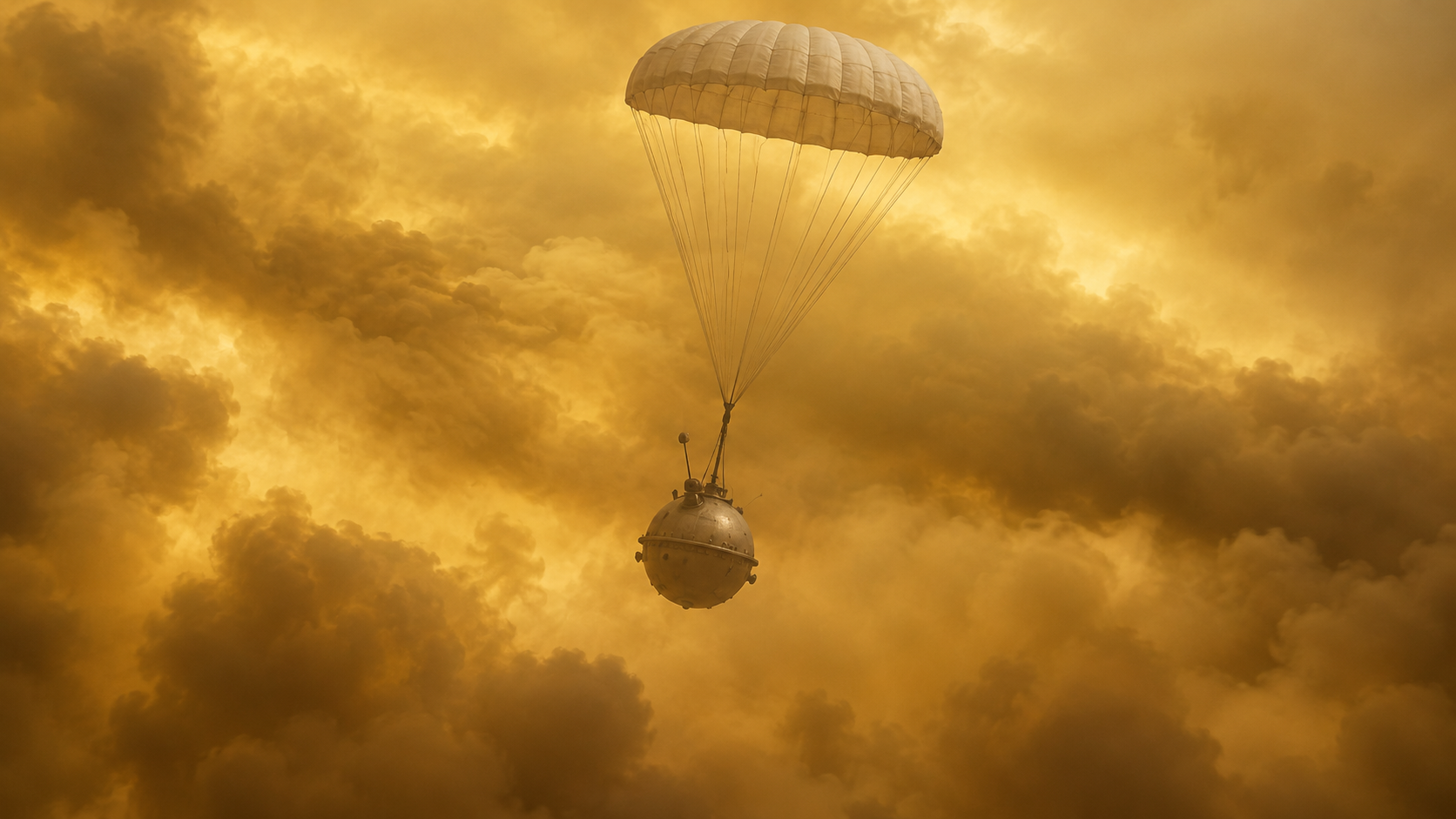
On October 18, 1967, the Soviet Venera 4 probe entered the atmosphere of Venus and transmitted direct measurements while descending by parachute. It became the first spacecraft to return data from within another planet’s atmosphere.
The spherical descent capsule carried pressure and temperature sensors, a radio altimeter, and gas-analysis instruments. It detected an atmosphere dominated by carbon dioxide with small amounts of nitrogen and oxygen, and it recorded rapidly increasing temperature and pressure during descent.
Venera 4 stopped transmitting before reaching the surface. Its designers had underestimated the depth and pressure of the atmosphere, and scientists initially debated whether the capsule had landed. Later measurements showed that it had been crushed or exhausted high above the ground.
Even incomplete, the descent ended speculation that Venus might have mild surface conditions beneath its clouds. Stronger Soviet probes later survived to the surface, but Venera 4 supplied the first in-place evidence of an extremely hot, dense planetary atmosphere. Modern interpretations benefit from evidence that the original participants did not possess. New instruments and analytical methods can recover additional detail, while historical scholarship clarifies questions of credit, context, and consequence. Holding the original achievement and those later corrections together produces a more accurate account than either celebration or dismissal alone. The anniversary also illustrates how a scientific milestone becomes useful through records that later researchers can inspect. Instruments, notebooks, images, specimens, and engineering reports preserve more than a celebratory date: they show what was actually measured, what remained uncertain, and how conclusions changed as better methods became available. Placed in a longer timeline, the event was a junction rather than a finished answer. Earlier discoveries and technical work made it possible, while later teams tested its limits and applied the result in new settings. That traceable sequence of evidence and revision is what turns one day into a durable part of scientific history. The episode also separates a first demonstration from mature understanding. A successful observation or flight can settle one question while exposing harder problems in reliability, interpretation, safety, and scale. Preserved data allow later generations to revisit the achievement without confusing what was known on the date with what became clear afterward. Its calendar date is an entry point rather than an endpoint. The people involved worked with the tools, assumptions, institutions, and social conditions of their time. Later research has extended some conclusions and corrected others, showing how science advances by keeping evidence open to comparison instead of treating a memorable event as final.
Sensors sampled gases and tracked pressure and temperature during descent.
Radio transmission carried each reading out through the clouds to Earth.
Pressure rose beyond the values used to design the capsule.
Loss of signal before the surface became an important engineering lesson.
Direct data ruled out older visions of an Earthlike surface climate.
Later landers were reinforced for the heat and pressure Venera 4 had revealed.
Explore more of "On This Day ..."
Discover more events from the same date across news, politics, technology, sports, and other fields. Each link highlights significant moments that shaped history on different fronts.