

How Ion Channels Set Membrane Voltage Explainer
A cell membrane separates solutions containing unequal concentrations of charged ions. Because the lipid layer blocks most ions, selective channels determine which charges can cross, and their movement creates the electrical potential measured between the cell interior and exterior. Cells regulate the pathway in context, so the outcome reflects both molecular recognition and cellular state. This distinction prevents a useful pathway from being mistaken for a single all-or-nothing switch.
Ion pumps first build concentration gradients, using energy to move ions against their preferred direction. Potassium, sodium, chloride, and calcium then have different electrochemical driving forces, combining a push from concentration with attraction or repulsion from voltage. Location matters because membranes and molecular partners determine which reactions can occur together.
At rest, many cells are more permeable to potassium than to sodium. Potassium tends to leave through leak channels, exposing negative charge inside until the growing electrical pull back inward balances the outward chemical tendency. The sequence is coordinated rather than automatic, and checkpoints can redirect or stop it.
Opening another channel changes permeability and shifts voltage toward that ion’s equilibrium potential. Voltage-gated channels can respond to the shift, producing rapid feedback such as the rising and falling phases of an action potential in nerves and muscles. Different cell types tune the same core machinery to suit their structure, metabolism, and surroundings.
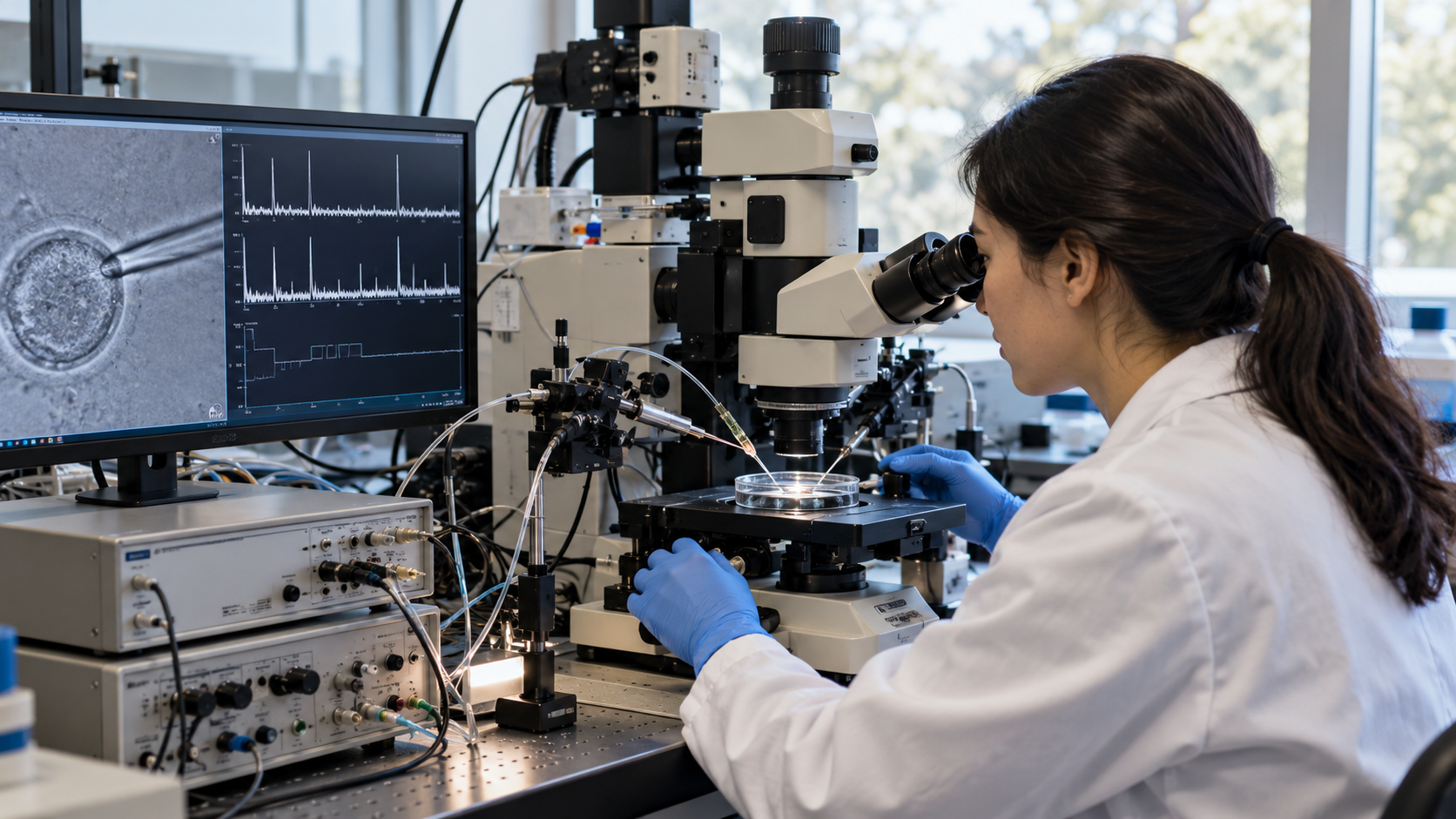
Patch-clamp recordings measure tiny currents through membranes or even single channels. Changing external ion concentrations, voltage commands, or channel genes helps researchers identify selectivity, gating, conductance, and the contribution of each channel type. Researchers separate cause from correlation with imaging, molecular perturbations, and measurements over time.
Membrane voltage is not stored electricity in one channel; it is a system-level result of gradients, permeability, and membrane capacitance. Channel behavior also varies with ligands, stretch, temperature, phosphorylation, and disease-causing variants. That evidence supports a general mechanism while leaving room for variation among organisms and conditions.
Pumps establish unequal ion concentrations across the membrane.
Selective channels provide controlled paths through the lipid barrier.
Chemical and electrical forces together drive each ion.
Resting voltage reflects the channels open at that moment.
Gated channels can rapidly change permeability and voltage.
Electrophysiology measures current, selectivity, and gating directly.
Explore more "Explainers"
Discover additional explainers across politics, science, business, technology, and other fields. Each explainer breaks down a complex idea into clear, everyday language—helping you better understand how major concepts, systems, and debates shape the world around us.