

How Molecular Chirality Changes Chemical Behavior Explainer
A chiral molecule has a mirror image that cannot be superimposed on it by rotation, much as left and right hands differ. The two mirror-image forms are called enantiomers and share the same atomic connectivity. The useful explanation follows energy, matter, and fields while respecting material properties at each boundary. Keeping track of losses explains why practical performance falls short of an ideal limit.
In an achiral environment, enantiomers have many identical bulk properties, including ordinary melting point and much of their reactivity. They rotate plane-polarized light in opposite directions and can be distinguished by other chiral materials. Geometry and composition set the available pathways, so small design changes can alter the response. Scale changes the balance among surface effects, bulk behavior, and heat flow.
Biological molecules such as enzymes, receptors, and transporters are chiral, so their binding sites can fit two enantiomers differently. That difference can change reaction rate, potency, metabolism, distribution, or toxicity without changing the molecular formula. The process continues only while a driving difference overcomes losses, resistance, or competing motion.
R and S labels describe absolute configuration according to priority rules; plus and minus signs describe measured optical rotation. Those naming systems are not interchangeable, and neither label by itself guarantees a particular biological effect. Real systems add interfaces and imperfections that idealized diagrams usually leave out.
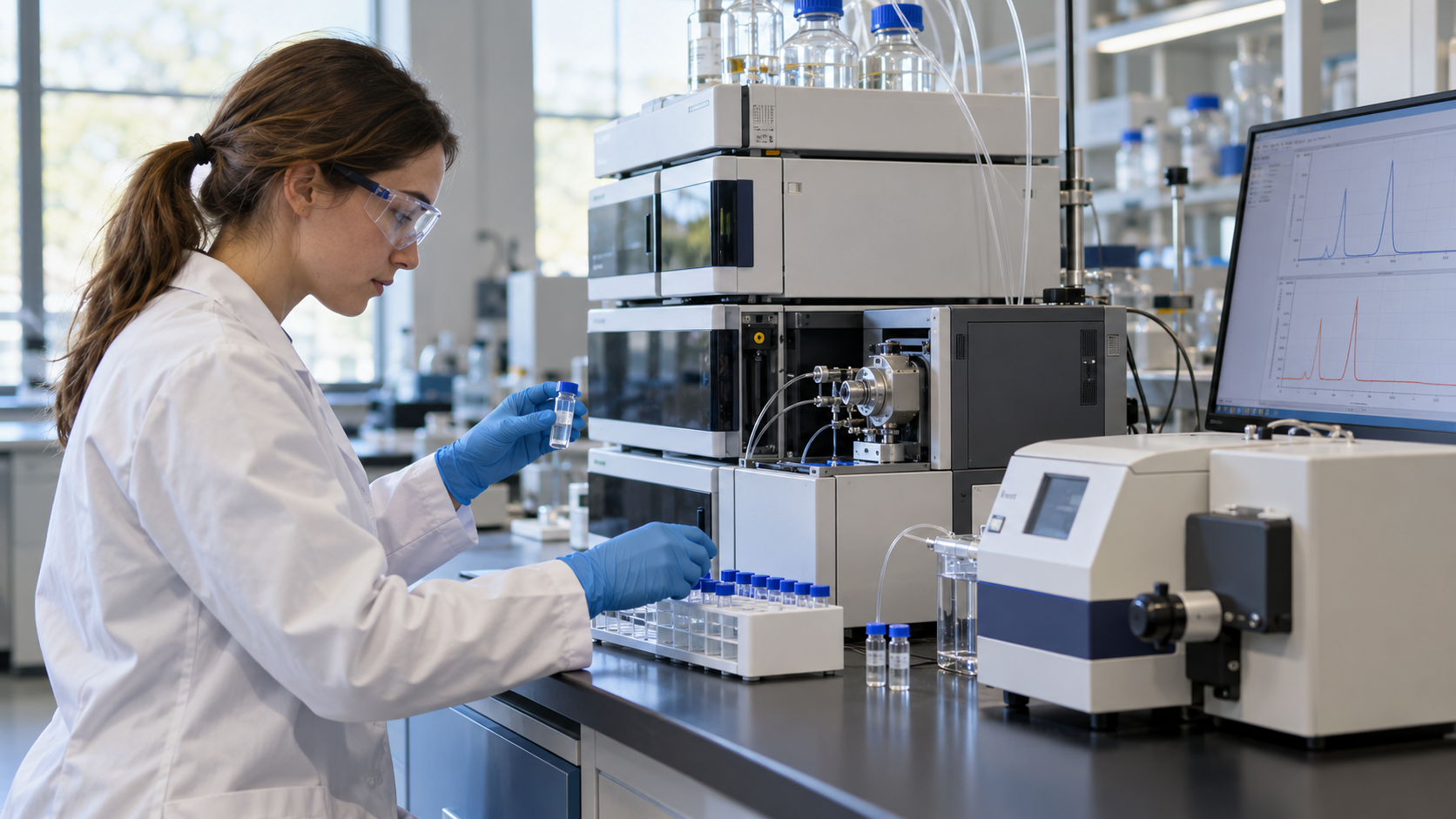
A mixture containing equal amounts of two enantiomers is racemic. Chemists obtain single-enantiomer material through asymmetric synthesis, chiral catalysts, biological transformations, or separations using a chiral stationary phase. Scientists test the model by changing one condition and measuring the predicted thermal, optical, or electrical signal.
Researchers analyze each enantiomer rather than assuming one is active and the other harmful. Some pairs behave similarly, some differ quantitatively, and some interconvert, so pharmacology and safety must be established experimentally. The core physics is dependable, but efficiency and scale depend on operating conditions and experimental uncertainty.
A chiral structure has a non-superimposable mirror image.
The mirror-image pair is called two enantiomers.
Achiral tests often give nearly identical bulk properties.
Chiral binding sites can recognize the forms differently.
Synthesis or chromatography can enrich one enantiomer.
Each form requires separate functional and safety testing.
Explore more "Explainers"
Discover additional explainers across politics, science, business, technology, and other fields. Each explainer breaks down a complex idea into clear, everyday language—helping you better understand how major concepts, systems, and debates shape the world around us.