

How Ecological Succession Rebuilds Communities Explainer
Ecological succession describes changes in community composition through time. It can begin on newly exposed material with little soil or after a disturbance that leaves soil, seeds, roots, microbes, and survivors in place. Cells regulate this pathway in context, so the result depends on timing, location, and molecular partners. This prevents a regulated process from being mistaken for a single all-or-nothing event.
Early colonists tolerate exposed conditions and disperse effectively. Their growth, litter, shade, roots, and interactions alter light, moisture, soil stability, and nutrient availability for species that arrive later. The components work as a coordinated system rather than as an isolated switch. Measurements of rate and location are as important as detecting a component.
Later communities are shaped by facilitation, competition, herbivory, dispersal, climate, and repeated disturbance. Succession is therefore not a rigid ladder in which every site passes through the same species in the same order. Different organisms tune the same basic mechanism to their structure, metabolism, and environment. This prevents a regulated process from being mistaken for a single all-or-nothing event.
A forest opening may first support fast-growing herbs or shrubs, then sun-loving trees, while shade-tolerant species recruit beneath them. Fire, storms, floods, grazing, and invasive species can redirect or reset the trajectory. Researchers test the explanation with imaging, perturbations, biochemical measurements, and comparisons over time.
The older idea of one permanent climax community is too simple for many ecosystems. Mature landscapes remain mosaics of patches with different histories, ages, soil conditions, and disturbance regimes. A visible association alone is not proof of function, so several independent measurements are needed.
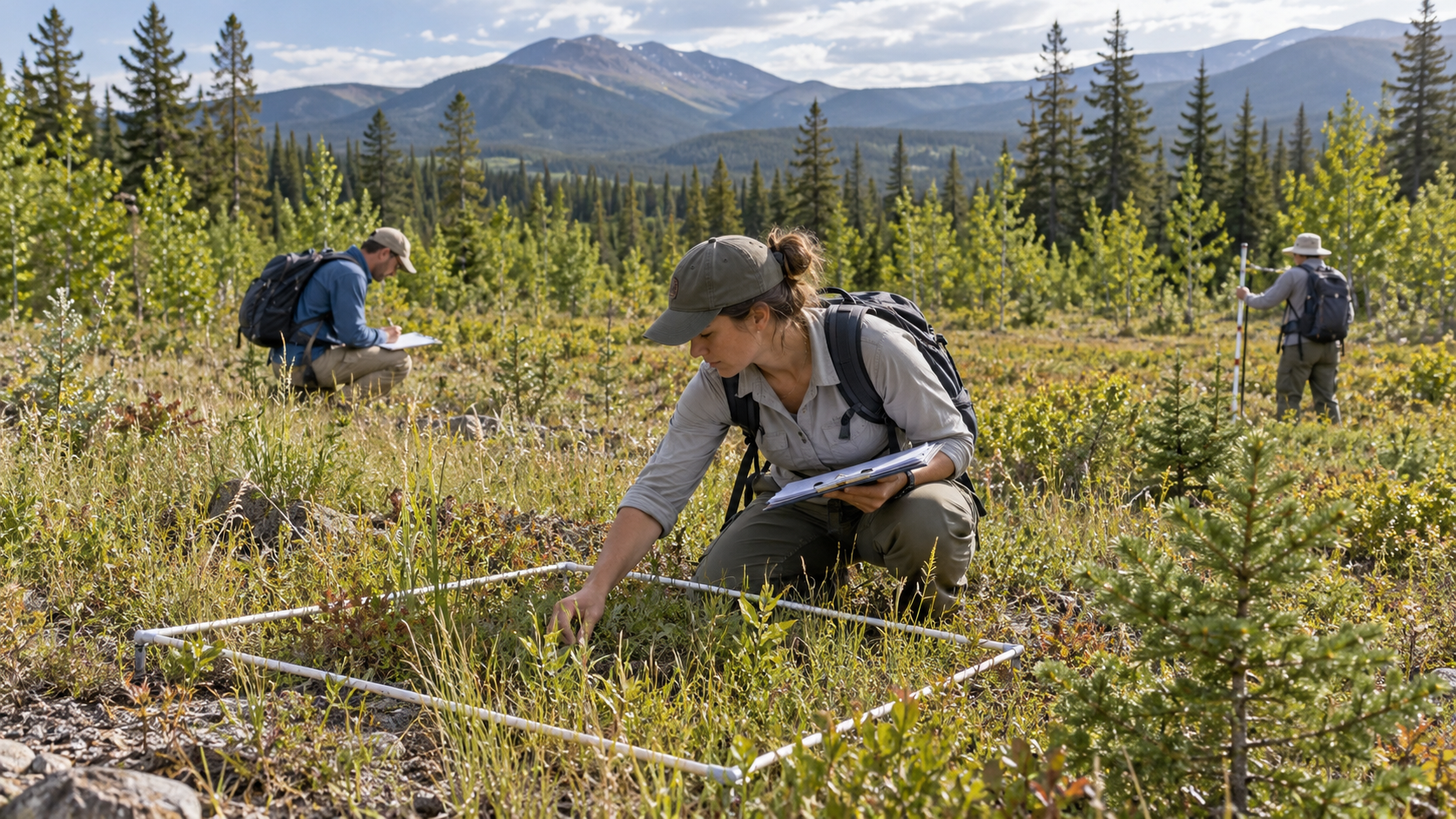
Researchers use permanent plots, dated aerial imagery, soil records, experiments, and comparisons among sites. Space-for-time comparisons are useful but can mislead if the sites began with different soils or climates. The broad mechanism is established even though its rate and outcome vary among cells and conditions.
A new surface or disturbance creates open ecological space.
Early colonists arrive from surviving or external sources.
Organisms change soil, light, moisture, and resource conditions.
New species establish, compete, and sometimes facilitate others.
Later disturbances redirect the developing community.
Long-term plots reveal multiple possible trajectories.
Explore more "Explainers"
Discover additional explainers across politics, science, business, technology, and other fields. Each explainer breaks down a complex idea into clear, everyday language—helping you better understand how major concepts, systems, and debates shape the world around us.