

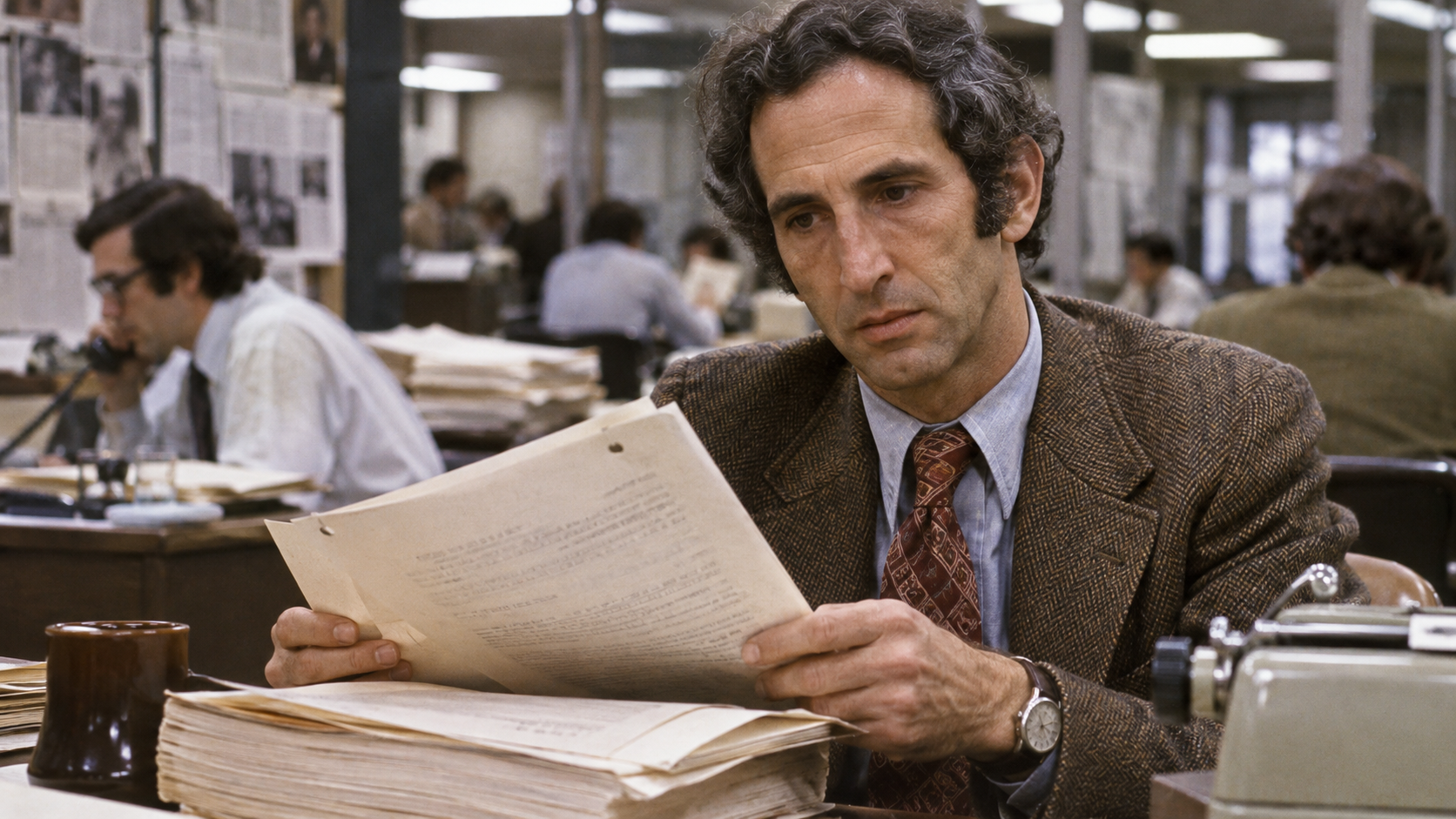
“The public is lied to every day by the President, by his spokespeople, by his officers.”
Daniel Ellsberg’s 1971 disclosure of the Pentagon Papers challenged years of official deception about the Vietnam War. His statement arose from a record showing that administrations privately recognized problems they publicly minimized or denied. The quote is sweeping, but its historical force came from documents that allowed the public to compare internal knowledge with official claims.
The central issue is not that every government statement is false. It is that secrecy and concentrated authority can sustain misleading narratives when evidence remains inaccessible. Democratic accountability therefore depends on records, lawful oversight, independent courts, protected sources, and journalists able to test what officials say.
Reporters handling leaked material must do more than publish dramatic files. They should authenticate documents, understand provenance, redact information when disclosure would cause specific avoidable harm, seek responses, and explain what the material proves and what it does not. Source motives matter, but they do not replace verification.
Ellsberg’s warning extends to modern information operations, classified programs, and coordinated messaging. Distrust alone is not a solution; it can make audiences vulnerable to new manipulation. The durable response is evidence-based skepticism: demand records, compare timelines, disclose uncertainty, and correct the account when stronger facts emerge.
Daniel Ellsberg’s 1971 disclosure of the Pentagon Papers challenged years of official deception about the Vietnam War. His statement arose from a record showing that administrations privately recognized problems they publicly minimized or denied. The quote is sweeping, but its historical force came from documents that allowed the public to compare internal knowledge with official claims.
The central issue is not that every government statement is false. It is that secrecy and concentrated authority can sustain misleading narratives when evidence remains inaccessible. Democratic accountability therefore depends on records, lawful oversight, independent courts, protected sources, and journalists able to test what officials say.
Ellsberg’s warning extends to modern information operations, classified programs, and coordinated messaging. Distrust alone is not a solution; it can make audiences vulnerable to new manipulation. The durable response is evidence-based skepticism: demand records, compare timelines, disclose uncertainty, and correct the account when stronger facts emerge.
Explore more "Quotes of The Day"
Discover more notable quotes from influential voices across politics, science, business, technology, sports, and culture. Each quote offers insight into how ideas, beliefs, and decisions shape the world around us.