

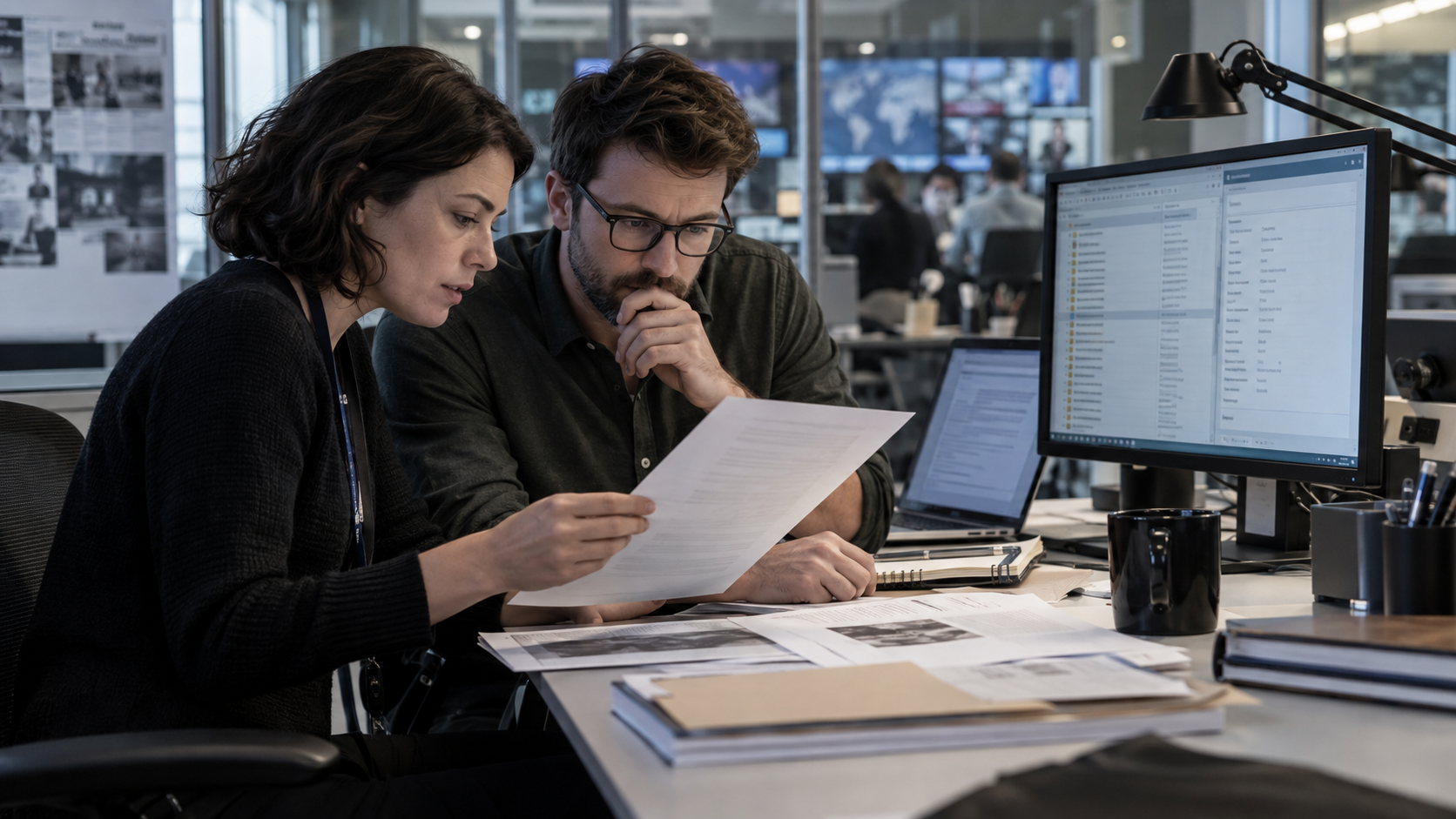
Leaked Document Authentication Explainer
Authenticating a leaked document means establishing that the material is genuine, complete enough to interpret, and connected to the people, organization, or event it appears to describe. A convincing logo, official-looking format, or anonymous sender is not proof. Journalists treat the document as a lead that must survive several independent checks before they rely on it. The work combines source reporting, technical examination, comparison with known records, and verification of the facts stated inside the file.
The first question is provenance: where did the material come from, and how did it reach the newsroom? A reporter may ask the source when and how it was obtained, who had access, whether pages are missing, and whether the file passed through other people or software. Editors often need to know the source’s identity even when the public will not. They assess whether that person was in a position to obtain the document and whether the source has a motive to mislead, selectively disclose, or remove context. A clear chain of custody is useful, but a source’s confidence never replaces independent checking.
Technical clues can support or weaken the case. File properties, creation and modification times, email headers, embedded metadata, digital signatures, scanning artifacts, and revision histories may help show how a document was produced. Those clues must be handled carefully because metadata can be stripped, altered, or generated by routine copying. Reporters compare typography, templates, reference numbers, addresses, terminology, and formatting with authentic records from the same institution and period. A mismatch is a reason to investigate, not automatically proof of fabrication, because organizations change systems and people make clerical errors.
Content verification is usually decisive. Journalists contact people named in the material, check dates against public events, compare figures with databases or filings, and seek other records that should exist if the document is real. They may ask the issuing organization to confirm specific details while avoiding the disclosure of a confidential source. The newsroom also looks for corroboration that was not supplied by the leaker. If several independent facts align, confidence increases; if a central claim depends only on the document itself, the story should clearly describe that limitation or wait for stronger evidence.
Even an authentic document can be misleading when it is incomplete, outdated, preliminary, or stripped of surrounding pages. Publication decisions therefore consider public interest, privacy, legal risk, and possible harm as well as authenticity. Sensitive personal information may be redacted, and excerpts should not imply more than the record shows. A careful story explains how the document was obtained as far as source protection allows, attributes disputed claims, and separates verified facts from unresolved questions. Authentication is not a single forensic test; it is a documented process of challenging the material from multiple directions.
Start with provenance: who supplied the document, how that person obtained it, who had access, and whether anything is missing. The answers guide later technical and reporting checks but do not replace them.
No. Metadata can reveal useful dates, software, authorship clues, or revision history, but it can also be removed or changed. It must be compared with the document’s content, source history, and independent evidence.
Often, yes. Editors may know the source privately while reporters corroborate the document through records, people named in it, and facts outside the source’s control. The public story should explain the basis for confidence without exposing a protected source.
Explore more "Explainers"
Discover additional explainers across politics, science, business, technology, and other fields. Each explainer breaks down a complex idea into clear, everyday language—helping you better understand how major concepts, systems, and debates shape the world around us.