

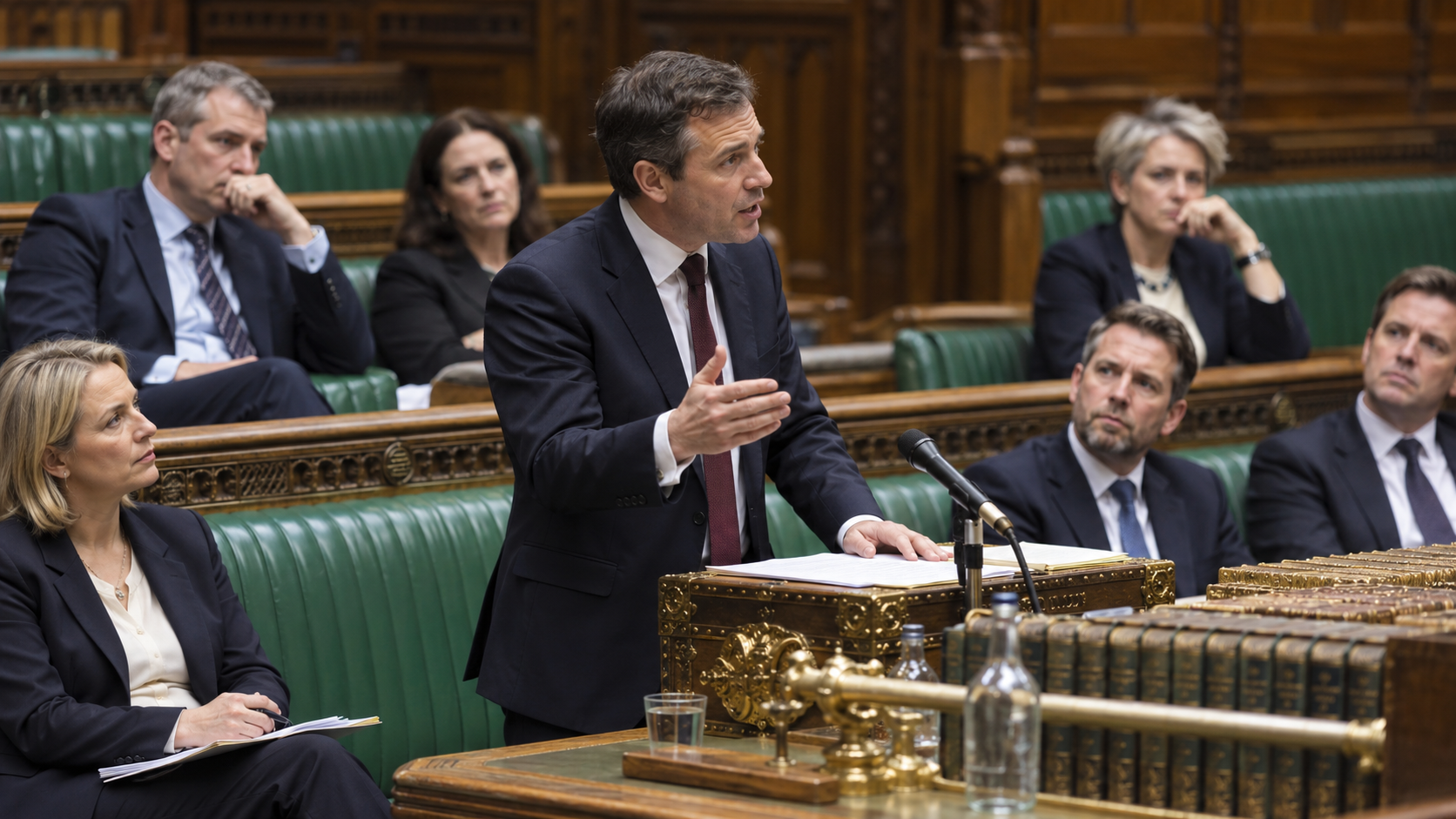
Opposition Days Explainer
Opposition days reserve parliamentary time for subjects chosen by opposition parties rather than by the government. In the United Kingdom House of Commons, this allocation gives opponents a formal opportunity to put their own concerns before the chamber. They can challenge the government's record, highlight a neglected issue, or ask members to support a proposed position. The arrangement matters because a government normally has substantial influence over the legislative timetable, making control of debate time an important source of political power.
An opposition day commonly centers on a motion selected by the opposition. Members debate its wording, the government may respond, and amendments can offer a different formulation. A vote can establish the House's position on the question ultimately put before it. The exact text therefore matters: an amended motion may express something different from the opposition's original proposal. Headlines about the topic alone do not show which wording members supported or what procedural effect the resulting decision has.
Imagine an opposition party uses its allocated time to debate access to a public service. It may call for a new assessment, criticize existing performance, or press ministers to change their approach. Government members can defend the policy, identify competing priorities, or propose an amendment. Even when the government has enough votes to defeat criticism, the debate can require public explanations and put members' positions on record. It can also draw attention to evidence that receives less prominence during government-led business.
These debates should not automatically be treated as the passage of legislation. Some motions express an opinion or political demand rather than directly altering legal obligations. Other forms of motion can have particular procedural consequences, so their effect must be assessed individually. Opposition days create opportunities for scrutiny and agenda setting; they do not guarantee that ministers will adopt the opposition's policy. To understand an outcome, examine the final motion, any amendments, the voting record, and the next action required. Those details distinguish political pressure from an instruction or legal change with an identifiable effect.
Allocated opposition time allows subjects to be chosen outside the government's usual control of business.
The chosen motion frames the debate and states the proposition members are asked to consider.
Amendments can change what the chamber ultimately votes on.
Debate can require ministers to explain policy and create a record of members' positions.
Many opposition motions express a position without directly changing the law.
Assess the final wording and the type of motion before describing a vote as binding.
Explore more "Explainers"
Discover additional explainers across politics, science, business, technology, and other fields. Each explainer breaks down a complex idea into clear, everyday language—helping you better understand how major concepts, systems, and debates shape the world around us.