

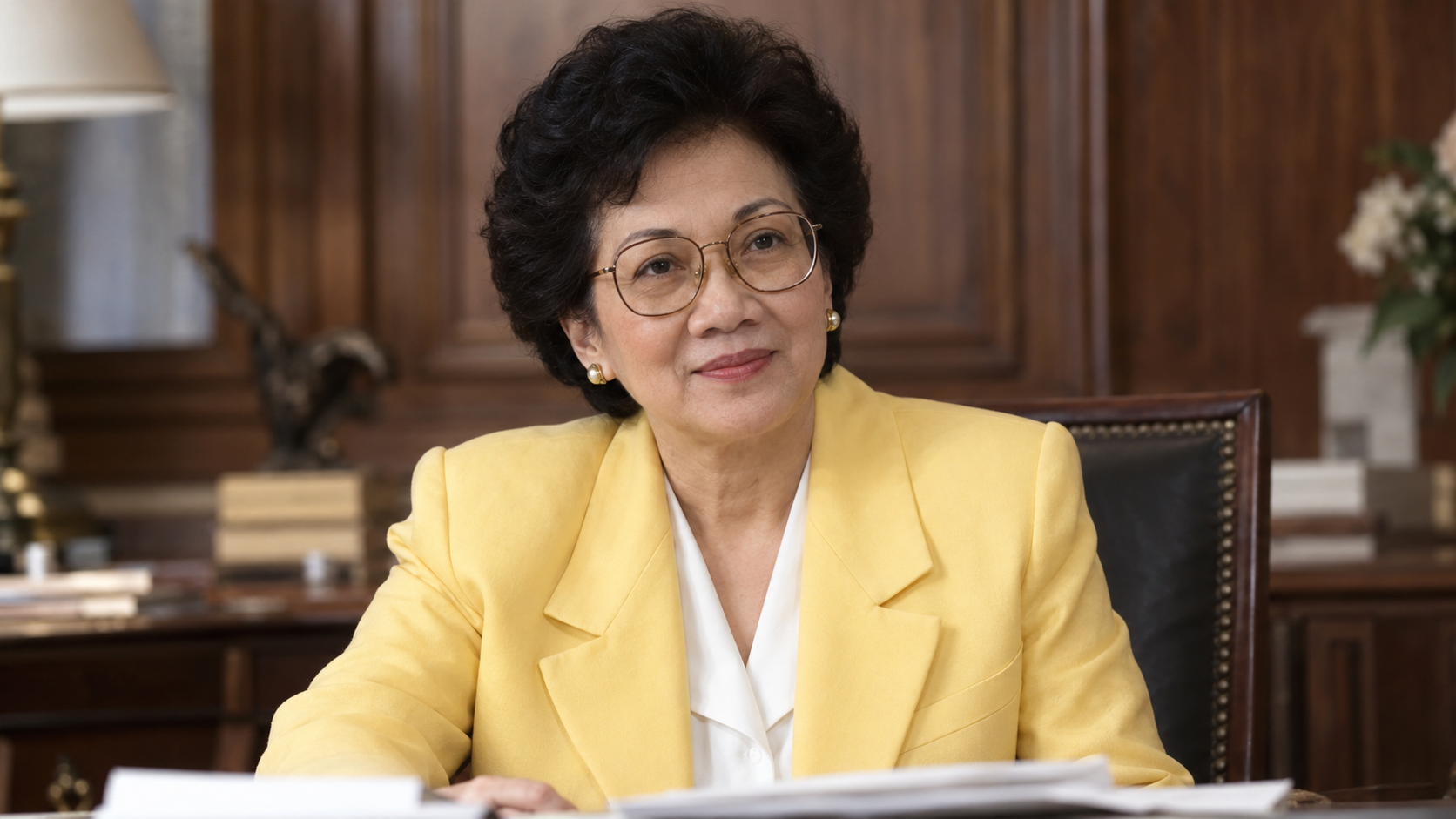
“As I came to power peacefully, so shall I keep it.”
Corazon Aquino made this commitment in her address to a joint session of the United States Congress on September 18, 1986. The Congressional Record preserves the speech, and the Philippine Constitutional Commission’s proceedings later quoted the same sentence. Aquino spoke after the People Power uprising had brought her to the presidency earlier that year. She was explaining the relationship between the movement that had brought change and the government she intended to lead. The quote makes the means of gaining office a standard for the use of office. A peaceful political transition, in her account, created an obligation to continue governing in that spirit.
The surrounding address discussed restoring constitutional government, protecting rights, and seeking ways to bring insurgents back into political and community life. Those were commitments and proposals expressed at the time, not proof that all the problems of the transition had been resolved. The speech also reflected Aquino’s account of the struggle against the previous government and the people who had supported her. Reading the sentence in that setting prevents it from becoming a simple promise of personal tranquillity. It concerned public power, the dangers facing a new administration, and the choices through which that administration would try to sustain democratic legitimacy.
The link between origins and conduct is a demanding political idea. A movement can gain support by opposing abuse, then face pressures that tempt its leaders to use similar methods once they hold authority. The quote offers a way to question that reversal. Readers can ask whether emergency measures remain subject to oversight, whether opponents have a lawful place in public life, and whether institutions can correct an executive’s decisions. These are applications of the principle, rather than a checklist from Aquino’s sentence. Peaceful government requires more than the absence of a dramatic confrontation; it needs practices that let disagreement continue without making coercion the routine answer.
There is also a distinction between a leader’s pledge and the arrangements that make it credible. Constitutional limits, open debate, and avenues for accountability help a promise survive changes of personality and circumstance. A citizen need not accept a speaker’s whole record to take that standard seriously. The words can be used to evaluate the speaker as well as anyone who repeats them. Aquino’s formulation gives political memory a practical role: the manner in which people sought change should remain relevant when their representatives exercise power. The achievement of office begins a responsibility whose fulfilment has to be examined through conduct over time.
Aquino spoke to a joint session of the US Congress on September 18, 1986, following the People Power transition.
The Congressional Record preserves the address. Philippine Constitutional Commission proceedings later quoted the same commitment.
The sentence ties the peaceful origins of her presidency to the conduct she promised in office. Its surrounding discussion included constitutional restoration and reconciliation.
A pledge describes an intention. It should be assessed through the government’s conduct and the institutions that constrain public power.
Citizens can examine whether opponents retain lawful political space and whether exceptional powers remain accountable.
The means used to seek change should continue to matter after office is won. Political memory can supply a standard for governing.
Explore more "Quotes of The Day"
Discover more notable quotes from influential voices across politics, science, business, technology, sports, and culture. Each quote offers insight into how ideas, beliefs, and decisions shape the world around us.