

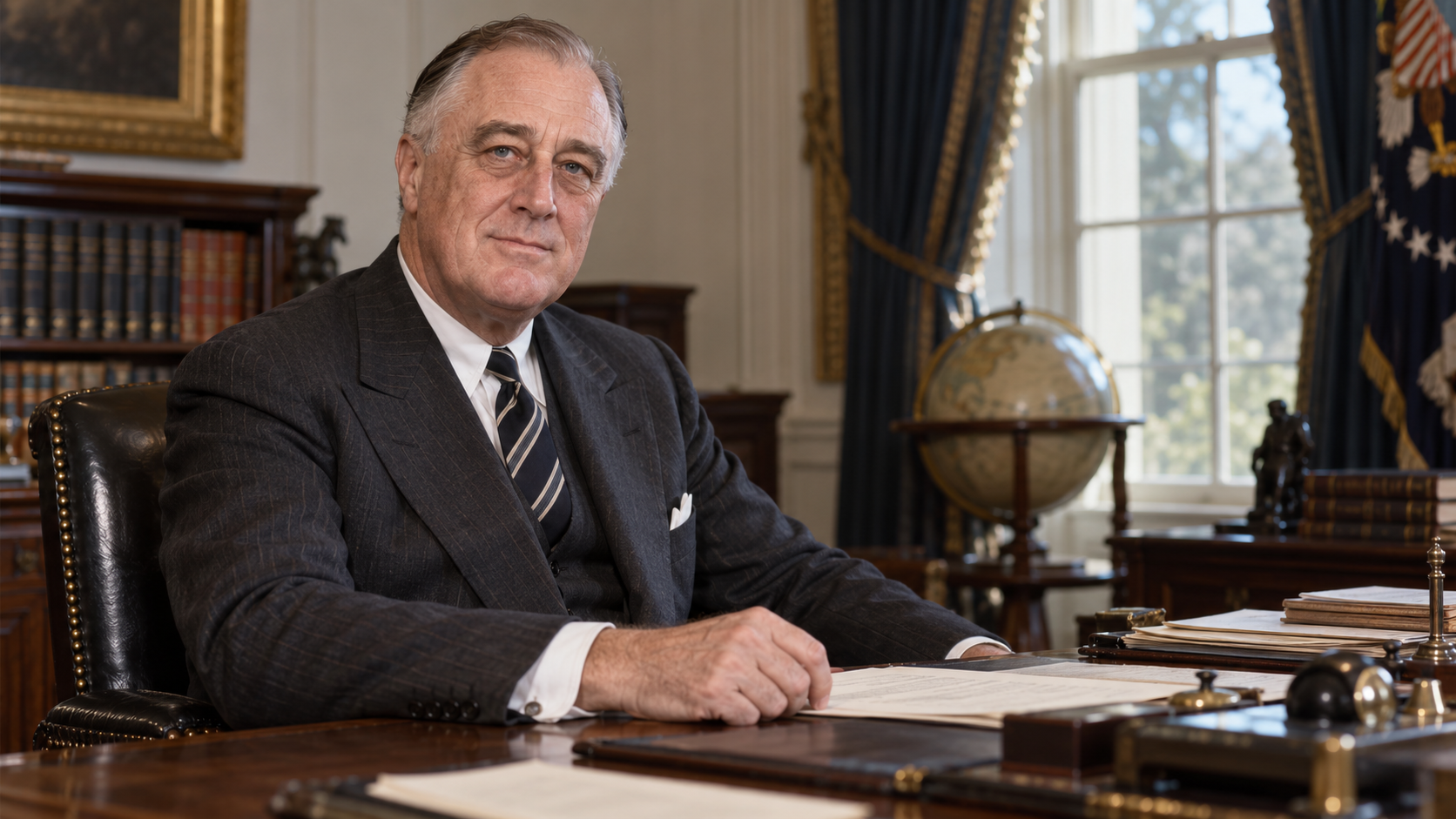
“We have always known that heedless self-interest was bad morals; we know now that it is bad economics.”
Franklin D. Roosevelt made this statement in his second inaugural address on January 20, 1937. Speaking after his first term during the Great Depression, he argued that economic experience had sharpened an older moral understanding. The word heedless is crucial: his target was self-interest pursued without regard for its effects on others. He connected that disregard with the instability of a prosperity that had failed many people. The statement did not reject all personal ambition. It questioned whether success that ignores the wider conditions of economic life can remain practical, even when those seeking it describe themselves as hardheaded realists.
The surrounding address acknowledged recovery while drawing attention to people still lacking basic necessities and opportunities. Roosevelt used that contrast to argue for continuing public effort rather than treating improved conditions for some as sufficient progress for everyone. His claim linked individual prospects with the welfare of the community. People’s ability to work, buy necessities, and develop their capacities affects others as well as themselves. This was an argument for the role of democratic government in responding to shared problems. Quoting it does not require treating every New Deal measure as successful or the administration’s record as beyond criticism; the speech states a position whose policies and consequences can be examined.
The quote offers a useful question for decisions that appear profitable only because their costs fall elsewhere. A gain may look impressive in a narrow account while depending on insecurity imposed on workers, customers, or neighboring communities. Considering those effects changes the meaning of practical success. This does not supply a complete economic model or settle every disagreement over regulation. It asks whether an account of advantage is incomplete because it excludes the conditions on which the advantage depends. In public discussion, that question encourages people to distinguish creating value from shifting burdens and to ask whether apparent prosperity can be sustained across the relationships that support it.
Moral and economic judgment will not always produce simple answers, and responsible choices still require evidence about their effects. Roosevelt’s statement is most useful as an invitation to examine the supposed separation between those judgments. Treating concern for others as merely sentimental can obscure real dependencies; treating a desirable aim as proof of an effective policy can obscure failure. A careful reading avoids both shortcuts. The speech called for public progress to be assessed through the circumstances of people who remained vulnerable. Its continuing challenge is to describe success honestly, including the burdens, opportunities, and security experienced by those whose lives help make the larger economy possible.
The quotation appears in Roosevelt’s second inaugural address of January 20, 1937. It concerns heedless self-interest, rather than all personal ambition.
The speech combined an acknowledgment of recovery with concern for people still lacking basic necessities and opportunities.
The argument connects moral responsibility with the dependencies of economic life. A narrow gain may conceal costs transferred to others.
It supplies a question for evaluating policy, rather than proof that every measure of Roosevelt’s administration succeeded.
A proposal can be assessed through who benefits, who bears costs, and whether the resulting conditions can endure.
Evidence about real effects remains necessary. A worthy aim and an effective policy should be examined together.
Explore more "Quotes of The Day"
Discover more notable quotes from influential voices across politics, science, business, technology, sports, and culture. Each quote offers insight into how ideas, beliefs, and decisions shape the world around us.