

Urticaria Explainer
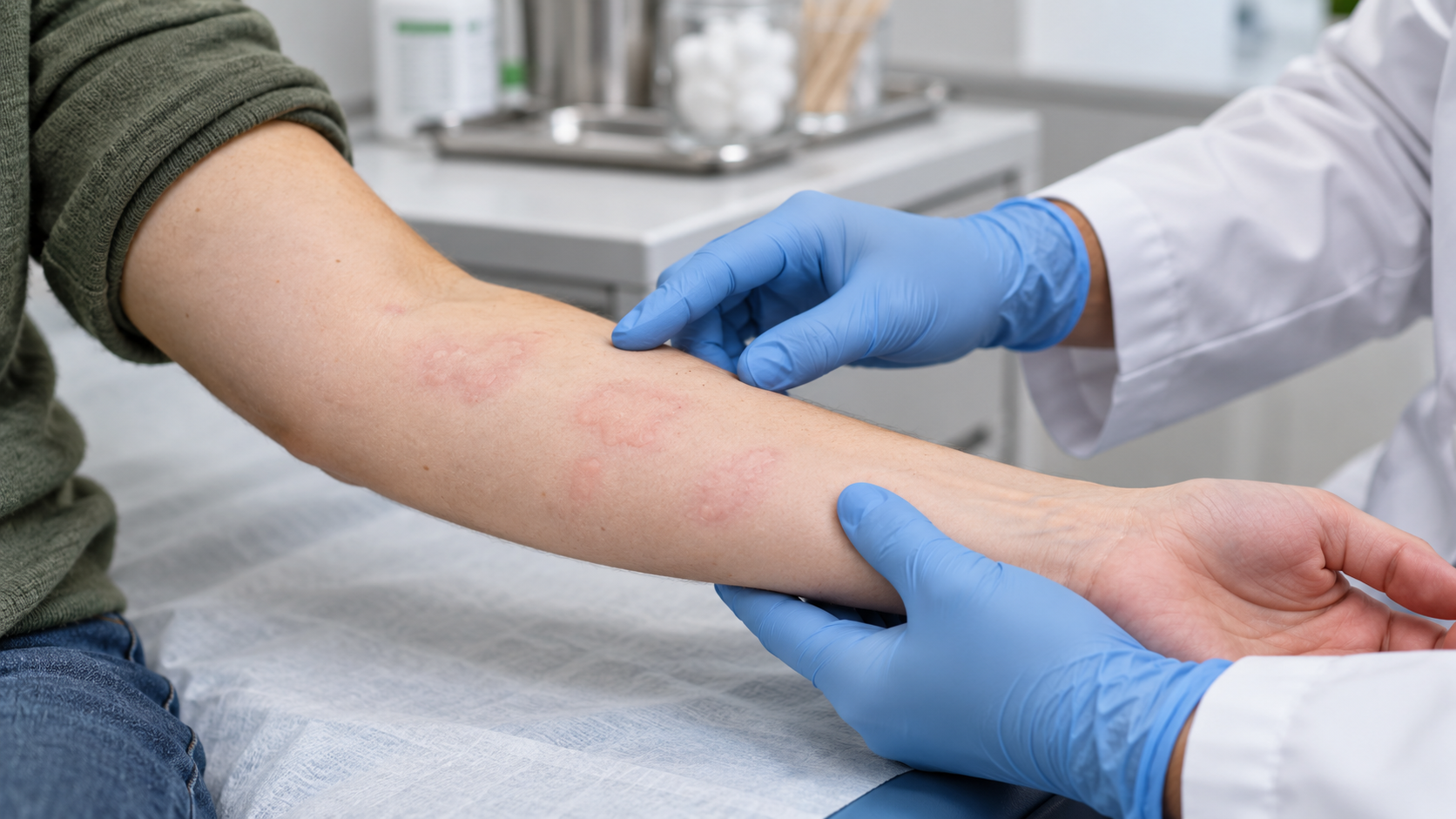
Urticaria is the medical name for hives: raised, itchy areas of skin often called welts or wheals. They can be small or join into larger patches, and their appearance may change over time. On lighter skin they may look pink or red; on darker skin the swelling can be more noticeable than a color change. A patch may disappear while another develops elsewhere. The rash can be uncomfortable and distracting, but the pattern and any accompanying symptoms matter more than how dramatic it looks.
Hives develop when histamine and other chemicals cause changes in the skin. An allergy to a food, medicine or insect sting is one possible trigger, but hives do not always mean allergy. Infection, temperature, pressure, sweating and other influences can be involved. In children, viral infection is a common explanation. Often no clear trigger is found. That uncertainty should not be turned into a long list of assumed food allergies or a reason to remove many foods without professional advice.
Assessment usually begins with the rash and its history: when it started, how long individual patches last and whether anything else happens at the same time. Photographs can help if the welts fade before an appointment. Allergy tests are not automatically useful for every episode, although selected tests may be needed when the history raises a particular concern. Hives recurring for more than six weeks are described as chronic. A clinician can help distinguish different types and rule out other conditions that resemble them.
Antihistamines can reduce itching and swelling, and a pharmacist or clinician can advise on a suitable option. Some products cause drowsiness, and age, other medicines and health conditions affect the choice. Persistent or difficult symptoms may need a specialist plan. Hives with sudden tongue or throat swelling, breathing difficulty, fainting or marked confusion can be part of anaphylaxis and require emergency help. A simple skin rash and a serious whole-body allergic reaction are different situations, so associated symptoms must be taken seriously.
Individual welts often come and go relatively quickly, while the overall episode can last longer because new ones appear. Keeping track of that difference helps explain the pattern to a clinician. Hives can also occur with angioedema, swelling in deeper tissue, sometimes around the lips or eyelids. Swelling affecting the mouth or throat needs immediate attention because breathing or swallowing can be affected.
Not every raised rash is urticaria. A clinician considers whether the appearance and timing fit, and whether another skin condition could be involved. Record medicines, recent illness, insect exposure and activities around the start of symptoms. Useful observations support assessment, but a coincidence does not establish a trigger. Repeatedly trying to provoke a suspected reaction is not a safe diagnostic method.
Chronic spontaneous urticaria describes recurring hives without an identified external trigger. Another pattern is inducible urticaria, in which a stimulus such as pressure or cold brings on welts. The distinction can guide management. Not finding one avoidable cause does not mean treatment is impossible. Specialist care can still reduce symptoms and their impact on sleep and daily activities.
Treatment aims to control itch and reduce new hives. A clinician may adjust an antihistamine plan or consider other prescribed treatments if it is not enough. Do not copy stronger doses from someone else's regimen. Bringing a symptom record and describing the effect on daily life helps the clinician decide what needs to change and how to check whether the plan is working.
Keeping cool and avoiding tight or irritating clothing can ease discomfort for some people. A soothing moisturizer may also help. These measures provide comfort but do not replace emergency care when serious symptoms develop. If a medicine is suspected as the trigger, contact the prescriber for advice about the next step rather than making an unsupported assumption about every treatment taken.
Children need age-appropriate advice about antihistamines and other medicines. A pharmacist can help with suitability, while a worried parent should seek clinical review for persistent or recurring rash. Antibiotics are not routinely needed for hives caused by a viral illness. A child who becomes limp, unusually unresponsive or has breathing or throat symptoms needs immediate emergency assessment.
Explore more "Explainers"
Discover additional explainers across politics, science, business, technology, and other fields. Each explainer breaks down a complex idea into clear, everyday language—helping you better understand how major concepts, systems, and debates shape the world around us.