

Varicose Veins Explainer
Varicose veins are enlarged, twisted veins lying just beneath the skin, usually in the legs. They may look like raised cords or lumps and can cause aching, itching, heaviness or swelling. Some people notice them mainly because of their appearance; others find that discomfort limits daily activities. Small thread or spider veins are a different pattern. A visible vein does not explain every leg symptom, so pain or swelling should be assessed in its own context.
Veins return blood toward the heart, and one-way valves help keep it moving in the correct direction. If valves or vein walls do not work well, blood can pool or flow backward, a process called reflux. Pressure can then enlarge superficial veins. Family history, pregnancy and circumstances that increase pressure in leg veins can contribute. Varicose veins are common, but they are not simply a result of poor effort or a problem that can always be solved by changing one habit.
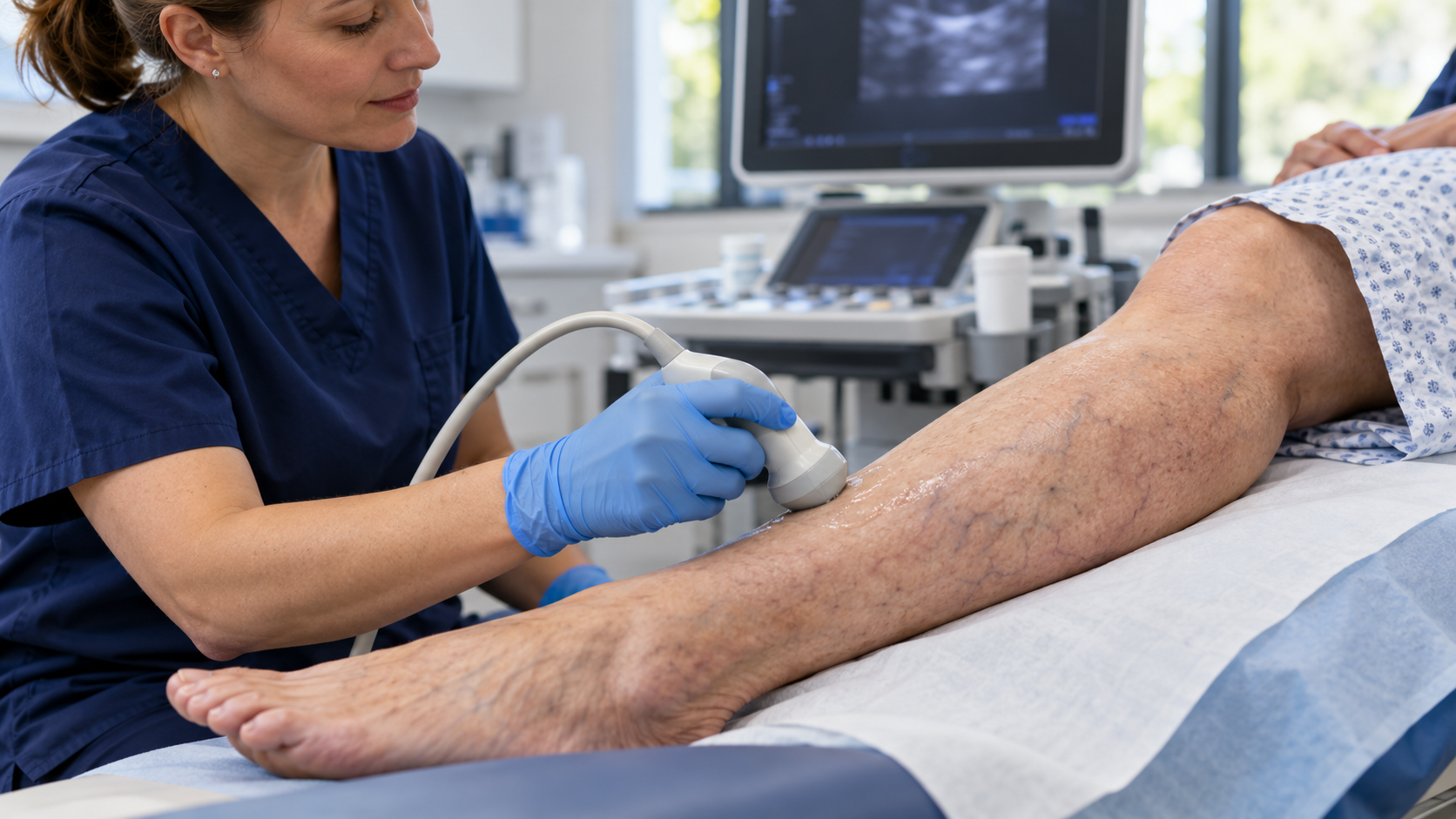
Assessment includes symptoms and examination, and often duplex ultrasound. This scan uses sound waves to show blood flow and help identify which veins are affected. That information can guide treatment rather than relying only on what is visible at the skin. Not everyone needs a procedure. The decision considers discomfort, skin changes, complications and the person’s preferences. New sores, worsening symptoms or bleeding need medical attention. Bleeding from a varicose vein should be treated urgently; seek emergency help rather than dismissing it as a minor cosmetic issue.
Treatments may relieve symptoms, close a vein that is allowing reflux or remove affected veins. Options include compression therapy, heat-based ablation, foam injections and surgery in selected circumstances. The choice depends on the ultrasound findings and suitability of the procedure. Recovery advice varies, and risks need discussion alongside likely benefits. Closing an affected superficial vein allows other veins to carry the returning blood. Treatment can help, but new varicose veins can appear later, so it should not be presented as a guarantee against any future vein problem.
Aching and heaviness may become worse after a long time standing and improve with rest and raised legs. Moving regularly and avoiding extended periods in one position can help symptoms. Skin irritation or a sore that is slow to heal deserves review. Creams can soothe dry skin, but they do not correct the faulty blood flow inside a vein.
Leg pain also has other possible explanations, including joint problems and nerve-related conditions. Having visible varicose veins does not establish that they cause all the discomfort. Describe where the symptoms occur, when they change and how they affect walking or sleep. This helps the clinician assess whether vein treatment is likely to address the problem that matters most.
Heat-based ablation uses a catheter and energy to close an affected vein, usually with ultrasound guidance and local anesthetic. Other approaches remove selected veins or seal them chemically. These techniques address the reflux pathway rather than treating only the skin's appearance. Ask why a particular option is suitable, whether alternatives exist and what result can reasonably be expected.
Compression stockings apply pressure to the legs and may reduce swelling or heaviness. They can also be used after a procedure. Their purpose and wearing instructions should come from the care team, since the appropriate plan varies. Compression can relieve symptoms but does not itself repair a failed valve. A properly chosen treatment discussion considers the underlying flow problem as well as comfort.
Foam sclerotherapy involves injecting a substance into selected veins to close them. Ultrasound helps guide the treatment, and not every vein is suitable. The vein's lining is affected and the treated tissue changes over time. Discomfort or skin discoloration can occur, and a further procedure is sometimes needed. The team should explain both common effects and less common complications before treatment.
Aftercare may include compression, walking guidance and advice about driving, work, exercise and travel. Follow the instructions for the actual procedure rather than borrowing a timeline from someone else. Plan practical needs before the appointment, including help getting home when advised. Report symptoms identified as concerning in the discharge advice. Recovery is part of the treatment plan, not merely the interval after the procedure finishes.
Explore more "Explainers"
Discover additional explainers across politics, science, business, technology, and other fields. Each explainer breaks down a complex idea into clear, everyday language—helping you better understand how major concepts, systems, and debates shape the world around us.