

Wound Healing Explainer
Wound healing is the body’s process of closing an injury and rebuilding damaged tissue. A wound may be a small scrape, a surgical incision or a deeper injury involving structures below the skin. The size, depth and cause influence how much care it needs. A mark that looks small on the surface can still be a significant puncture. Understanding the injury is therefore the first step; appearances alone do not show whether nerves, tendons or deeper tissue have been affected.
Repair starts with stopping bleeding, often through clot formation. Inflammation brings cells and resources to the injured area, then new tissue and skin develop. Later, the repaired area changes and strengthens as a scar matures. These stages overlap rather than operating like a rigid calendar. A deeper wound generally takes longer to heal than a shallow scrape. Some early tenderness can occur during repair, but increasing pain or spreading inflammation should not be dismissed as an automatic sign of normal healing.
For a small cut, basic care involves clean hands, controlling bleeding, rinsing away contamination and protecting the area with an appropriate clean dressing. Keep the dressing clean and change it when needed. Avoid picking at a scab or repeatedly disturbing the wound. Serious injuries need professional care rather than an expanded home-cleaning routine. Heavy or persistent bleeding, a deep wound, loss of sensation or impaired movement calls for urgent assessment, and severe bleeding warrants emergency help.
A surgical wound should be cared for according to the treating team’s instructions. Some wounds are deliberately managed open so they heal from deeper tissue outward, and their dressings require particular care. Do not add peroxide, alcohol or an unapproved lotion to try to speed recovery; these can irritate or damage healing tissue. An effective plan explains what to use, how often to change the dressing, which changes to watch for and whom to contact if the wound worsens.
Healing relies on an adequate blood supply and a working repair response. Diabetes, poor circulation and infection can interfere with that process. Age and some medicines can also influence recovery. A wound that repeatedly opens or fails to improve needs assessment of the underlying reason. Simply applying a different dressing may leave a circulation problem or other medical issue unrecognized.
Scars form when repaired tissue differs from the original skin. They may fade gradually, but deeper injuries can leave a lasting scar, and some people form thicker scars. No ordinary cream guarantees that a wound will heal without a mark. Ask the treating clinician before applying products to a healing injury, particularly after surgery, when the appropriate timing and wound condition matter.
Increasing redness, swelling or pain, pus-like drainage, a bad smell or fever can signal infection. A wound becoming larger, deeper or dark also needs medical attention. Changes are especially concerning when they represent a worsening pattern rather than a stable appearance. Record what has changed and contact the care team promptly instead of waiting for every possible warning sign to develop.
Bites, contaminated injuries and punctures deserve particular attention because infection or deeper damage may be present. A clinician may assess whether tetanus protection or other treatment is needed. Do not pull out a deeply embedded object or dig into a wound to retrieve debris. If bleeding is severe or cannot be controlled, seek emergency help rather than continuing repeated attempts at home treatment.
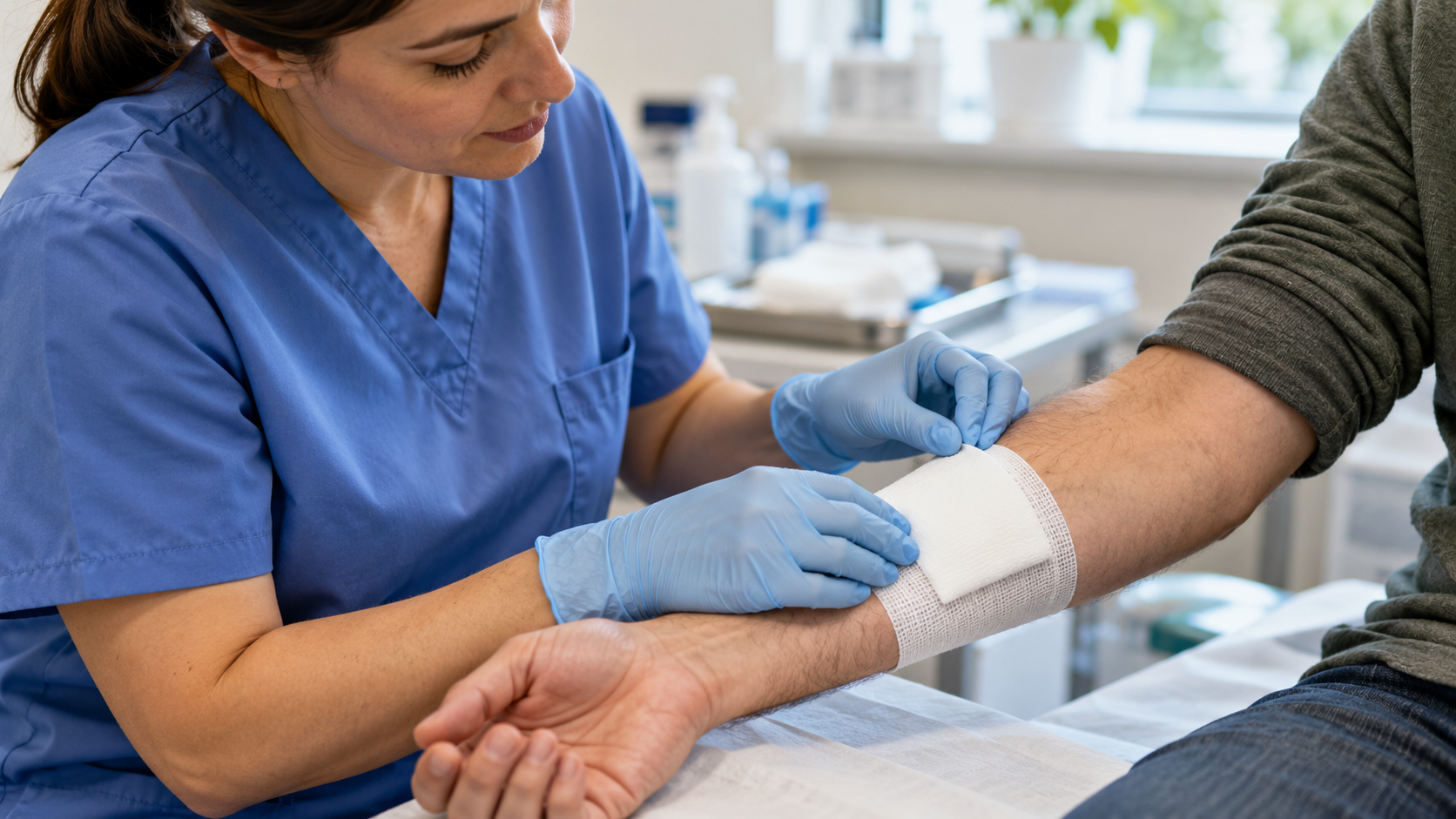
A clean dressing protects the injury from further contamination and friction. Choose and change it according to the wound-care instructions, keeping supplies and the work surface clean. Do not reuse a disposable dressing. For a surgical wound, the clinician may recommend a specific cleaning solution and dressing technique; following that plan is more reliable than substituting something that happened to work for a different injury.
Review is useful when healing is slower than expected, stitches or staples come out early, or a previously closed wound opens. Mention diabetes, circulation problems, relevant medicines and any difficulty following the care plan. Ask what improvement should look like and when the next assessment is due. Safe wound care combines practical protection with timely recognition that a wound needs more than routine home care.
Explore more "Explainers"
Discover additional explainers across politics, science, business, technology, and other fields. Each explainer breaks down a complex idea into clear, everyday language—helping you better understand how major concepts, systems, and debates shape the world around us.