

Fractures Explainer
A fracture is a broken bone, whether the damage is a small crack or a complete break. The words fracture and break describe the same basic problem. Injuries such as falls, collisions or a direct blow can cause fractures, while repeated loading can produce a stress fracture. Weakened bones may break after a smaller injury. The seriousness depends on the bone, the pattern of damage and surrounding tissues, rather than on whether someone calls it a crack.
Pain, swelling, tenderness, bruising and difficulty using the injured area can suggest a fracture. A limb may look out of place, but an obvious deformity is not necessary for a bone to be broken. If a fracture is suspected, get medical assessment. Avoid repeatedly moving the area to test it or trying to straighten it yourself. The clinician examines the injury and considers the circumstances, then usually uses an X-ray or another imaging test to establish the diagnosis.
Fractures are described in several ways. A stable fracture has bone ends that remain largely aligned, while a displaced fracture has ends that have moved out of position. The break can run across the bone, at an angle or through several fragments. An open fracture involves a wound communicating with the broken bone, even if bone is not visible. These descriptions help guide care, including the need to protect the wound and reduce infection risk.
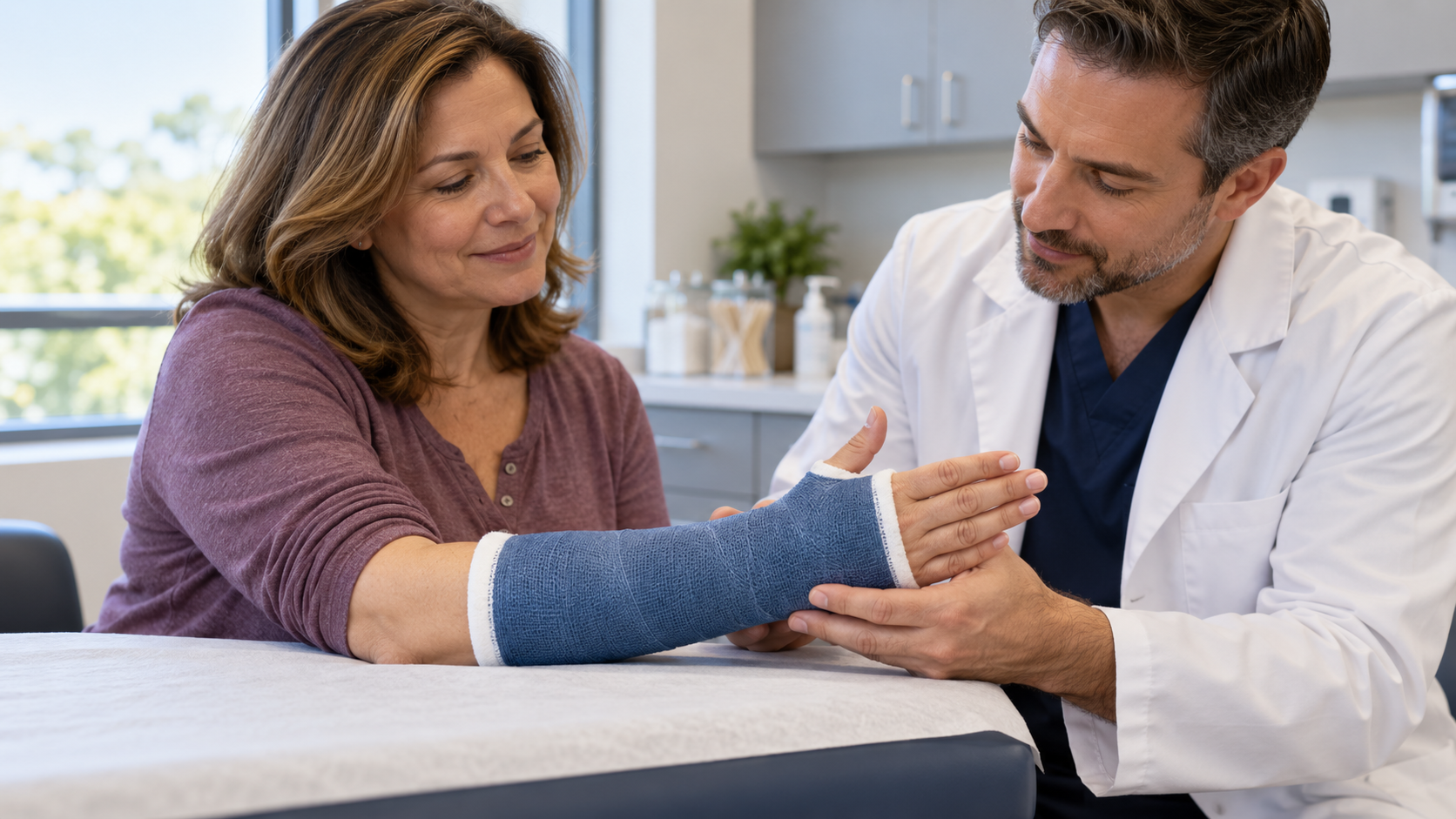
Treatment aims to hold the bone in a suitable position while it heals and preserve useful function. Some fractures need a cast, splint or brace; others require surgery with plates, screws or other fixation. A splint may be used initially to accommodate swelling. The choice depends on the injury and the person’s circumstances. Ask about permitted movement, weight bearing, pain relief and follow-up. Advice for another person’s fracture may be unsuitable even when the injuries seem similar.
Call emergency services for a serious injury with severe bleeding, exposed bone, loss of consciousness or a pale, cold or blue area beyond the injury. Suspected fractures involving the spine, hip or pelvis also need urgent help. Keep the person still and follow emergency instructions. Do not move someone with a possible neck or back injury unless necessary for immediate safety. Protecting the person takes priority over trying to fix the limb.
An open wound needs prompt care because contamination can lead to infection. Do not probe it, push bone back in or attempt your own realignment. A clean covering can help protect the area while medical help arrives. Even without an open wound, substantial pain or loss of function warrants assessment. A fracture and a dislocated joint can look similar; neither should be diagnosed solely by appearance at home.
Keep a cast dry unless the treating team specifically confirms that its materials and lining are waterproof. Wet padding can irritate skin and moisture can weaken plaster. Follow instructions for bathing and protecting the cast, and do not put objects inside to scratch. Tell the team if the cast becomes damaged, too loose or otherwise difficult to manage. A cast is part of treatment and needs attention when its fit changes.
Increasing pain or tightness, numbness, tingling, burning or excessive swelling beyond a cast needs immediate advice from the treating team. Inability to actively move fingers or toes requires urgent assessment. These changes may indicate pressure or circulation problems. Do not simply wait for the next routine appointment. The team may recommend elevation and movement of uninjured digits, but those measures should not delay evaluation of concerning symptoms.
Healing time varies with the bone, injury and health factors. Follow the plan for loading the limb and returning to work or sport rather than judging readiness by pain alone. Follow-up imaging may check alignment and progress. Stiffness and weakness after immobilisation may need rehabilitation. Exercises and timing should fit the injury; forcing movement before clearance can conflict with the protection the fracture still needs.
Reducing future risk can involve fall prevention, appropriate protective equipment and support for bone health. Adequate calcium and vitamin D, suitable activity and treatment of osteoporosis when indicated can help. A fracture after a minor fall may prompt discussion about bone strength. Remove tripping hazards and review recovery needs with the team. Prevention advice should complement a realistic rehabilitation plan and support a safe return to everyday activities.
Explore more "Explainers"
Discover additional explainers across politics, science, business, technology, and other fields. Each explainer breaks down a complex idea into clear, everyday language—helping you better understand how major concepts, systems, and debates shape the world around us.