

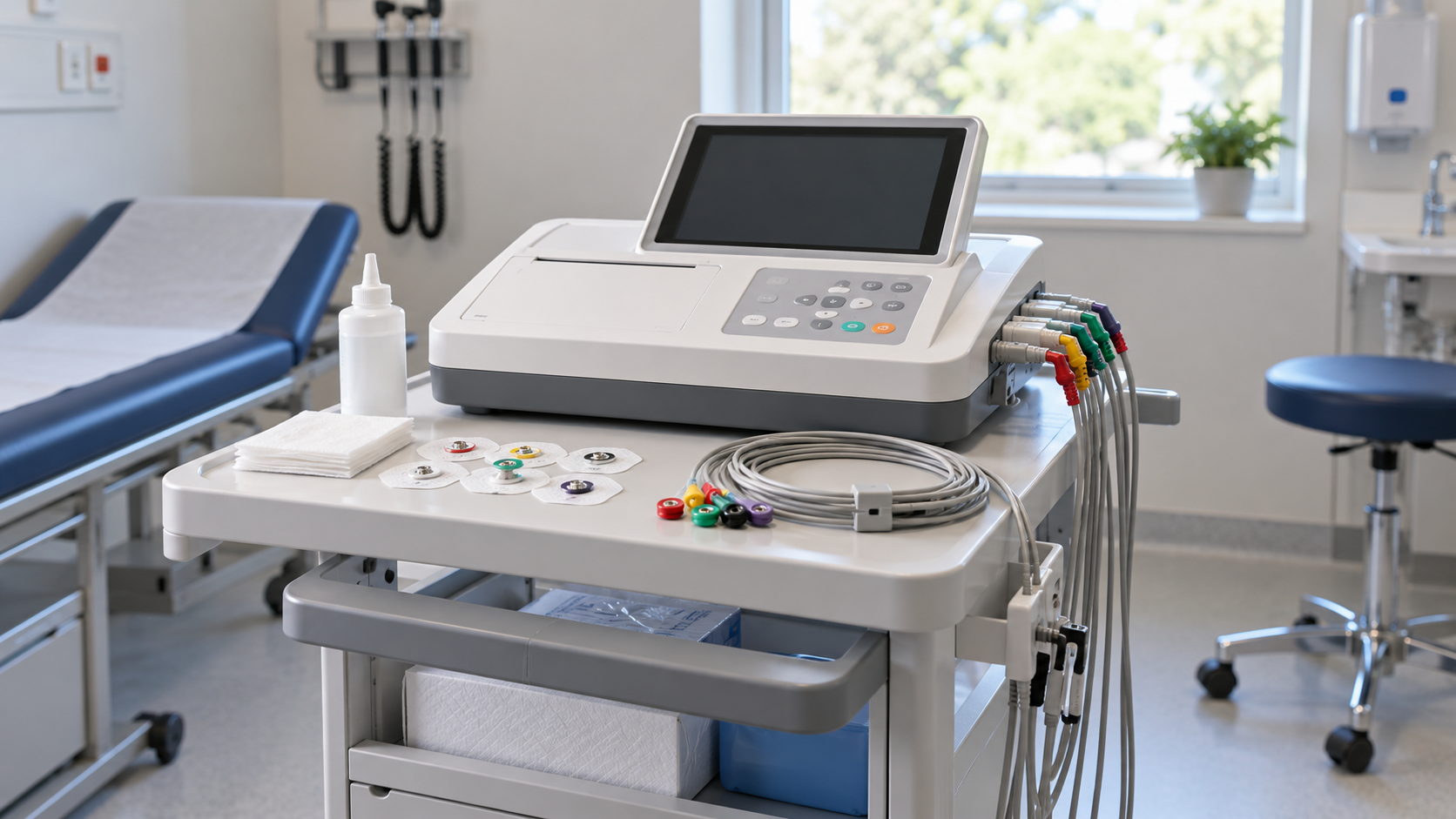
Electrocardiogram Explainer
An electrocardiogram records electrical signals produced as the heart beats. It is usually shortened to ECG or EKG; both names refer to the same kind of recording. Sensors placed on the skin detect these signals and a machine displays them as a tracing. The test helps a clinician examine heart rate, rhythm and the timing of electrical activity. It records what the heart is doing rather than sending electricity into it or providing a photograph of its structure.
A clinician may request an ECG for symptoms such as an irregular heartbeat, chest pain, breathlessness or dizziness, or to monitor an existing condition or certain medicines. The tracing can provide useful clues, but it is interpreted alongside symptoms, medical history and sometimes other tests. An ECG is not a universal screening test that every person needs simply for reassurance. Ask why it has been recommended and what question the team hopes the recording will help answer.
During a resting ECG, a healthcare professional attaches small sticky electrodes to the chest and limbs and connects them to the recorder. The person lies still while the machine records the heart’s activity. The recording is usually quick and painless, although removing the patches can cause brief discomfort or skin irritation. Some areas may need cleaning or shaving to help the electrodes adhere. Privacy should be respected, and a chaperone can be requested if desired.
A resting ECG captures only a short period. An intermittent rhythm problem may not happen during that recording, so a normal result does not necessarily explain symptoms that come and go. Portable monitors can record for longer, and exercise testing examines the heart under a different set of conditions. These tests answer related but different questions. The clinician chooses the method and recording duration according to the symptoms and suspected problem rather than assuming one tracing can reveal everything.
Wear clothing that makes the chest accessible and follow the clinic's preparation instructions. Skin products such as oils or lotion can interfere with sticky electrodes, so the team may advise avoiding them. Tell staff about medicines and supplements. Some treatments affect the tracing, but do not stop prescribed medicine unless the clinician specifically asks you to. A resting ECG generally needs little preparation beyond these practical steps.
Lying still helps produce a clear recording because movement or shivering can interfere with the signal. Tell the technician if you are uncomfortable or cannot maintain the requested position. The electrodes detect activity from the skin surface; they do not deliver an electric shock. Ask about any irritation from adhesives, and let the team know if there is a history of difficulty with sticky dressings.
A portable recorder allows assessment while someone goes about daily activities. Instructions differ between devices, including whether and how washing is possible. A symptom diary can help the team compare the recorded rhythm with what the person felt at the time. Follow directions for wearing, returning and operating the device. Longer monitoring can be useful even when an earlier clinic recording appeared normal.
An exercise ECG involves supervised activity, commonly on a treadmill or exercise bike, while heart activity is monitored. Preparation and appointment length differ from a resting test. Staff monitor the person and explain when to report symptoms or stop. Some people need a different stress-testing method if exercise is unsuitable. Do not use a home workout as a substitute for a medically supervised investigation.
The shape and timing of the ECG tracing can suggest rhythm abnormalities or other heart problems, but the findings need clinical interpretation. An abnormal result does not identify every detail of a diagnosis by itself. Additional blood tests, imaging or monitoring may be needed. Ask what the result means in your circumstances, whether a follow-up appointment is required and how you will receive the final explanation.
Do not delay emergency help for possible heart attack symptoms while waiting for an outpatient ECG or an online interpretation. New severe chest discomfort, collapse or major breathing difficulty needs urgent assessment. After a routine test, contact the referring team if results do not arrive within the expected time. The useful outcome is a clear plan based on symptoms and evidence, not simply possession of a printout or an automated label.
Explore more "Explainers"
Discover additional explainers across politics, science, business, technology, and other fields. Each explainer breaks down a complex idea into clear, everyday language—helping you better understand how major concepts, systems, and debates shape the world around us.