

On This Day in Health: July 12, 1957
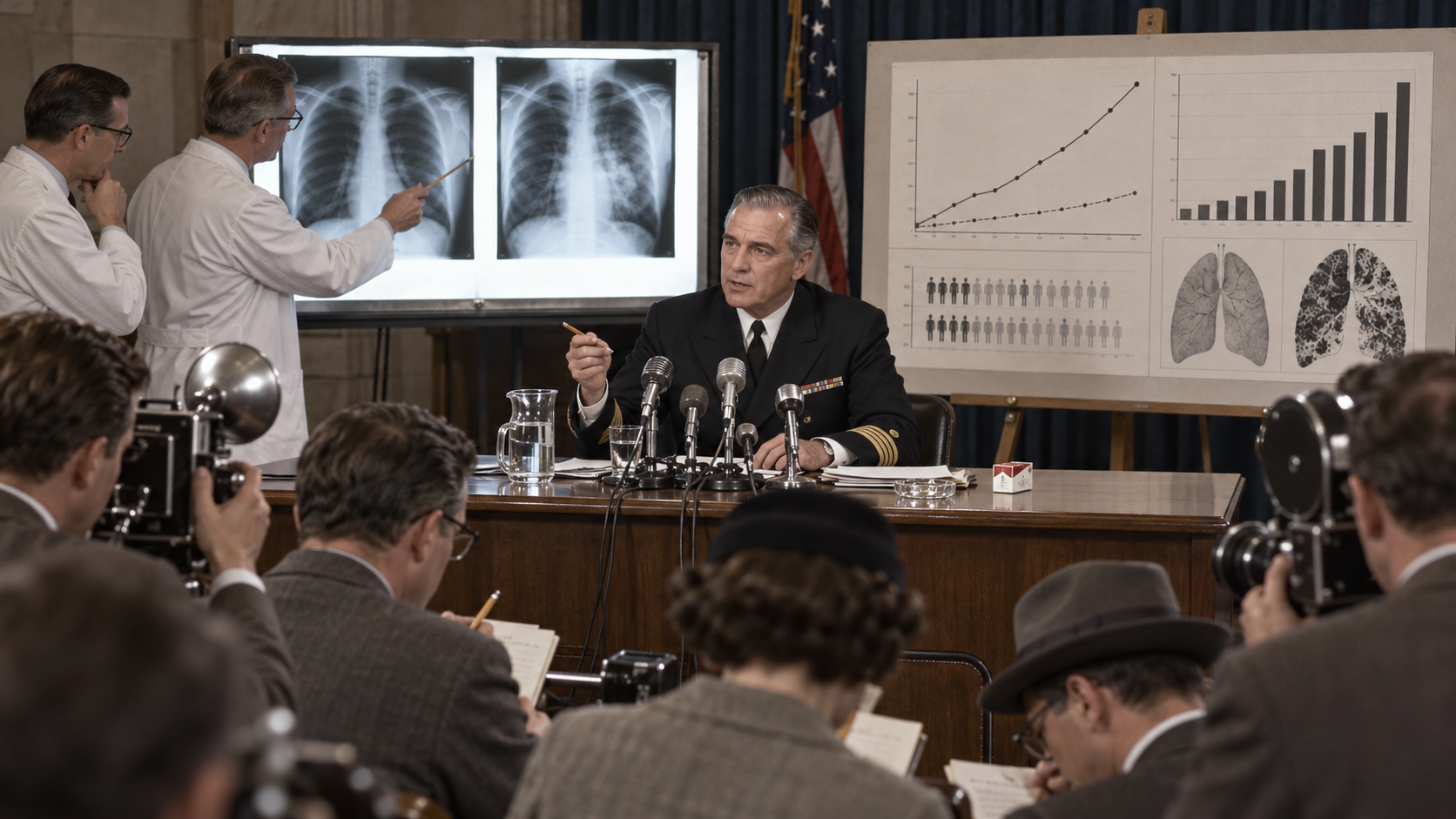
On July 12, 1957, the U.S. Public Health Service issued an official statement that an increasing and consistent body of evidence showed excessive cigarette smoking was one of the causative factors in lung cancer. Surgeon General Leroy E. Burney released the statement and began a nationwide effort to inform state health officers and the public. It was a significant change from the agency's more cautious 1954 position, which had acknowledged a statistical association while leaving the question of cause and effect open. The 1957 pronouncement made the federal government's assessment clearer years before the landmark 1964 Surgeon General's report.
The statement emerged from a growing body of epidemiologic and laboratory evidence. Case-control studies had found that people with lung cancer were far more likely to have smoked cigarettes, while long-term studies of physicians and other groups showed higher lung-cancer mortality among smokers. Researchers also observed a steep rise in lung-cancer deaths during decades when cigarette use had expanded. No single study settled every question, and scientists continued to investigate dose, duration, inhalation, tobacco composition, and other exposures. Taken together, however, the findings became difficult for public-health leaders to explain as coincidence or bias alone.
The announcement did not immediately transform smoking behavior or regulation. Cigarettes remained deeply embedded in advertising, entertainment, workplaces, military life, and social customs. Tobacco companies disputed causal conclusions and promoted uncertainty, while many physicians still smoked. Burney strengthened the Public Health Service position again in 1959, identifying cigarette smoking as the principal factor in the rise of lung cancer. The better-known 1964 report followed an extensive review by an independent advisory committee and addressed smoking's relationship to lung cancer and other disease. That later report carried wider institutional force, but it did not erase the importance of the 1957 step.
July 12 marks an early federal move from observing an association to warning about causation. Over time, evidence connected smoking with cardiovascular disease, chronic lung disease, cancers at multiple sites, pregnancy complications, and harms from secondhand smoke. Public policy later added package warnings, advertising restrictions, smoke-free spaces, taxation, and cessation support. Those measures developed unevenly and faced sustained opposition, but they helped reduce smoking in the United States. Burney's statement also illustrates how public-health judgments are often made: officials rarely wait for perfect certainty when converging evidence points to a serious, preventable danger. Clear communication can begin before every remaining research question has a final answer.
The Public Health Service had acknowledged a statistical link in 1954. Its July 12, 1957 statement went further by naming excessive cigarette smoking as a causative factor in lung cancer.
Surgeon General Leroy Burney paired the statement with communication to state health officials, bringing a scientific judgment into public-health practice.
The statement did not end scientific debate or tobacco-industry resistance, and it produced no immediate nationwide ban on advertising or smoking.
Evidence at the time was strongest for lung cancer; understanding of cardiovascular disease, chronic lung disease, secondhand smoke, and other harms expanded later.
Burney's 1957 and 1959 statements helped prepare the institutional path for the comprehensive 1964 Surgeon General's report on smoking and health.
The episode became an example of acting on converging epidemiologic evidence before every biological mechanism and long-term outcome was fully resolved.
Explore more of "On This Day ..."
Discover more events from the same date across news, politics, technology, sports, and other fields. Each link highlights significant moments that shaped history on different fronts.