

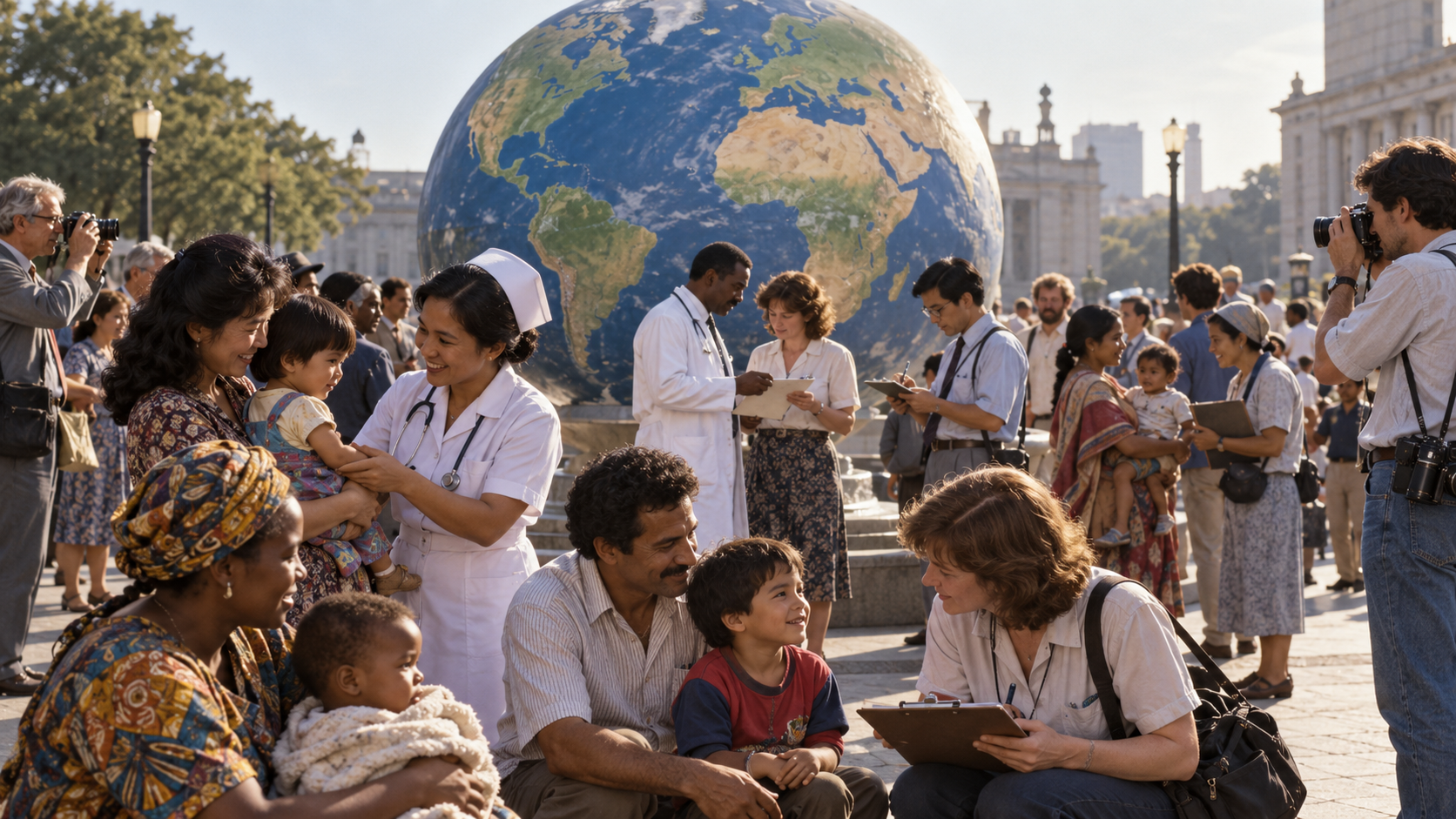
On This Day in Health: July 11, 1987
On July 11, 1987, the United Nations marked the Day of Five Billion, the approximate date when the world population reached five billion people. The milestone drew unusual public attention to demographic change and to the services that allow people to make informed decisions about family size and health. The United Nations Population Fund, the UN agency for sexual and reproductive health, later identified the day as the inspiration for World Population Day. That annual observance continues to connect population trends with maternal care, voluntary family planning, education, gender equality, and the rights of young people.
Five billion was an estimate rather than a literal count of every person or the identification of one certain fifth-billionth baby. Demographers combined censuses, birth and death registration, surveys, and statistical models to estimate when the threshold was crossed. The world had reached four billion only in the 1970s, reflecting the combination of falling death rates, longer lives, and still-high birth rates in many regions. Improvements in vaccines, sanitation, nutrition, and treatment helped more children survive and more adults live longer. Those gains were major public-health achievements, even as rapid growth placed pressure on housing, schools, clinics, food systems, and clean water in places where resources were already limited.
Population policy has a difficult history, so the health meaning of the milestone cannot be reduced to a campaign for fewer births. Coercive sterilization, discriminatory migration policies, and targets imposed without consent have harmed communities in several countries. A rights-based approach instead emphasizes access to accurate information, contraception, safe pregnancy and childbirth care, and the freedom to decide whether and when to have children. It also recognizes that fertility patterns reflect education, income, infant survival, housing, work, and social expectations. A large population is not itself a diagnosis, and global totals can hide major differences between countries that are growing rapidly and those facing aging or decline.
The Day of Five Billion helped create a recurring moment for discussing those differences. World Population Day now highlights reproductive autonomy and the health needs of women, adolescents, migrants, and rapidly urbanizing communities. Since 1987, the global population has continued to grow while the average rate of growth has slowed, and many societies have entered new debates about aging, caregiving, and labor. July 11 therefore marks both a statistical threshold and a shift in public conversation. Its lasting value lies in asking how demographic change affects access to health, dignity, and opportunity, while keeping individual rights at the center of policy.
The Day of Five Billion was based on demographic estimates, not a complete head count or a precisely identifiable birth. July 11 served as a public marker for a gradual global change.
UNFPA links population work with sexual and reproductive health, safe childbirth, family planning, and the ability of young people to fulfill their potential.
The milestone focused attention on the speed of population growth and on the capacity of health, education, housing, water, and food systems to serve expanding communities.
Population figures can be misused when policy ignores consent. Ethical programs protect reproductive choice and avoid quotas, coercion, or discrimination.
Interest generated by the 1987 milestone helped establish World Population Day as an annual observance on July 11.
Later demographic challenges include both continued growth in some regions and population aging or decline in others, requiring different health and social responses.
Explore more of "On This Day ..."
Discover more events from the same date across news, politics, technology, sports, and other fields. Each link highlights significant moments that shaped history on different fronts.