

Home Composting Explainer
Home composting turns selected food scraps and yard materials into a dark, crumbly soil amendment through biological decomposition. Bacteria, fungi, and other organisms feed on the material, breaking complex plant tissues into simpler compounds while releasing heat, water vapor, and carbon dioxide. The process is not the same as letting garbage rot in an airtight container. A managed compost pile supplies a useful mixture of carbon-rich material, nitrogen-rich material, moisture, and oxygen. When those conditions remain reasonably balanced, decomposition proceeds faster and with fewer odors, pests, and soggy pockets.
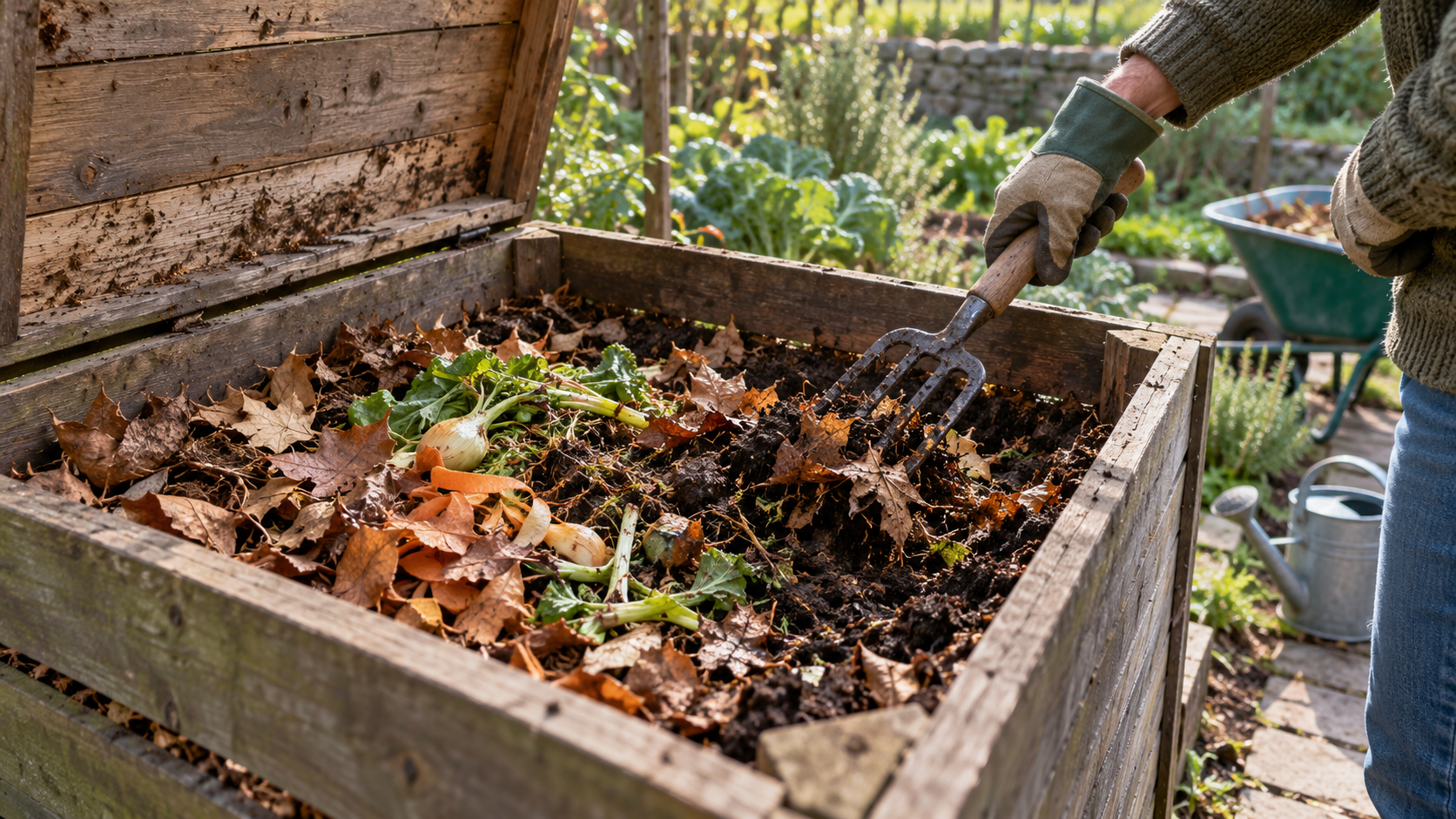
Composters often call dry, woody, or papery ingredients “browns” because they provide carbon and structure. Fallen leaves, shredded uncoated cardboard, small twigs, and dry plant stalks are common examples. Fresh grass, fruit and vegetable scraps, and coffee grounds are “greens” that provide more nitrogen and moisture. The labels describe function rather than literal color. A practical pile alternates or mixes several volumes of loose browns with a smaller amount of greens, covering fresh food scraps in the center. Exact ratios are less important for a household bin than maintaining a mixture that stays porous instead of matted or waterlogged.
Microbes need water, but too much water fills the air spaces they also need. Material should feel like a wrung-out sponge: damp throughout without dripping when squeezed. A lid can keep out heavy rain, while added dry leaves can absorb excess moisture. Turning the pile with a fork or compost aerator redistributes moisture and introduces oxygen. Passive piles can still decompose, but they usually work more slowly. Chopping bulky ingredients increases surface area. A larger, well-built pile may heat noticeably as organisms work, although a small backyard bin can make useful compost without reaching the high temperatures of a carefully managed municipal system.
Ingredient choices matter. Vegetable and fruit trimmings, eggshells, coffee grounds, tea without plastic, untreated yard debris, and many plain paper products are common home-compost inputs. Meat, fish, dairy, grease, and large amounts of cooked food can attract animals and create odor in a basic open pile. Pet waste may contain pathogens and should not be added to compost intended for food gardens. Diseased plants, invasive weeds with viable seeds, glossy paper, treated wood, and products labeled compostable may require conditions a home pile cannot achieve. Local programs can also have different rules from backyard composting.
The pile gives clues when the balance is off. A rotten or sour odor usually points to low oxygen or excess moisture; mixing in dry browns and turning can help. A pile that looks unchanged for months may be too dry, too cold, too woody, or short of nitrogen. Flies around exposed scraps are reduced by burying them beneath finished compost or browns and using a fitted lid. Rodent-resistant bins, secure placement, and avoiding animal products are more reliable than trying to chase pests away later. Compost should not be used until recognizable inputs have mostly disappeared and the material smells earthy rather than sharp.
Finished compost improves soil structure and water management, but it is not identical to potting soil or a concentrated fertilizer. It is commonly mixed into garden soil, applied as a surface amendment, or used in modest amounts in planting mixes suited to the crop. Screening can separate unfinished sticks, which return to the active pile. Home composting does not eliminate the need to prevent food waste: edible food has already consumed land, water, labor, and energy. The most useful hierarchy is to buy and prepare realistic quantities, donate or reuse suitable food, then compost unavoidable scraps and yard material so their nutrients return to soil.
Composting relies on decomposers supplied with carbon-rich browns, nitrogen-rich greens, moisture, and oxygen. Key terms include decomposition, browns, greens, aeration, moisture, microbes, curing, and soil amendment.
The mixture should be damp like a wrung-out sponge and loose enough to hold air. Cover fresh scraps with browns, turn compacted material, and add dry leaves if the pile becomes wet or smelly.
No. Some certified compostable products require sustained industrial conditions. Meat, dairy, pet waste, treated wood, diseased plants, and other problematic materials may also be unsuitable for a basic backyard pile.
Explore more "Explainers"
Discover additional explainers across politics, science, business, technology, and other fields. Each explainer breaks down a complex idea into clear, everyday language—helping you better understand how major concepts, systems, and debates shape the world around us.