

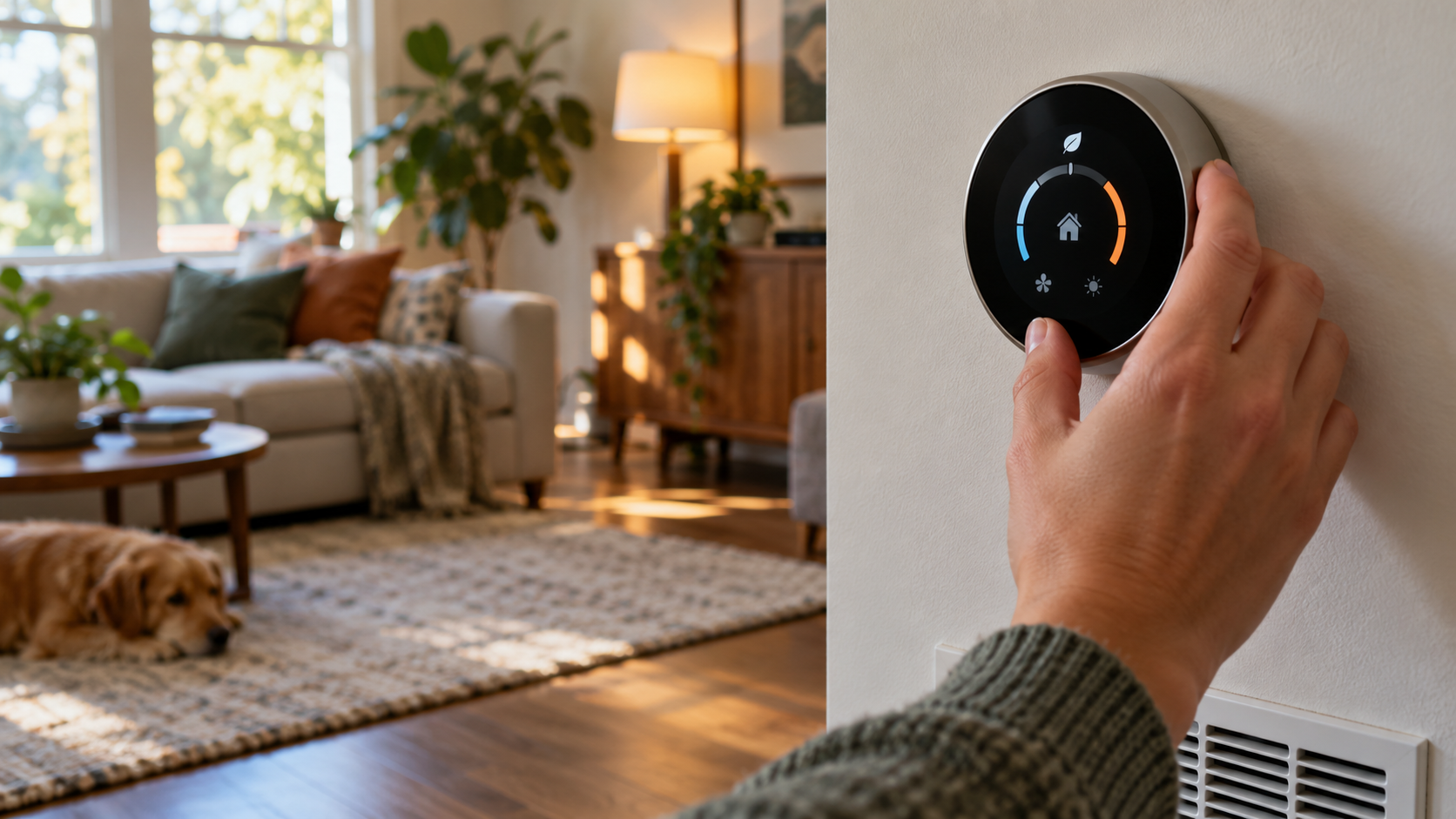
Home Thermostat Explainer
A thermostat controls home temperature by comparing a sensor reading with a chosen setpoint and signaling heating or cooling equipment when the two differ enough. In a basic system, room temperature falling below the heating target closes a low-voltage control circuit and starts the furnace, boiler, or heat pump. When the room reaches the upper edge of the control range, the signal stops. Cooling uses the opposite direction. The small gap between start and stop thresholds prevents equipment from switching every second when the measured temperature hovers near the setpoint.
Older mechanical thermostats used bimetal coils, switches, or sealed bulbs that changed shape with temperature. Electronic models use sensors such as thermistors, whose electrical properties vary predictably. The display shows a rounded value, but the controller may use finer internal measurements, filtering, and timing rules. The thermostat does not usually push warm or cold air itself; it sends calls to equipment and, depending on the system, controls a fan, compressor stages, valves, pumps, or auxiliary heat. More advanced communicating systems exchange digital information and can request a particular output level.
Placement determines whether the measured temperature represents the occupied space. Direct sunlight, a drafty exterior door, a kitchen appliance, a supply register, or an unconditioned wall cavity can bias the sensor. A thermostat in a central interior location with normal air circulation generally provides a more useful reference. Large homes may use zones, each with its own sensor and damper or valve, while remote sensors can average selected rooms. Closing doors or blocking return air can still create imbalances the thermostat cannot see or solve by itself.
Programmable schedules change setpoints automatically for sleep, work, and return periods. Smart thermostats may add occupancy detection, weather data, remote control, energy reports, or learning features. These functions do not repeal building physics: savings depend on the size and duration of setbacks, local weather, equipment type, insulation, and whether the schedule matches real behavior. Some controllers begin recovery early so the house reaches the target at the scheduled time. Heat pumps may require carefully configured staging so a large change does not unnecessarily activate high-cost resistance backup.
Frequent short cycles can signal an oversized system, poor sensor location, clogged filter, equipment fault, wiring problem, or an overly narrow control setting. A thermostat cannot correct refrigerant charge, combustion safety, inadequate ductwork, or a weak building envelope. Battery warnings and loose low-voltage connections can cause intermittent behavior, but opening unfamiliar equipment creates shock and damage risks. Homeowners can usually replace batteries, confirm mode and schedule, keep vents clear, and check a user-serviceable filter; wiring and system configuration are better handled with model instructions or qualified service.
The setpoint is a request, not a speed control on most systems. Setting 85 degrees typically does not make a conventional furnace warm the house faster than setting 70; it only keeps the call active longer. Likewise, a cooling setpoint far below normal can run equipment continuously without overcoming an undersized system or open window. Effective control comes from a realistic schedule, representative sensor location, correct equipment configuration, and steady maintenance. The thermostat is a small decision point linking human comfort preferences to the much larger heating and cooling system.
A thermostat senses room temperature, compares it with a setpoint, and calls for heating or cooling within a small control range. Key terms include sensor, setpoint, deadband, call, stage, zone, schedule, recovery, and auxiliary heat.
The sensor should represent normal occupied air. Sunlight, drafts, supply registers, kitchens, and unconditioned wall cavities can make the reading warmer or cooler than the rooms people use.
Usually not. Conventional equipment runs at its available output while a call is active. An extreme setting mainly extends runtime and can overshoot comfort or trigger inefficient backup stages.
Explore more "Explainers"
Discover additional explainers across politics, science, business, technology, and other fields. Each explainer breaks down a complex idea into clear, everyday language—helping you better understand how major concepts, systems, and debates shape the world around us.