

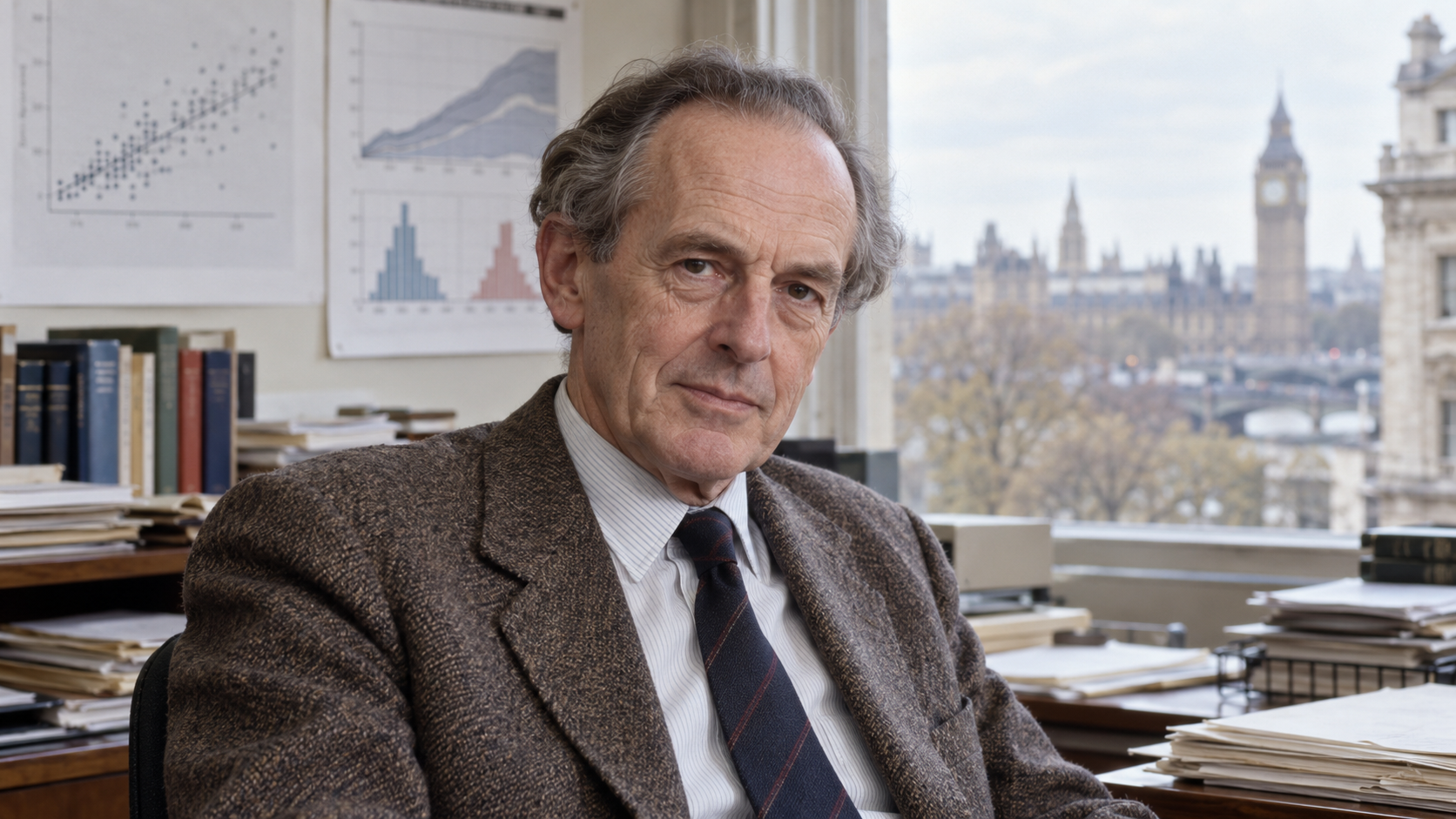
“The primary determinants of disease are mainly economic and social, and therefore its remedies must also be economic and social.”
Geoffrey Rose made this argument in his work on population strategy, most fully associated with The Strategy of Preventive Medicine. The epidemiologist distinguished the causes of individual cases from the causes of rates within populations. A clinician may ask why one person developed high blood pressure while a neighbor did not; population health also asks why the whole distribution of blood pressure differs across places or over time. Rose’s sentence points toward income, work, housing, food systems, education, and other shared conditions that shape exposure and opportunity before anyone enters a clinic. If those conditions help produce the pattern of disease, he reasoned, prevention cannot rely only on identifying high-risk individuals and asking them to change. Rose also distinguished a high-risk strategy from a population strategy, arguing that each answers a different part of prevention and that neither should automatically displace the other.
The claim is broad and should not be read as denying biology, infection, chance, or personal agency. Economic and social forces operate through physical environments, behavior, stress, access, and many other pathways, while individual treatment remains essential for people who are ill. Rose’s distinction is about the level at which a cause and remedy are sought. A risk-factor program aimed only at people above a threshold can help them while leaving the population distribution almost unchanged. A policy that reduces a common exposure may offer each person a modest benefit but prevent many cases across millions of people. That population benefit can be hard to notice because no single individual can know with certainty that a policy prevented their illness. A broad shift may change the social norm surrounding an exposure, while targeted support can protect people facing an especially high probability of harm.
Rose’s sentence remains useful for evaluating prevention proposals. Does an intervention make the healthy option realistically available, or does it add another instruction to people whose circumstances limit their choices? Does it lower a harmful exposure broadly while protecting groups that face greater risk? Economic and social remedies can include safer work, clean air, reliable transport, income security, affordable housing, and access to primary care, depending on the evidence for a particular problem. Such measures require public judgment and can carry tradeoffs; population language should never erase the preferences or rights of individuals. Rose’s contribution is to make the scale match the cause. When illness clusters through common conditions, prevention must improve the conditions as well as help the people already carrying their consequences. Evaluation should look for benefits, unintended burdens, and distribution, because a policy that improves the average can still leave the highest-risk communities behind.
Individual care asks why one person became ill; population health asks why whole groups show different levels of risk.
Both questions matter, but they can point to different kinds of action.
A modest reduction in a common exposure can prevent many cases when it reaches a large population.
The benefit is often invisible to any one person even when it is substantial in aggregate.
Socially patterned risks may require changes in work, housing, transport, environment, income, or access.
Clinical treatment remains necessary while prevention reduces the conditions that keep generating illness.
Explore more "Quotes of The Day"
Discover more notable quotes from influential voices across politics, science, business, technology, sports, and culture. Each quote offers insight into how ideas, beliefs, and decisions shape the world around us.