

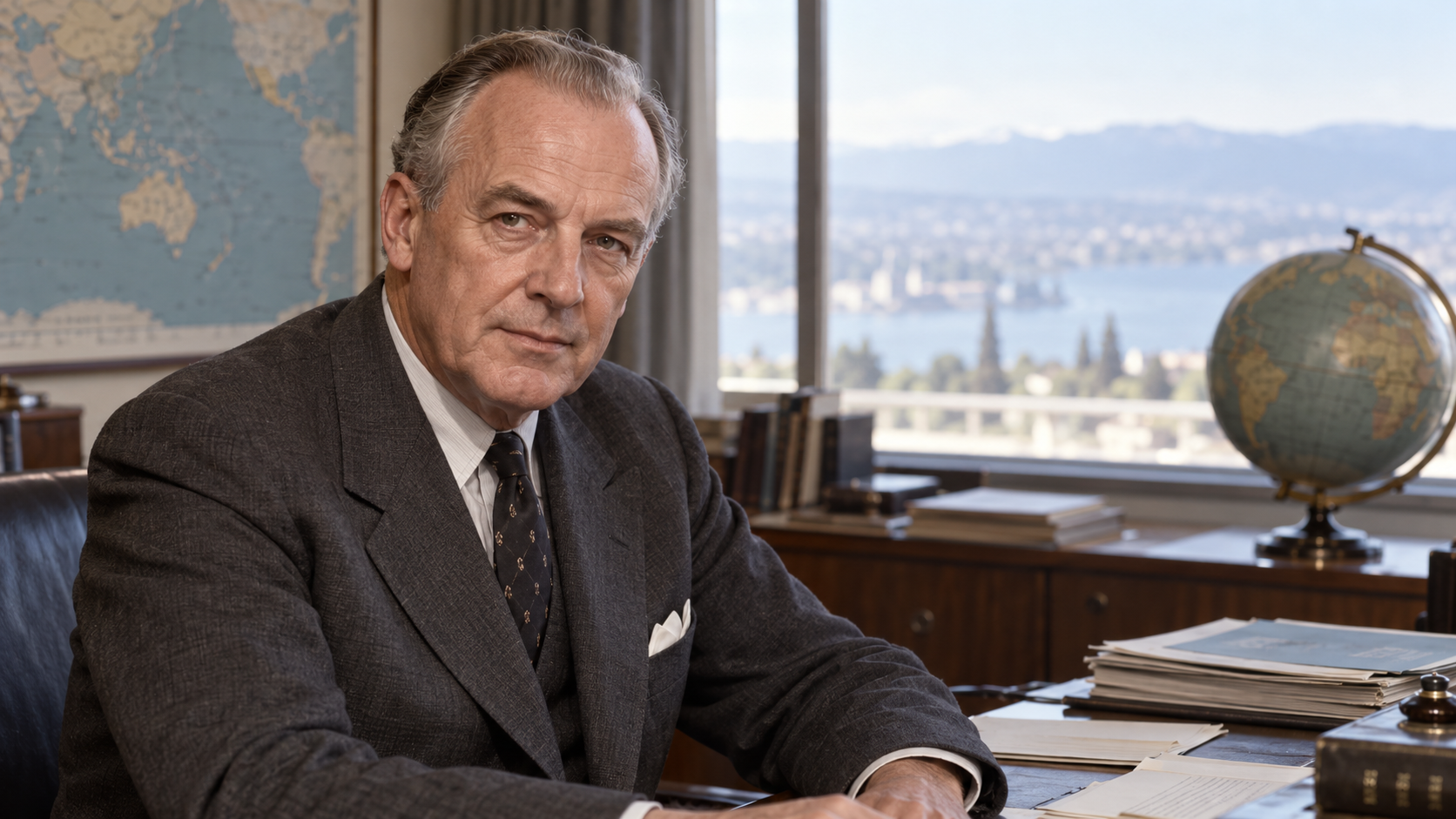
“Without mental health there can be no true physical health.”
Brock Chisholm, the first person to lead the World Health Organization, wrote this sentence in the early years of international mental-health policy. A physician and psychiatrist, he argued that health could not be understood as a sound body with the mind left outside the frame. The wording was striking in a period when many mental illnesses were hidden, stigmatized, or confined to institutions with little therapeutic hope. “True physical health” did not mean that every bodily symptom has a psychological origin. It meant that the capacities people use to live, relate, work, and recover are shaped by mental and physical processes together. A health organization that ignores either side misunderstands the whole person. Chisholm’s early WHO role placed the claim within a global institution whose constitution had already defined health in physical, mental, and social terms.
The sentence can be overextended if it turns into a demand for perfect emotional well-being before someone is considered healthy. Mental distress is part of many ordinary responses to loss, danger, illness, and change, while diagnosable conditions vary in course and severity. Physical illness can affect mood and cognition; mental illness can alter sleep, movement, substance use, nutrition, and access to care; social conditions influence both. These relationships are real without making every correlation a simple cause. Integrated care should therefore add careful assessment and support, not replace biological investigation with vague psychological explanations. The operational challenge was to move that comprehensive ideal into services at a time when specialist resources were scarce and institutional models dominated.
Chisholm’s line remains a useful test for service design. Can someone receiving treatment for diabetes, cancer, pregnancy, or heart disease also obtain mental-health support without navigating a separate maze? Do psychiatric settings attend to physical symptoms and preventive care? Are primary-care teams prepared to recognize distress, respond to crisis, and refer appropriately? Integration also requires privacy, continuity, and payment systems that allow professionals to communicate. None of this makes every clinician a specialist in everything. It builds connections so that people are not forced to divide their lives according to administrative boundaries. The quote’s force lies in refusing that split: health services should recognize the traffic in both directions between body, mind, relationships, and environment. Contemporary integration can learn from that gap by pairing ambitious definitions with referral capacity, trained staff, community-based options, and evaluation of whether people actually receive coordinated help. Parity on paper matters only when it changes real access, timeliness, and quality.
Chisholm placed mental health within the core mission of health rather than treating it as a separate concern.
His statement challenged institutional stigma and the narrow definition of health common in his era.
Mind and body interact, but not every physical symptom should be explained psychologically.
Good integration widens assessment while preserving evidence, specialist skill, and appropriate medical investigation.
Primary, specialty, and psychiatric care should share pathways for physical symptoms, distress, prevention, and crisis.
People benefit when continuity replaces the burden of navigating disconnected systems alone.
Explore more "Quotes of The Day"
Discover more notable quotes from influential voices across politics, science, business, technology, sports, and culture. Each quote offers insight into how ideas, beliefs, and decisions shape the world around us.