

Food Fermentation Explainer
Food fermentation uses the activity of microorganisms to transform sugars and other food components. In many vegetable ferments, lactic-acid bacteria convert natural sugars into lactic acid. As acidity increases, the environment becomes less favorable to many spoilage and disease-causing organisms while the food develops sour flavor, aroma, and new texture. Other traditions rely on yeasts, molds, or combinations of microbes to produce alcohol, carbon dioxide, acids, or enzymes. Preservation is therefore an ecological process: the recipe creates conditions that favor useful organisms and limit competitors.
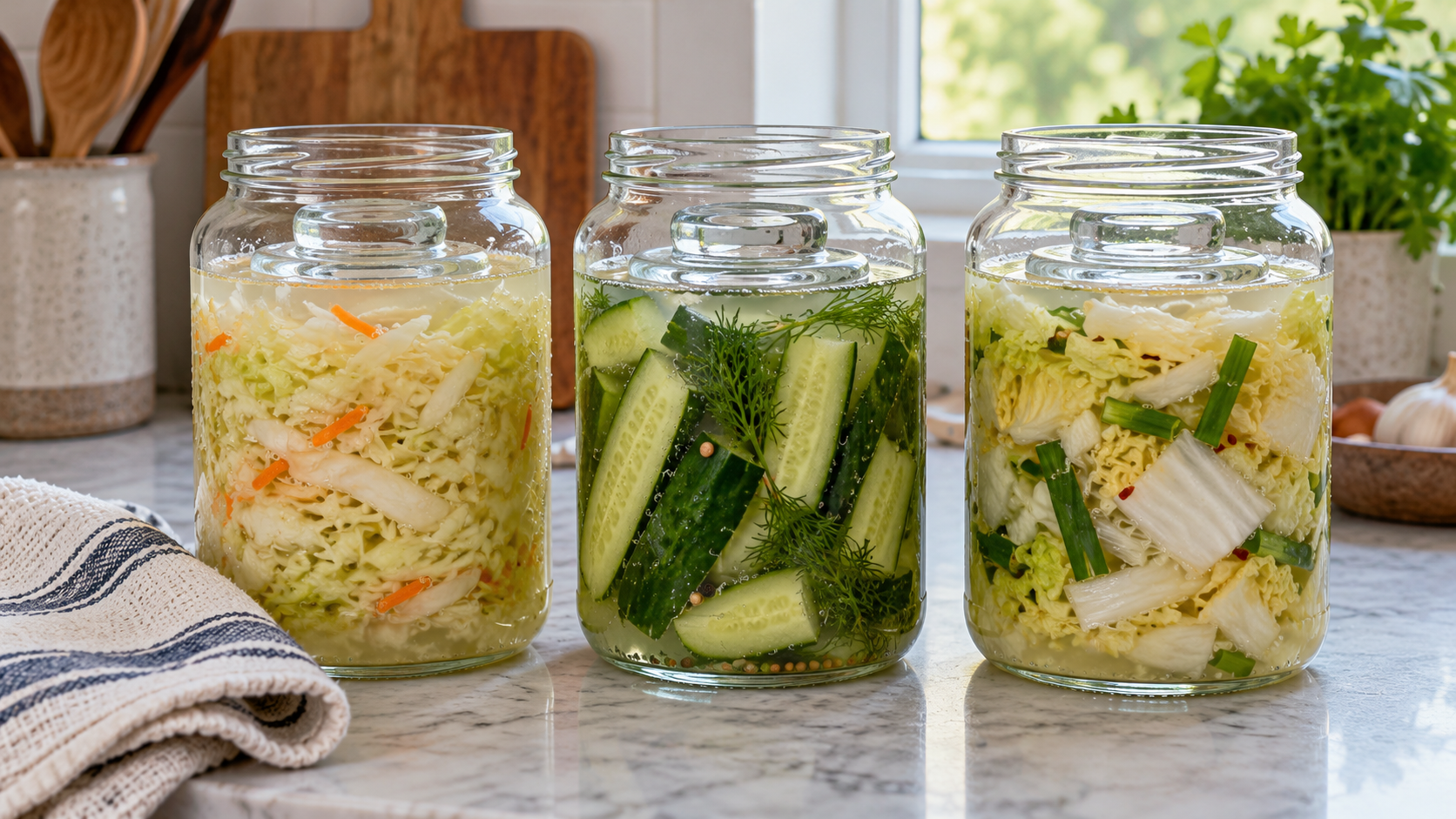
Salt plays several roles in fermented vegetables. It draws water from plant cells to form brine, slows many undesirable organisms, and gives salt-tolerant lactic-acid bacteria time to become dominant. The tested salt proportion matters; cutting it casually can change which microbes grow and how quickly acidity develops. Vegetables are packed beneath brine because exposed surfaces receive oxygen and are more prone to molds and yeasts. A clean weight, jar, or crock keeps solids submerged, while a cover allows fermentation gases to escape without inviting insects or excessive contamination.
Temperature affects both speed and flavor. A moderate, stable room temperature typically supports predictable lactic fermentation, while excessive heat can soften vegetables and encourage unwanted organisms. Cool conditions slow the process. Bubbles, a pleasantly sour smell, and a gradually more acidic taste can be normal signs, but recipes define time and handling more reliably than appearance alone. For shelf-stable canned products, fermentation is followed by a tested heat-processing step. Refrigeration slows further change but does not turn an improvised recipe into a validated preservation method.
Fermented food is not simply food left to spoil. Controlled recipes specify ingredients, concentrations, container practices, and often acidity or processing steps. Clean hands and equipment reduce the initial load of competing organisms, but equipment does not have to be sterile for traditional lactic fermentation. The food itself should be sound and fresh. Soft rot, insects, soil, and damaged produce create a poor starting point. Water quality and salt type can also affect a brine; additives in some salts may cloud it or change texture even when safety is not affected.
Warning signs deserve conservative judgment. Putrid odor, slimy texture where the recipe does not expect it, colorful or fuzzy mold, or evidence that the food remained above the brine can indicate failure. Skimming a suspicious surface does not guarantee that the material below is safe. A trusted preservation source should guide the decision, and doubtful batches should be discarded without tasting. Fermentation should never be used to rescue spoiled food. Low-acid foods, meat ferments, and unfamiliar cultural methods require specialized, validated procedures beyond a basic jar of salted vegetables.
Successful fermentation produces more than a longer storage window. Microbes can create distinctive flavors, soften or firm textures, and make ingredients useful in new dishes. The result continues to change until chilling, cooking, drying, or another control slows the organisms. That living quality is part of the appeal and the reason process control matters. For a home fermenter, the safest path is modest: start with a tested recipe from a reliable preservation program, measure rather than guess, keep vegetables submerged, observe the recommended temperature, and use the specified refrigerated or canned storage method.
Fermentation preserves food by favoring microbes that produce acid, alcohol, or other inhibitory compounds. Key terms include lactic-acid bacteria, brine, salt concentration, acidity, anaerobic conditions, submersion, fermentation temperature, and tested recipe.
Submersion limits oxygen at the food surface and keeps the environment consistent for lactic-acid bacteria. Exposed pieces are more vulnerable to molds, yeasts, discoloration, and drying.
Not safely without validated guidance. Salt concentration, ingredient proportions, temperature, and any later heat process work together. Use a tested recipe and discard a batch with putrid odor, slime, or suspicious mold.
Explore more "Explainers"
Discover additional explainers across politics, science, business, technology, and other fields. Each explainer breaks down a complex idea into clear, everyday language—helping you better understand how major concepts, systems, and debates shape the world around us.