

Home Water Filter Explainer
A home water filter improves tap water by passing it through material or a treatment process designed to reduce particular substances. A screen or sediment cartridge traps particles larger than its openings. Activated carbon adsorbs many compounds onto an enormous internal surface and can improve chlorine-related taste and odor. Ion-exchange media swap selected dissolved ions, while reverse-osmosis membranes use pressure to pass water through a barrier that rejects many dissolved contaminants. No single device removes everything, and a filter marketed for taste may not reduce lead, microbes, nitrate, or other health concerns.
The first step is to identify the water and the reason for treatment. A public water supplier provides a consumer confidence report describing regulated results and the source system. Private wells require owner-directed testing because conditions can change and no utility manages the building’s tap. Problems can also arise in household plumbing after water leaves the main. A laboratory result, utility notice, or local health guidance is more useful than color, taste, or a countertop sales demonstration. Clear water can contain contaminants, while harmless minerals can create visible scale.
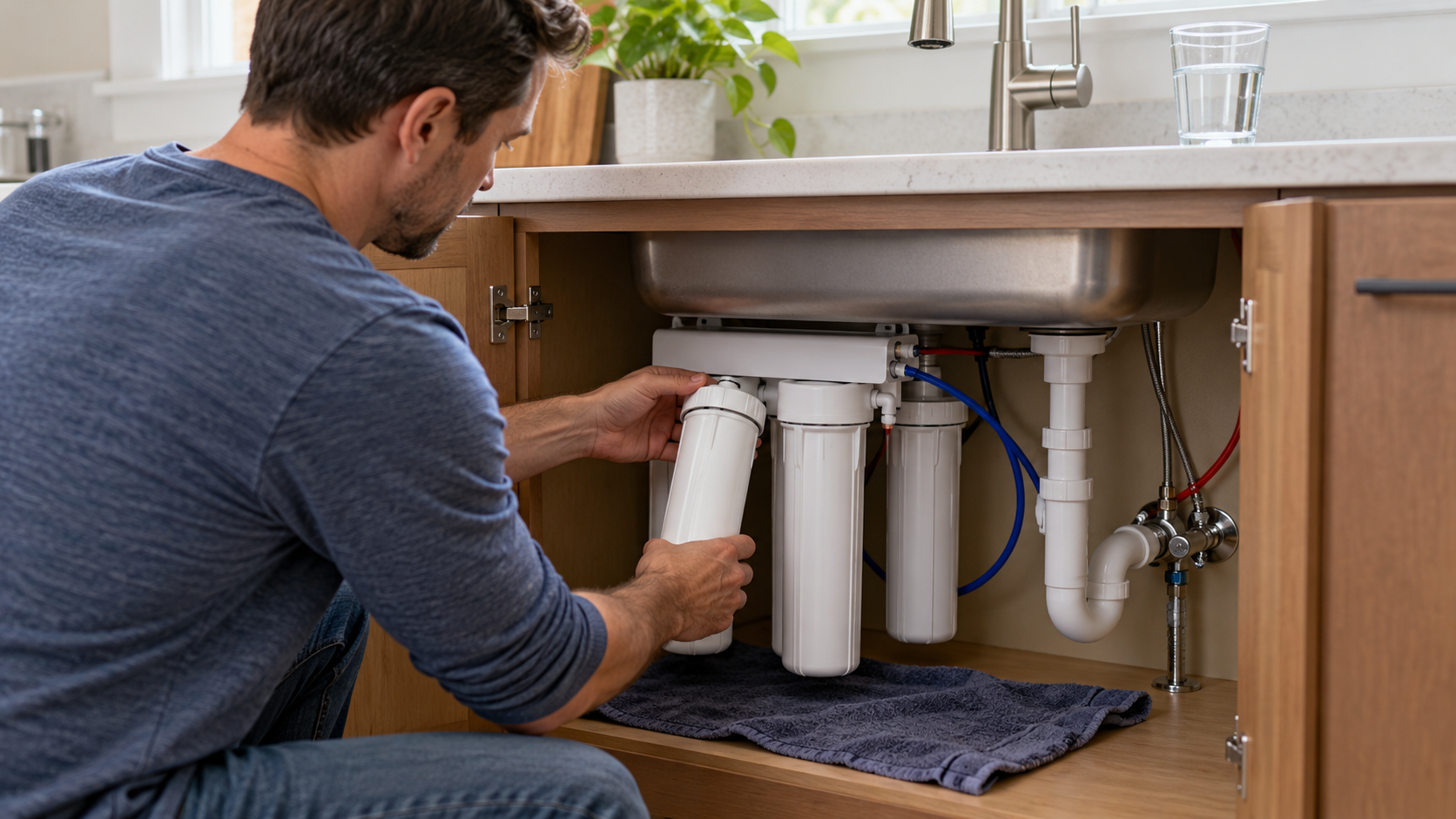
Filters are installed at different points. A pitcher, faucet attachment, or under-sink unit treats water at one tap and is called point of use. A whole-house or point-of-entry system treats water as it enters the building, but that broader plumbing role does not mean it removes more types of contaminants. Reverse osmosis usually produces a slower stream of treated water and a separate concentrate stream. Ultraviolet systems inactivate susceptible microorganisms only when water clarity, exposure, and equipment conditions are suitable; they do not remove particles or dissolved chemicals by themselves.
Independent certification links a model to defined performance claims. Standards may address material safety, structural integrity, aesthetic effects, or reduction of specific contaminants. The important wording is the exact substance and certified claim, not simply a seal or the phrase “tested to standards.” Capacity and flow conditions also matter. If lead is the concern, choose a device certified for lead reduction and use the correct replacement cartridge. If a boil-water advisory is in effect, an ordinary carbon filter does not replace the actions directed by health officials.
Maintenance is part of filtration. As media collect particles or adsorption sites fill, flow and contaminant reduction can decline. A wet, neglected cartridge can also support microbial growth. Replacement schedules are based on time, volume, or an indicator and should account for local water quality and use. Housings, pitchers, tanks, faucets, and refrigerator dispensers need cleaning according to instructions. After installation or replacement, flushing removes loose carbon fines and manufacturing residues. Bypassing an overdue cartridge is safer than assuming an exhausted filter still provides its original protection.
Treatment can create tradeoffs. Reverse osmosis wastes some feed water and may remove minerals along with targeted contaminants. Whole-house softeners change hardness ions but do not function as general contaminant filters. Improper installation can create leaks, pressure loss, cross-connections, or stagnant tubing. A home filter is best understood as a matched tool: define the concern, verify the water, select an independently certified reduction claim, install it correctly, and maintain it on schedule. Those steps turn a vague promise of “purity” into a measurable improvement at the tap.
A home filter uses physical barriers, adsorption, ion exchange, membranes, or other treatment to reduce specified contaminants. Key terms include sediment, activated carbon, adsorption, point of use, point of entry, reverse osmosis, certification, capacity, and cartridge life.
Start with a utility report or accredited water test, identify the specific concern, then choose a model independently certified for that exact reduction claim at the needed flow and capacity.
No. Media fill, clog, or lose treatment capacity. Replace cartridges, clean housings, flush new filters, and follow any boil-water or health advisory even when a household filter is installed.
Explore more "Explainers"
Discover additional explainers across politics, science, business, technology, and other fields. Each explainer breaks down a complex idea into clear, everyday language—helping you better understand how major concepts, systems, and debates shape the world around us.