

Refrigerator Cooling Explainer
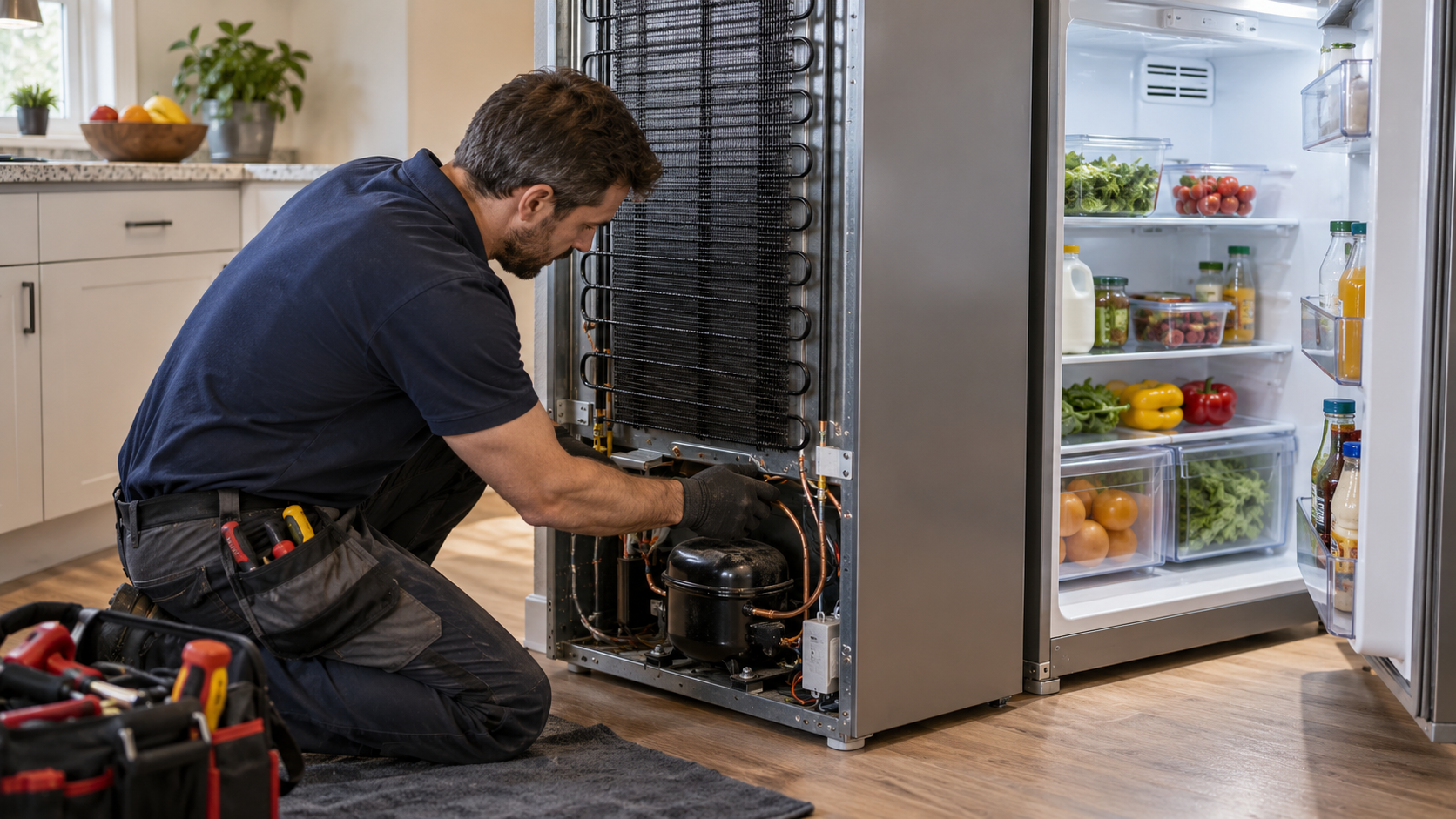
A refrigerator keeps food cold by moving heat from inside its insulated cabinet into the surrounding room. Refrigerant circulates through a closed loop. After an expansion device lowers its pressure, the refrigerant enters an evaporator coil cold enough to absorb heat from interior air and food. It boils into vapor as it takes in that energy. A compressor then raises the vapor’s pressure and temperature. In the condenser, the hot refrigerant releases heat to room air and becomes liquid again, ready to pass through the expansion device and repeat the cycle.
Fans and air passages distribute the effect. Many household refrigerators cool an evaporator hidden behind a freezer panel and use a fan to move cold air through the freezer and fresh-food compartments. Dampers or variable fans regulate how much reaches each section. Other designs use multiple evaporators. A thermostat or electronic sensor compares compartment temperature with its target and cycles or modulates the compressor and fans. The back, bottom, or sides can feel warm because the machine is rejecting both the heat removed from food and the electrical energy consumed by the compressor.
Insulation and door gaskets slow heat from returning. Every opening admits warmer, more humid room air; the moisture can condense or freeze on cold surfaces. A damaged or dirty gasket increases the load, while packages that prevent the door from closing create a direct leak. Food should not block interior vents, and there must be room for circulation around shelves. A full but not overpacked refrigerator often changes temperature more slowly than an empty one, yet a large pot of hot food still adds heat that the system must remove.
Frost-free models periodically warm the evaporator enough to melt accumulated frost, then drain the water to a pan where it evaporates. The compressor pauses or operating conditions change during this defrost cycle, so brief temperature movement is normal. Heavy recurring frost can point to door leakage, a defrost fault, or humid air entering. The condenser also needs to release heat; dust buildup on accessible coils or blocked ventilation around the appliance can increase energy use and temperature. Cleaning and clearance should follow the model instructions because coil locations and panels vary.
Food safety depends on actual compartment temperature, not the feel of a shelf or a decorative control number. A separate appliance thermometer helps verify that the refrigerator is at or below 40 degrees Fahrenheit and that the freezer is near 0 degrees Fahrenheit. Different areas can vary as doors open and cooling cycles run. Raw foods should be contained to prevent drips, leftovers cooled and stored promptly, and the door kept closed during an outage. Odor cannot establish that perishable food remained safe after warming.
A refrigerator does not create cold as a substance; it uses work to pump heat uphill from a cooler space to a warmer room. That is why ventilation, intact seals, correct charge, clean heat-transfer surfaces, and a functioning compressor all matter. Unusual clicking, continuous running, warm compartments, oily residue, or damaged refrigerant lines require professional diagnosis. Good everyday practice is simpler: set and verify safe temperatures, leave vents open, close the door fully, clean recommended areas, and avoid crowding the machine beyond its ability to circulate air.
A refrigerator’s refrigerant absorbs heat in an evaporator, the compressor raises its pressure, and the condenser releases the heat into the room. Key terms include evaporator, compressor, condenser, expansion device, refrigerant, gasket, defrost, and airflow.
The condenser releases heat removed from the cabinet plus the energy used by the compressor. Warm surfaces can be normal, but ventilation must remain clear so that heat can escape.
No. Control scales vary and temperatures cycle across the cabinet. Use an appliance thermometer to verify the fresh-food compartment stays at or below 40°F and the freezer near 0°F.
Explore more "Explainers"
Discover additional explainers across politics, science, business, technology, and other fields. Each explainer breaks down a complex idea into clear, everyday language—helping you better understand how major concepts, systems, and debates shape the world around us.