

Dog Crate Training Explainer
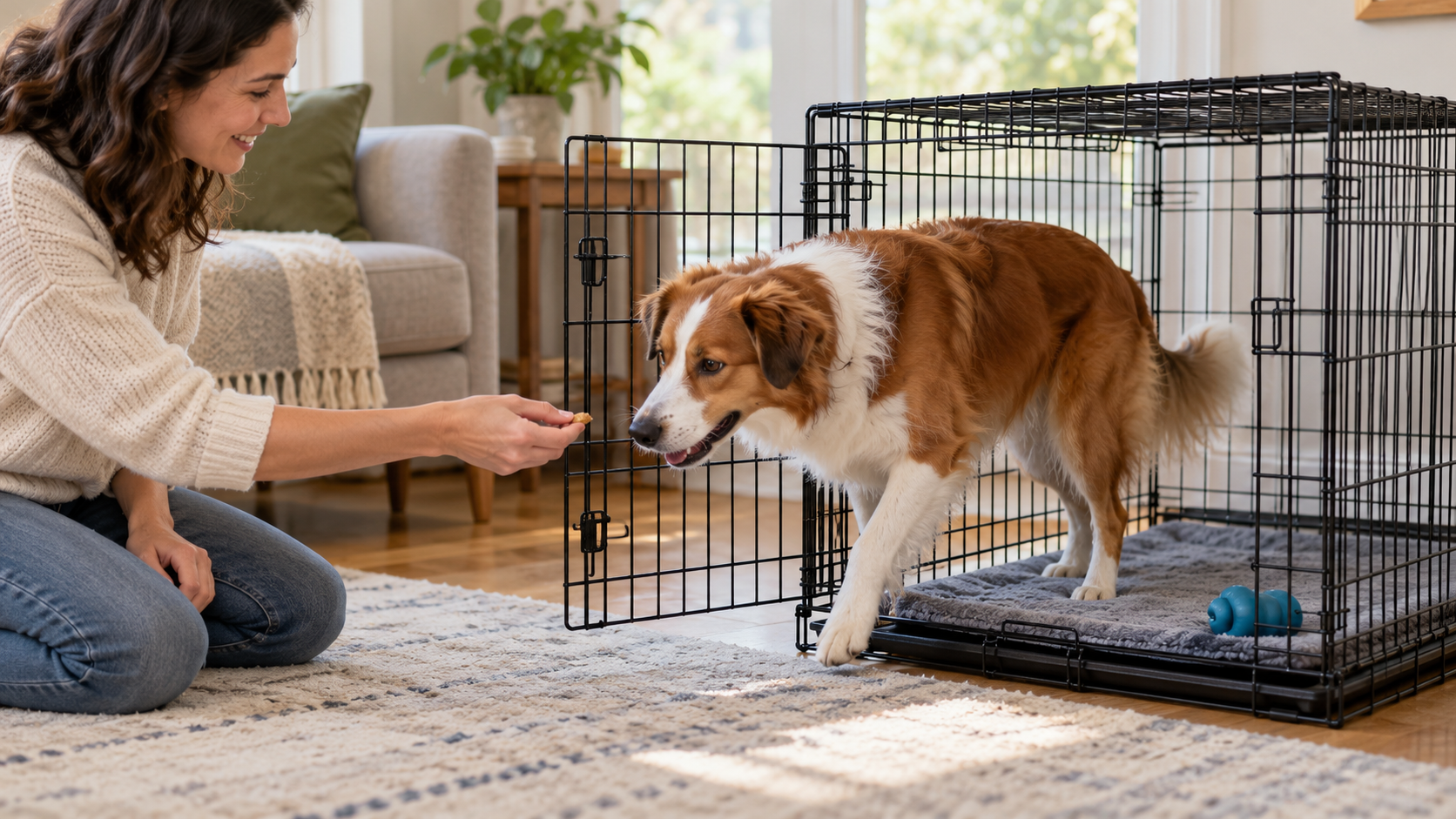
Crate training teaches a dog that a correctly sized enclosure is a predictable place to rest and travel safely. The learning comes from association: meals, treats, comfortable bedding, calm attention, and voluntary exploration make the space valuable. The door is initially left open so the dog can enter and leave. Once the dog chooses to remain briefly, the door can close for a few seconds while the person stays nearby, then reopen before anxiety grows. Duration and distance increase in small steps, with exercise and a toilet break provided first.
The crate should let the dog stand, turn around, lie comfortably, and stretch in a normal resting position. A very large enclosure can be divided for a growing puppy, while a cramped crate prevents comfortable movement and can overheat. Wire, plastic, and fabric crates have different ventilation, strength, visibility, and travel uses. Bedding must suit the dog; an animal that shreds and swallows fabric needs a safer surface. Collars and tags can catch on bars, so many trainers remove them during unsupervised crating after assessing the setting.
Short sessions establish the pattern. A cue such as “crate” is followed by a tossed treat or food toy, never by pushing or dragging. The dog eats or relaxes, the door closes briefly, and release happens during a calm moment. If whining begins, the handler considers whether the dog needs to eliminate, has been confined too long, or is frightened. Waiting for a brief pause can avoid teaching that ordinary protest always opens the door, but urgent physical needs and escalating panic should never be ignored.
Crating cannot replace exercise, social contact, training, or access to water and toileting. Puppies have limited bladder control, and older or ill dogs may need more frequent breaks. Long workdays require another arrangement such as a walker, sitter, safe room, or pen. The crate should not be used to punish unwanted behavior; doing so can poison the positive association. After a household member becomes angry, sending the dog into confinement can make the enclosure predict isolation and conflict rather than security.
Some dogs show separation distress that a crate worsens. Persistent escape attempts, bent bars, broken teeth or nails, heavy drooling, self-injury, frantic barking, or refusal of high-value food indicate more than mild adjustment. Leaving such a dog to “cry it out” can be dangerous. A veterinarian can rule out medical causes, and a qualified behavior professional can develop gradual alone-time training or recommend a safer room. Cameras can reveal whether the dog settles after a minute or becomes progressively more distressed when the person leaves.
A successfully trained dog may nap in an open crate, enter for travel, and tolerate necessary confinement during evacuation, veterinary care, or household repairs. The door does not need to remain closed whenever the dog rests, and many adult dogs earn free access to a safe room or home. The goal is not maximum confinement; it is calm flexibility. By pairing the crate with good experiences, progressing below the dog’s fear threshold, and meeting physical and social needs, the household builds a reliable routine without turning the enclosure into a shortcut for supervision.
Crate training pairs a suitable enclosure with rewards, voluntary entry, gradual door closure, and predictable exercise and toilet breaks. Key terms include positive association, duration, distance, release cue, safe confinement, enrichment, threshold, and separation distress.
Increase only while the dog remains relaxed. Add seconds or a few minutes, change one difficulty at a time, and practice both with the person nearby and briefly out of view.
Frantic escape attempts, self-injury, heavy drooling, persistent panic, or refusal of food require a different plan and professional help. A crate can worsen true separation distress.
Explore more "Explainers"
Discover additional explainers across politics, science, business, technology, and other fields. Each explainer breaks down a complex idea into clear, everyday language—helping you better understand how major concepts, systems, and debates shape the world around us.