

On This Day in Health: July 19, 1921
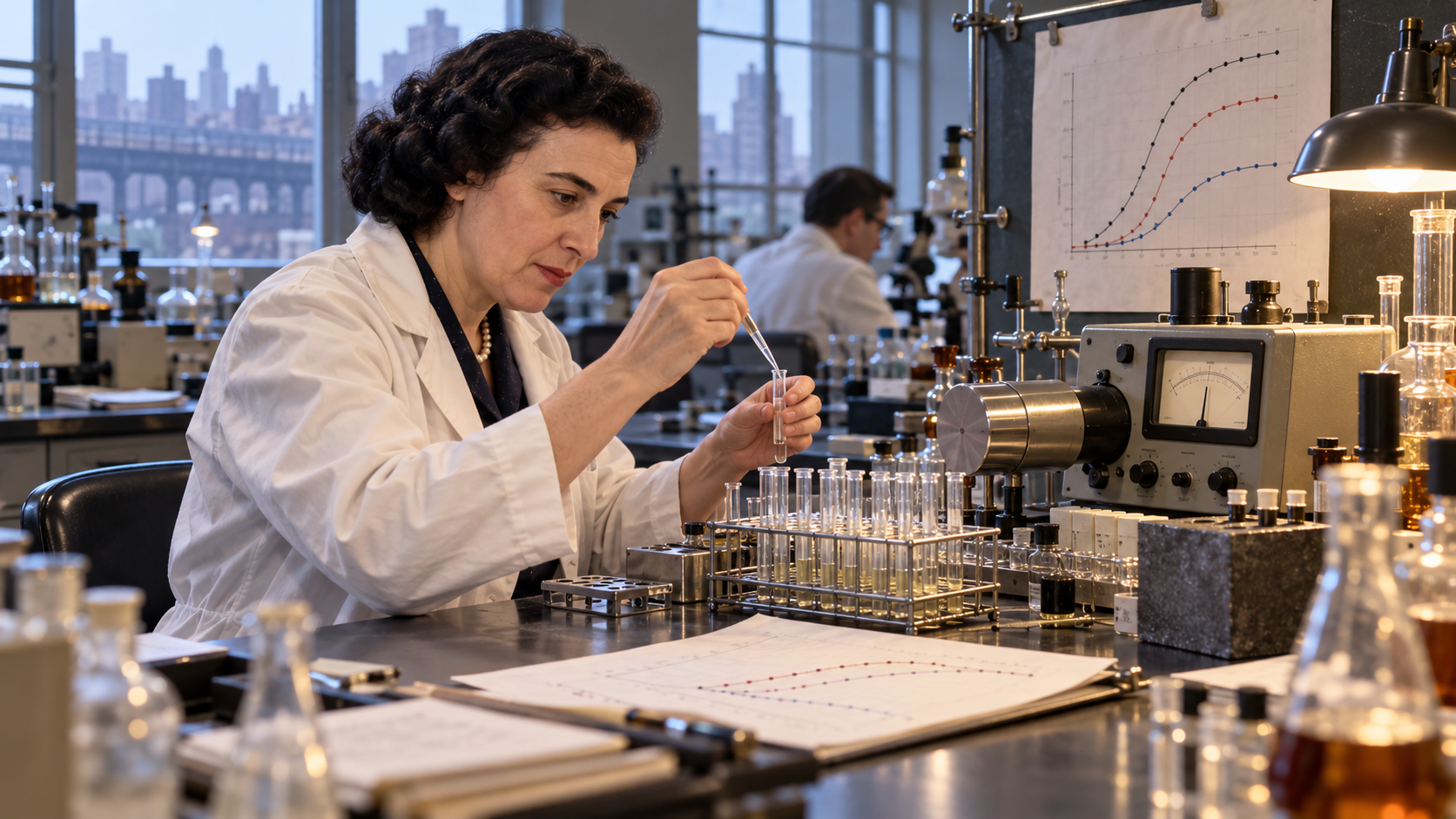
Rosalyn Sussman Yalow was born in New York City on July 19, 1921. She became a nuclear physicist and medical researcher whose work made it possible to measure extraordinarily small quantities of hormones and other substances in blood. At a time when women and Jewish students faced major barriers in science, Yalow graduated from Hunter College as its first female physics major and earned a doctorate in nuclear physics at the University of Illinois. She later established a radioisotope laboratory at the Bronx Veterans Administration Hospital, where her partnership with physician Solomon Berson reshaped endocrinology and laboratory medicine.
Yalow and Berson initially studied how the body handled insulin labeled with radioactive iodine. They found that people treated with animal insulin could form antibodies that bound the hormone, an observation many researchers doubted because insulin was thought too small to provoke that response. The pair turned the disputed finding into a measurement method. In radioimmunoassay, a known amount of radioactively labeled substance competes with the same unlabeled substance in a patient's sample for binding to an antibody. By measuring the labeled portion, researchers can calculate the concentration in the sample even when it is extremely low.
Their insulin assay, published in 1960, opened a new scale of biological measurement. Scientists adapted the method to growth hormone, thyroid hormones, reproductive hormones, vitamins, drugs, enzymes, viral markers, and many other targets. It supported more precise diagnosis and research in diabetes, thyroid disease, growth disorders, fertility, and infectious disease. The method required careful laboratory controls and the safe handling of radioactive materials; later immunoassays often replaced radioactivity with enzymes, fluorescence, or other signals. The central competitive-binding principle, however, became part of routine clinical testing around the world.
Yalow received half of the 1977 Nobel Prize in Physiology or Medicine for the development of radioimmunoassays of peptide hormones. Berson had died in 1972 and could not receive a Nobel Prize posthumously, so accounts of the achievement must retain his role. Their decision not to patent the method also encouraged broad, rapid scientific adoption and adaptation. July 19 marks the birth of a scientist who joined physics, immunology, and clinical questions to create a practical tool. Her career also demonstrates that measurement can change medicine as profoundly as a new treatment: once clinicians can reliably detect tiny biological signals, they can define disease more precisely, test hypotheses, monitor therapy, and see processes that were previously invisible.
Rosalyn Yalow was born on July 19, 1921, in New York City. She trained in nuclear physics and built her research career at the Bronx VA hospital.
She and physician Solomon Berson combined radioactive tracers with antibody binding to measure substances present at extremely low concentrations.
Their early conclusion that patients could form antibodies to animal insulin met skepticism, and their work required careful evidence before gaining acceptance.
Radioimmunoassay used radioactive material and demanded strict laboratory controls. Many later assays adopted other signal systems while preserving its basic logic.
The technique transformed hormone measurement and was adapted to vitamins, drugs, enzymes, viral markers, and many other biological substances.
Yalow's 1977 Nobel Prize recognized the method, while the historical record also credits Berson, who died before the award and could not be honored posthumously.
Explore more of "On This Day ..."
Discover more events from the same date across news, politics, technology, sports, and other fields. Each link highlights significant moments that shaped history on different fronts.