

On This Day in Health: July 18, 1921
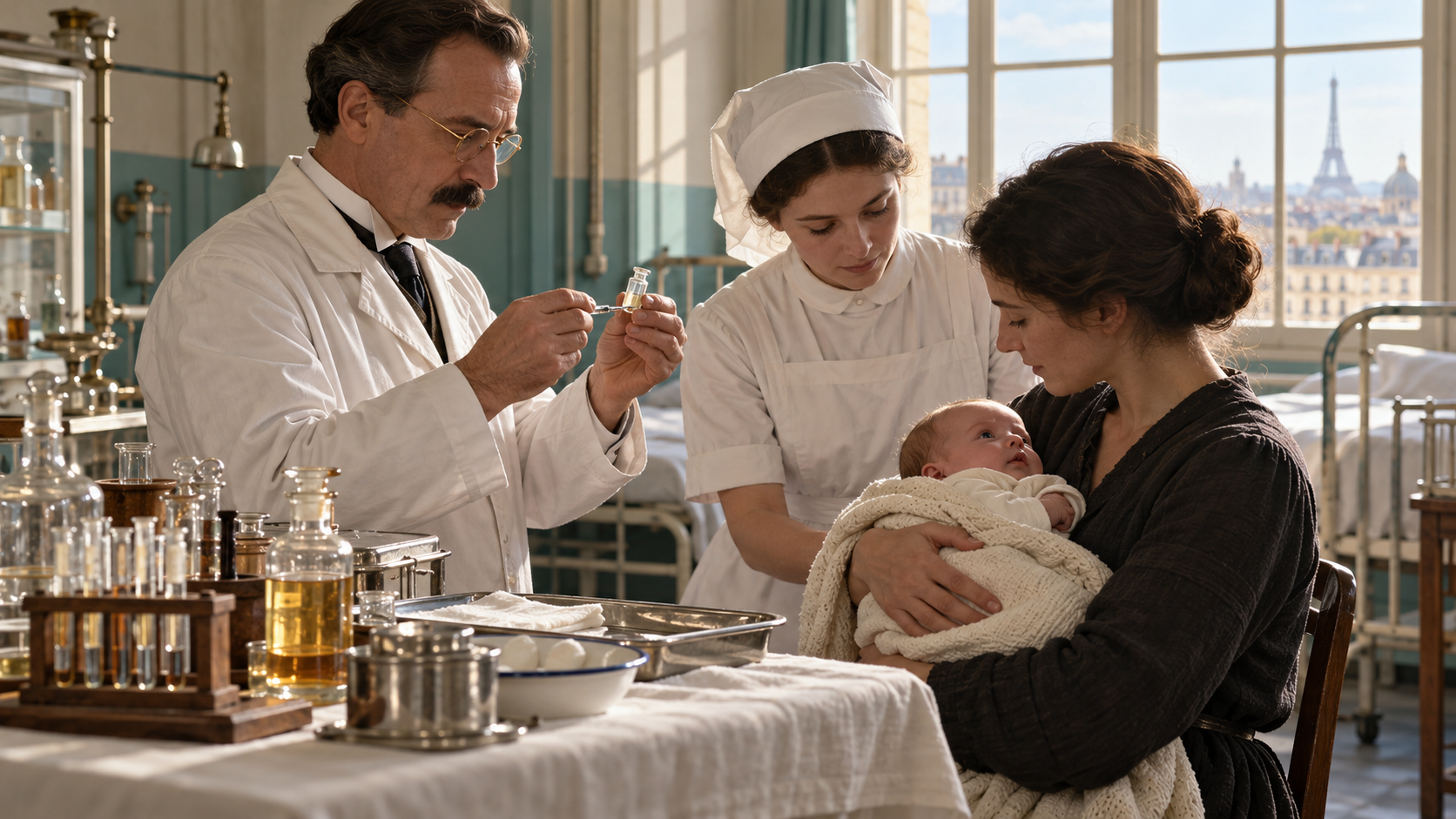
On July 18, 1921, physicians at the Hôpital de la Charité in Paris administered the first human bacille Calmette-Guérin vaccination to a newborn at high risk of tuberculosis. The infant's mother had died of the disease, and the child would live in a household where tuberculosis was present. Pediatrician Benjamin Weill-Hallé delivered the preparation by mouth in several doses. The vaccine had been developed by Albert Calmette and Camille Guérin from a strain related to the bacterium that causes tuberculosis in cattle. The child remained healthy, providing an early but very limited indication that the weakened organism could be used safely.
Calmette and Guérin had spent years repeatedly culturing Mycobacterium bovis until it lost much of its ability to cause disease while retaining properties that could stimulate immunity. This process of attenuation required hundreds of passages in the laboratory and was interrupted by World War I. After the first use, French physicians vaccinated additional infants and collected evidence about safety and outcomes. Adoption spread internationally, but not without controversy. A fatal 1930 incident in Lübeck, Germany, caused by contamination of vaccine material with virulent tuberculosis bacteria, damaged confidence even though investigations found that BCG itself was not responsible.
BCG became one of the world's most widely used vaccines. Its protection varies by population and setting, and it is not generally used for routine vaccination in the United States, where tuberculosis prevalence is lower and testing strategies differ. Its clearest benefit is reducing severe forms of childhood disease, including tuberculous meningitis and disseminated tuberculosis. Because BCG is a live attenuated vaccine, clinicians consider a person's immune status before use. Vaccination also does not replace the public-health work of finding infectious cases, completing effective drug treatment, improving ventilation, tracing contacts, and addressing crowded living conditions.
July 18 marks a cautious first step rather than an instant victory over tuberculosis. The history includes persistence in the laboratory, a vulnerable infant, expanding evidence, a preventable manufacturing disaster, and continuing differences in how countries use the vaccine. Tuberculosis still causes illness and death worldwide, and drug-resistant strains still continue to complicate global control. BCG's century of use shows both the reach and the limits of vaccination: a vaccine can prevent devastating disease in children while leaving transmission and adult pulmonary tuberculosis only partly controlled. Current research seeks better vaccines, but the original remains an essential tool where the risk of severe childhood tuberculosis is high.
The first human BCG vaccination was given in Paris on July 18, 1921, to a newborn whose household carried an unusually high risk of tuberculosis.
BCG was created by repeatedly culturing Mycobacterium bovis until it was weakened enough to stimulate immunity with greatly reduced ability to cause disease.
One infant could not establish effectiveness, and international adoption required additional observation. A contaminated batch in Lübeck later caused deaths and damaged public trust.
Protection varies, and BCG is not a complete answer to tuberculosis. Diagnosis, effective treatment, ventilation, contact investigation, and social conditions remain crucial.
BCG is especially valuable for protecting young children against severe forms such as tuberculous meningitis and disseminated tuberculosis.
The vaccine remains widely used in countries where tuberculosis is common while researchers continue to pursue stronger and more durable protection.
Explore more of "On This Day ..."
Discover more events from the same date across news, politics, technology, sports, and other fields. Each link highlights significant moments that shaped history on different fronts.