

On This Day in Tech: November 14, 1910
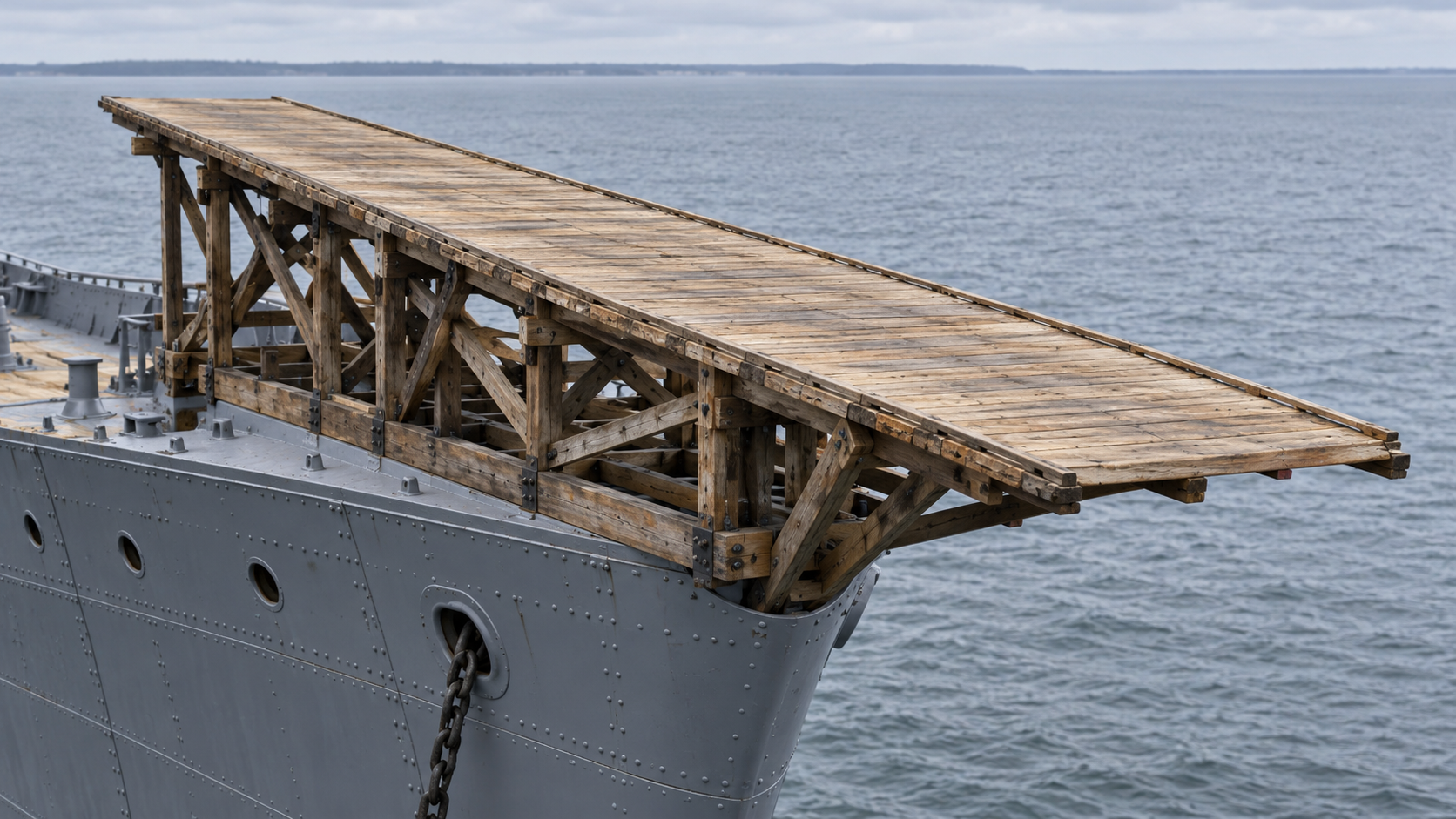
On November 14, 1910, civilian pilot Eugene B. Ely took off in a Curtiss pusher biplane from a temporary platform on the cruiser USS Birmingham in Hampton Roads, Virginia. The flight demonstrated that an airplane could launch from a naval ship. Captain Washington Irving Chambers, an advocate for naval aviation, and aircraft manufacturer Glenn Curtiss were central to arranging the experiment. Birmingham was a cruiser, not an aircraft carrier with a purpose-built flight deck. Carpenters had constructed a sloping wooden runway above its bow, adapting an existing vessel for a test whose outcome was uncertain.
Early airplanes were light, relatively low-powered machines with open structures and limited margins for difficult conditions. A shipboard launch added challenges absent from an ordinary land airfield. The available runway was short, the water lay below its end, and the surrounding rigging and ship structure constrained the operation. Wind over the deck could assist takeoff, but the weather and the vessel’s movement mattered. Ely’s aircraft used a propeller behind the pilot, giving it the pusher description. The temporary platform and the aircraft had to function together, illustrating that naval aviation required suitable ship arrangements as well as an airplane capable of flying.
The original plan called for a launch while the cruiser was underway and a substantially longer flight. Rain, fog, and light wind complicated the operation, and Ely ultimately departed while Birmingham lay at anchor. After leaving the downward-sloping platform, the airplane dropped low enough for its wheels and propeller to strike the water. Ely recovered and landed on shore after a short flight, with the propeller damaged. The outcome therefore demonstrated feasibility without demonstrating a routine or risk-free procedure. It was a takeoff from a ship followed by a landing on land, not the first landing back on a ship or a complete modern carrier operating cycle.
Ely performed a separate shipboard landing on USS Pennsylvania in January 1911, using arrangements intended to stop the airplane. That later experiment addressed another part of the operating problem. Naval aviation subsequently required specialized ships, stronger aircraft, deck procedures, maintenance facilities, communications, and methods of launching and recovering machines repeatedly. None of that infrastructure appeared fully formed during the November flight. November 14 marks an early practical demonstration of a new relationship between aircraft and ships. Its importance lies in the evidence it supplied: a limited, improvised platform could support a successful departure, but reliable fleet operations would require systematic solutions to wind, deck space, recovery, and safety. The short flight opened an engineering path rather than completing it.
Chambers and Curtiss helped organize the experiment. Birmingham was an existing cruiser fitted with a temporary wooden platform.
Ely made the shipboard takeoff in Hampton Roads on November 14, 1910. His aircraft was a Curtiss pusher biplane.
Weather changed the plan, and the ship was at anchor for departure. The airplane struck the water briefly before recovering.
Ely landed ashore, not back aboard Birmingham. The test demonstrated possibility while exposing substantial operating risks.
A separate January 1911 flight demonstrated a landing on USS Pennsylvania. Launch and recovery required different arrangements.
Later carrier operations depended on purpose-built infrastructure and coordinated procedures. The 1910 experiment was an opening step, not a complete carrier system.
Explore more of "On This Day ..."
Discover more events from the same date across news, politics, technology, sports, and other fields. Each link highlights significant moments that shaped history on different fronts.