

On This Day in Tech: November 13, 1971
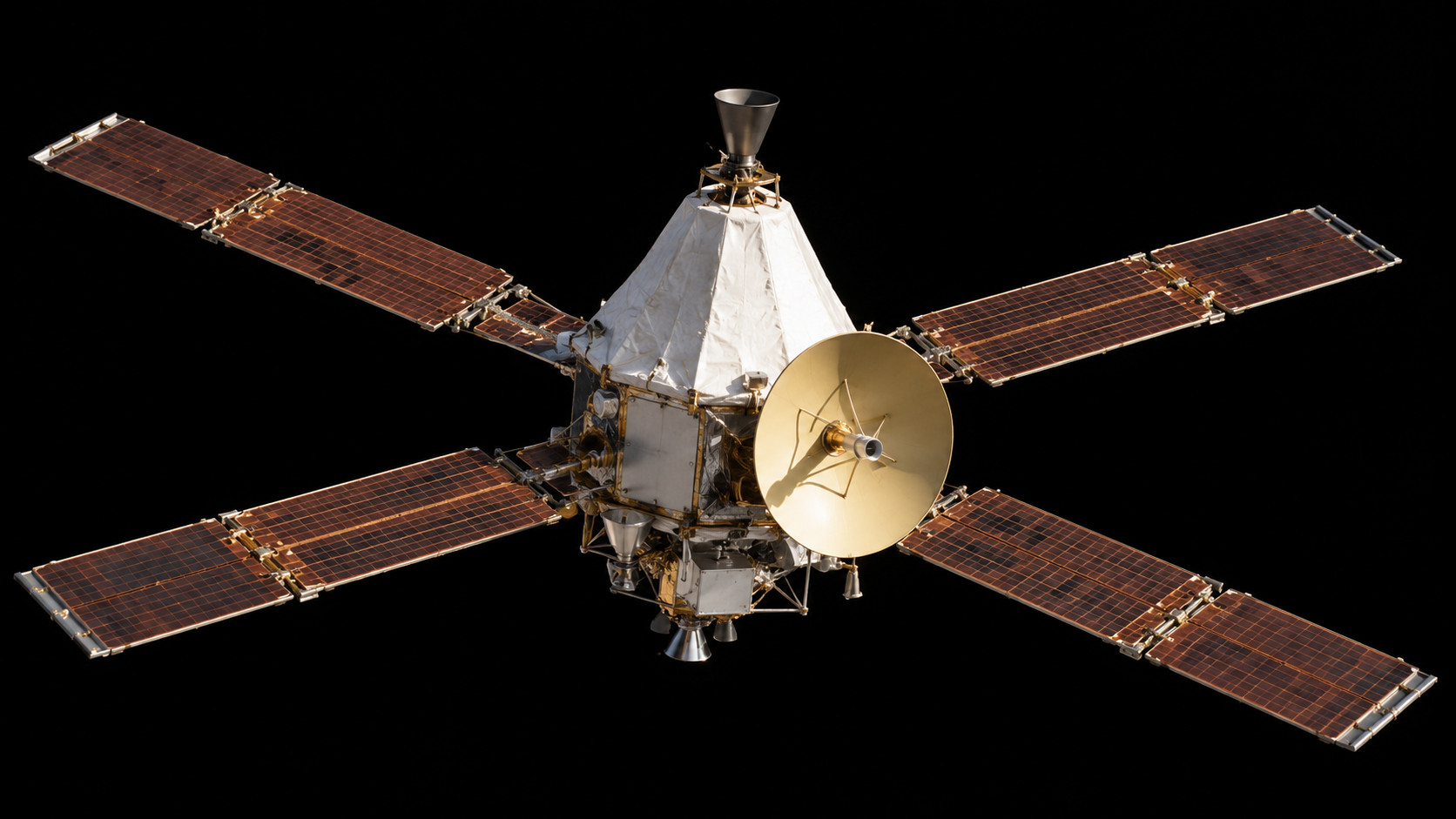
On November 13, 1971, in the United States, NASA’s Mariner 9 entered orbit around Mars, becoming the first spacecraft to orbit another planet. Engineers at the Jet Propulsion Laboratory in Pasadena, California, managed the mission and monitored the arrival. The maneuver occurred after midnight on November 14 in Universal Time, explaining why records using different time conventions can show different calendar dates. Unlike an earlier flyby, the new orbit would allow the spacecraft to return repeatedly over the planet. That offered researchers opportunities to assemble broad maps and observe changes instead of collecting only a brief sequence during a single encounter.
NASA had intended to send two orbiters, Mariner 8 and Mariner 9, with complementary scientific objectives. Mariner 8 was lost in a launch failure, leaving Mariner 9 to undertake an expanded observing role. After its successful May launch and interplanetary cruise, the surviving spacecraft used its propulsion system to slow enough for capture by Mars. Cameras, infrared and ultraviolet instruments, radio equipment, solar panels, and orientation controls had to work as a coordinated system. Reaching a useful orbit was a demanding engineering achievement in its own right. It did not guarantee that the view beneath the spacecraft would immediately reveal the surface scientists hoped to study.
A major dust storm enveloped Mars when Mariner 9 arrived. Much of the terrain was hidden, limiting the immediate usefulness of photographs for mapping. An orbiter, however, could wait and return to targets after conditions changed. Controllers revised the observing program and obtained detailed views of the small moons Phobos and Deimos while the dust gradually cleared. As visibility improved, images revealed enormous volcanoes, extensive canyons, and terrain suggesting a more varied geological history than the limited earlier flyby pictures had shown. These discoveries accumulated after arrival. They should not all be attributed to the first minutes of orbital insertion or described as photographs returned on November 13 itself.
The spacecraft operated until October 1972 and returned thousands of images, supporting extensive mapping and helping identify possible sites for later exploration. Repeated observations also documented atmospheric and seasonal changes. Mariner 9 did not land, collect surface samples, or prove that Mars supported life. Its achievement was providing a persistent observing position from which several instruments could investigate the planet and its surroundings. November 13 marks the U.S.-dated beginning of that orbital mission. The dust storm made a central advantage especially clear: an instrument that can stay near a target has options unavailable to one passing only once. Patience, adaptable operations, and reliable spacecraft systems helped turn an initially obscured view into a much richer understanding of another world.
Mariner 9 became the surviving orbiter after Mariner 8's launch failure. Its program combined mapping with repeated observations.
Orbital insertion occurred November 13, 1971, in U.S. time, and November 14 in Universal Time. The date difference reflects the time convention.
A global dust storm initially hid much of the surface. Remaining in orbit allowed the spacecraft to wait for improved visibility.
Controllers adjusted observations and studied Phobos and Deimos. The mission's famous surface discoveries followed as the storm cleared.
Thousands of images revealed major volcanoes, canyons, and changing atmospheric conditions. The spacecraft remained active into October 1972.
Orbiting and landing are different capabilities. Mariner 9's legacy was sustained remote observation rather than direct access to Martian soil.
Explore more of "On This Day ..."
Discover more events from the same date across news, politics, technology, sports, and other fields. Each link highlights significant moments that shaped history on different fronts.