

On This Day in Tech: November 15, 1971
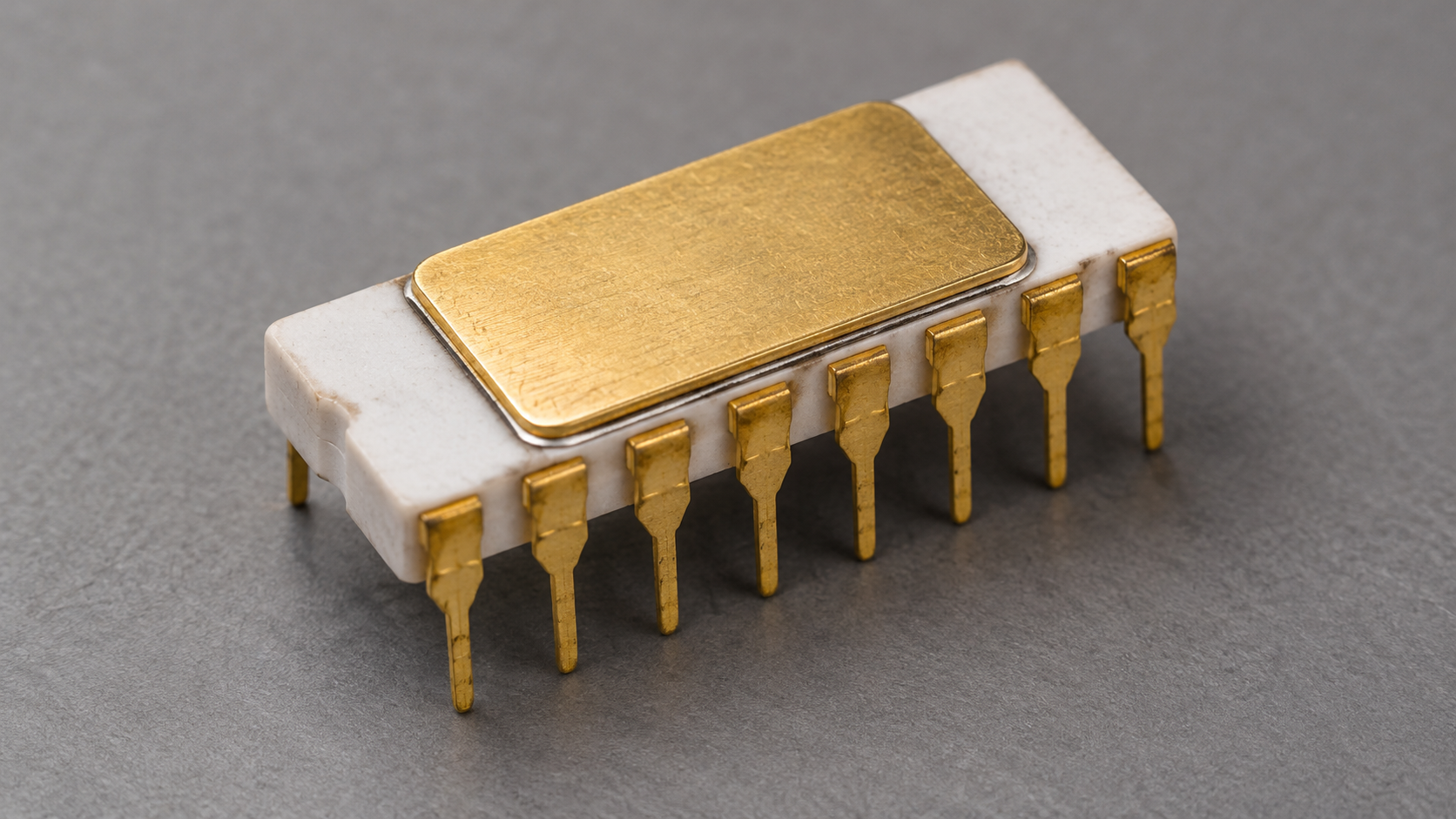
On November 15, 1971, Intel publicly advertised the availability of the MCS-4 microcomputer family, centered on the 4004 processor, in the trade newspaper Electronic News. The California semiconductor company’s announcement offered customers a programmable central processing unit on a single integrated circuit. The device was a four-bit processor, originally developed for a Japanese calculator project rather than a modern personal computer. Its significance was not that one chip contained every part of a complete computer. Memory and other supporting components still had distinct roles. The announcement presented a reusable computing component that could be programmed for applications beyond its original assignment.
Calculator maker Busicom had approached Intel about integrated circuits for a new product. Ted Hoff proposed a more flexible architecture than a collection of highly specialized calculator chips, with Stanley Mazor contributing to the architectural work. Federico Faggin led the implementation using silicon-gate technology, working with Busicom engineer Masatoshi Shima. The result connected decisions about software, logic, semiconductor manufacture, and the customer’s needs. Fitting a processor into a small package required more than reducing the drawing of a larger computer. The team had to design a workable instruction set and circuitry that could be fabricated, tested, and combined with supporting chips.
The 4004 incorporated approximately 2,300 transistors and was supplied in a sixteen-pin package. Other members of the MCS-4 family supplied program storage, working memory, and input or output functions. Instructions could direct the same processor hardware to perform different sequences, making it attractive for control and calculation tasks. That flexibility remained bounded by small word size, memory arrangements, execution speed, and the effort needed to develop software. The chip was not comparable in capability to later desktop processors, and it did not eliminate the need for a circuit board or peripherals. Intel obtained the rights needed to market the design beyond Busicom, making that commercial reuse central to the announcement.
The 4004 became a landmark in the history of commercially available single-chip microprocessors, while other contemporary designs make unqualified claims about the first processor dependent on definitions. Its documented importance does not require ignoring that broader history. Later Intel devices used wider data paths and supported more demanding systems, and other manufacturers developed competing architectures. Those products were not features hidden inside the original 4004. November 15 marks a public commercial introduction, not the date every design problem was solved or every computer became chip-based. The lasting change was a practical shift toward programmable components that could be produced repeatedly and adapted through software. That approach helped make computing useful in many products whose designers could not economically build a custom processor from the ground up.
The design began with Busicom's calculator requirements. Hoff, Mazor, Faggin, and Shima contributed different architectural and implementation work.
Intel's public MCS-4 announcement appeared on November 15, 1971. The 4004 was the processor at the center of that chipset.
The four-bit CPU contained about 2,300 transistors. Separate chips supplied memory and other functions needed by a complete system.
Programmability expanded possible uses without removing limits of speed, word size, or memory. It was not a modern desktop computer in one package.
Marketing rights allowed Intel to offer the component beyond its original customer. Reuse was a commercial as well as an engineering development.
The 4004 is a major single-chip microprocessor milestone. Carefully qualified claims are more accurate than treating every contemporary processor definition as identical.
Explore more of "On This Day ..."
Discover more events from the same date across news, politics, technology, sports, and other fields. Each link highlights significant moments that shaped history on different fronts.