

On This Day in Health: July 21, 1930
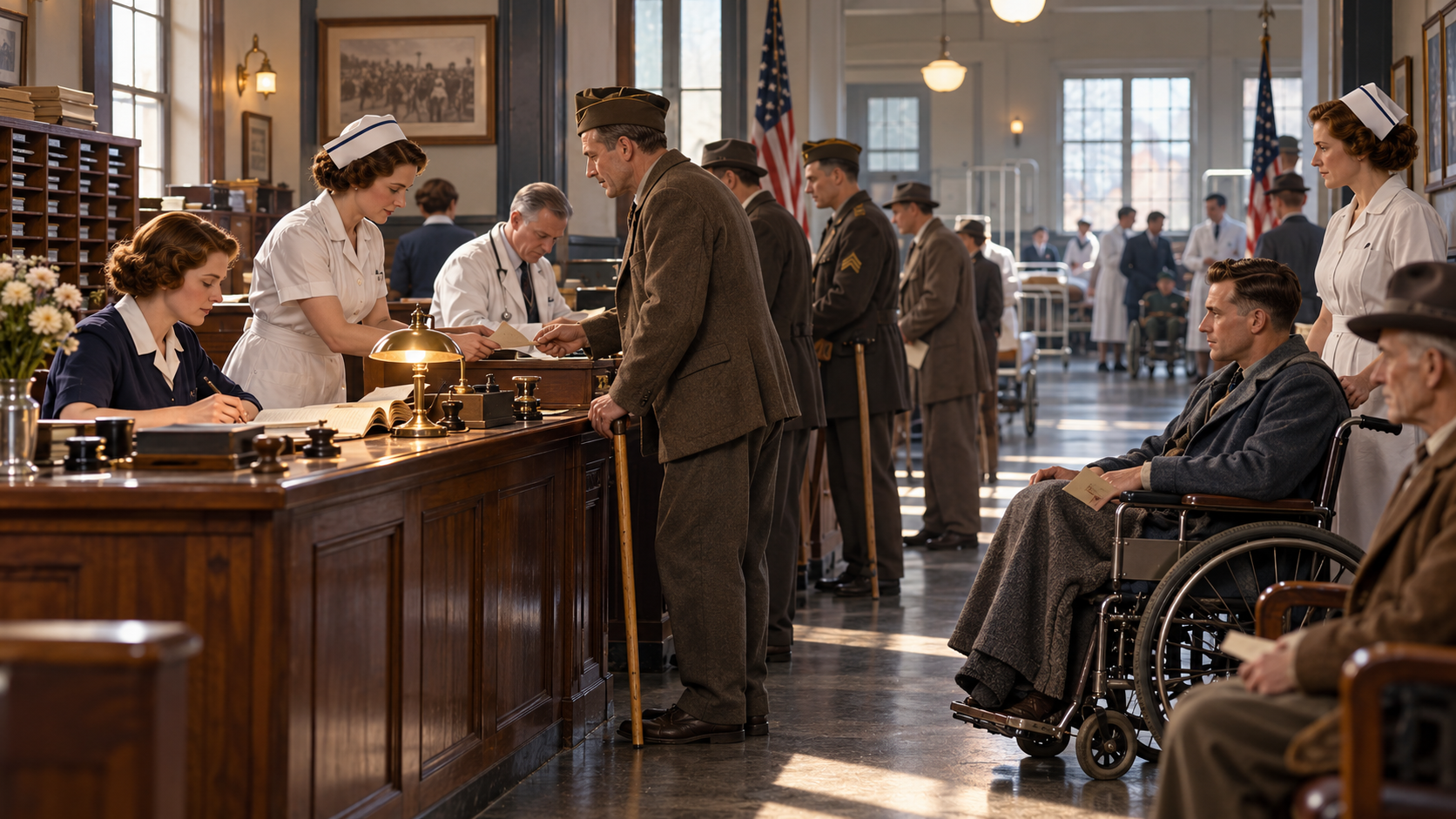
On July 21, 1930, President Herbert Hoover signed Executive Order 5398, creating the Veterans Administration. The order consolidated the Veterans' Bureau, the Bureau of Pensions, and the National Home for Disabled Volunteer Soldiers into one independent federal agency. Before the merger, veterans could face separate offices and overlapping rules for pensions, insurance, rehabilitation, and hospital care. World War I had added millions of former service members, including more than 200,000 people disabled by new forms of warfare. A unified administration was intended to coordinate those obligations and give veterans' programs a clearer place in the federal government.
Health care was only one part of the new agency, but it became one of its largest responsibilities. The National Home operated residential facilities and hospitals, while the Veterans' Bureau had developed another hospital system for World War I veterans. Consolidation placed those services under common leadership, although the new organizational plan did not fully take effect until July 1, 1931. In 1930 the system included fifty-four hospitals. The scale grew sharply after World War II, when millions returned to civilian life and many needed treatment, rehabilitation, prosthetics, mental-health services, or long-term support.
A national system did not guarantee equal or adequate care. Eligibility rules, geography, racial segregation, gender assumptions, disability policy, and administrative delay shaped who could use services and what they received. Black veterans encountered discrimination in hospitals and benefits administration, while women veterans were often treated as exceptions within institutions designed around men. The system also struggled at times with crowding, uneven quality, and long waits. Its history therefore includes both a durable public commitment and repeated demands from veterans, clinicians, advocates, and lawmakers to make that commitment real.
The Veterans Administration became the cabinet-level Department of Veterans Affairs in 1989, and its health system developed major roles in clinical care, professional training, rehabilitation, and medical research. VA investigators and patients contributed to advances ranging from prosthetics and transplant medicine to large clinical trials and electronic health records. July 21 marks the administrative decision that brought separate programs together, not the beginning of all veterans' care and not the end of reform. Its health significance lies in the attempt to build an integrated system around a defined population whose illnesses and injuries could require coordinated care across an entire lifetime. The model also demonstrated how a public health system can combine direct care, disability support, research, education, and social benefits.
Executive Order 5398 combined the Veterans' Bureau, Bureau of Pensions, and National Home for Disabled Volunteer Soldiers into the Veterans Administration.
The merger addressed fragmented programs serving millions of veterans after World War I, including many people living with service-related disability.
The agency was created on July 21, 1930, but its reorganized operating plan did not fully take effect until July 1, 1931.
Centralization did not eliminate discrimination, geographic barriers, waiting times, or unequal recognition of the needs of Black and women veterans.
The organization became the Department of Veterans Affairs in 1989 and developed one of the country's largest integrated health-care systems.
Its hospitals also became major sites for clinician training, rehabilitation, clinical research, prosthetics, and long-term management of complex illness.
Explore more of "On This Day ..."
Discover more events from the same date across news, politics, technology, sports, and other fields. Each link highlights significant moments that shaped history on different fronts.