

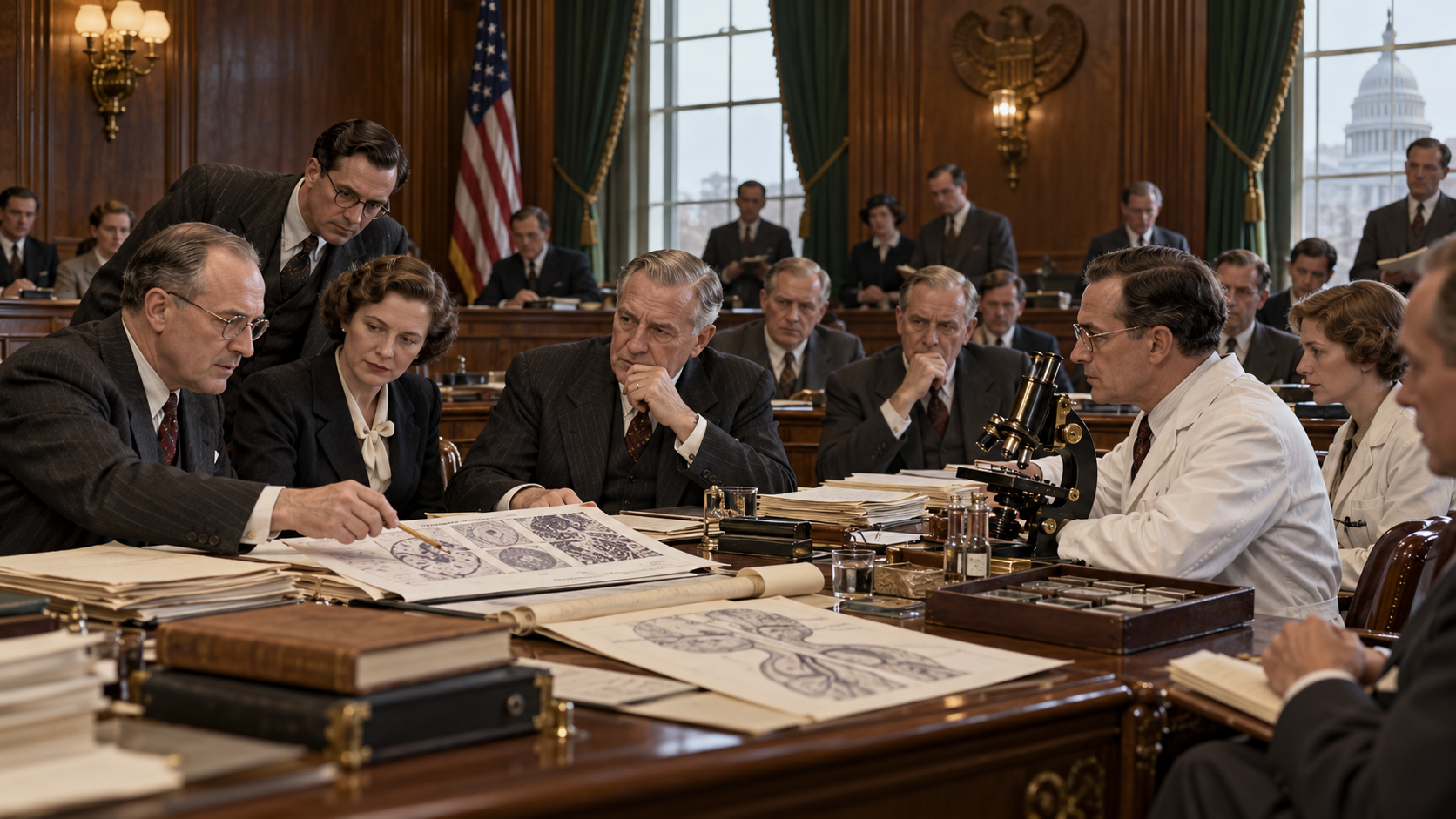
On This Day in Health: July 23, 1937
On July 23, 1937, Congress passed the National Cancer Institute Act, advancing legislation to establish a permanent federal center for cancer research. President Franklin D. Roosevelt signed it on August 5 as Public Law 244. The law created the National Cancer Institute within the U.S. Public Health Service and made it the government's principal organization for research and training on the causes, diagnosis, prevention, and treatment of cancer. Its passage followed years of advocacy by physicians, scientists, voluntary organizations, and lawmakers who argued that a growing national problem required coordinated public investment.
The act authorized the institute to conduct investigations, support work at public and private institutions, coordinate research, provide technical training and fellowships, consult experts, and cooperate with state health agencies. It also created the National Advisory Cancer Council and permitted the purchase and lending of radium for research and treatment. Grants were central to the model: federal money could strengthen laboratories and investigators beyond the government's own facilities. The law represented an early congressional commitment to sustained research on a noncommunicable disease rather than a short campaign against an epidemic infection.
Cancer was not one disease, and the new institute did not bring an immediate cure. In the 1930s, diagnosis often came late, surgery and radiation were the main treatments, and many biological mechanisms were unknown. Some patients encountered stigma, fear, and misleading claims. Research also developed within institutions that did not equally include women, people of color, rural communities, or every tumor type. Later ethical standards, trial protections, and expectations for diverse participation grew in response to harms and exclusions across medical research, including but not limited to cancer.
The National Cancer Institute joined the National Institutes of Health in 1944 and later received expanded authority through the National Cancer Act of 1971. Its programs helped support basic biology, epidemiology, prevention, clinical trials, cancer centers, training, and the translation of discoveries into care. Progress came incrementally through many institutions and included both major successes and persistent disparities in risk, screening, treatment, and survival. July 23 marks the legislative step that committed the federal government to a durable cancer-research infrastructure. That commitment made long investigations possible even when results required decades rather than one dramatic breakthrough. The institute's creation also helped make cancer statistics, public information, and training part of a coordinated national effort, giving later discoveries an institutional path into better care for patients and communities nationwide.
Congress passed the National Cancer Institute Act on July 23, 1937. President Franklin D. Roosevelt signed the bill into law on August 5.
The act placed NCI within the Public Health Service and assigned it research, training, coordination, grants, expert consultation, and state cooperation.
The law did not produce an immediate cure. Cancer comprises many diseases, and the science, diagnostics, and treatments of the 1930s were limited.
Research institutions also reflected social exclusion; modern programs continue working to improve representation and reduce disparities in outcomes.
Federal grants allowed the institute to support promising cancer research at universities, hospitals, and other institutions beyond its own laboratories.
NCI later joined NIH and gained broader authority, supporting basic science, epidemiology, prevention, clinical trials, cancer centers, and professional training.
Explore more of "On This Day ..."
Discover more events from the same date across news, politics, technology, sports, and other fields. Each link highlights significant moments that shaped history on different fronts.