

On This Day in Lifestyles: January 17, 1912
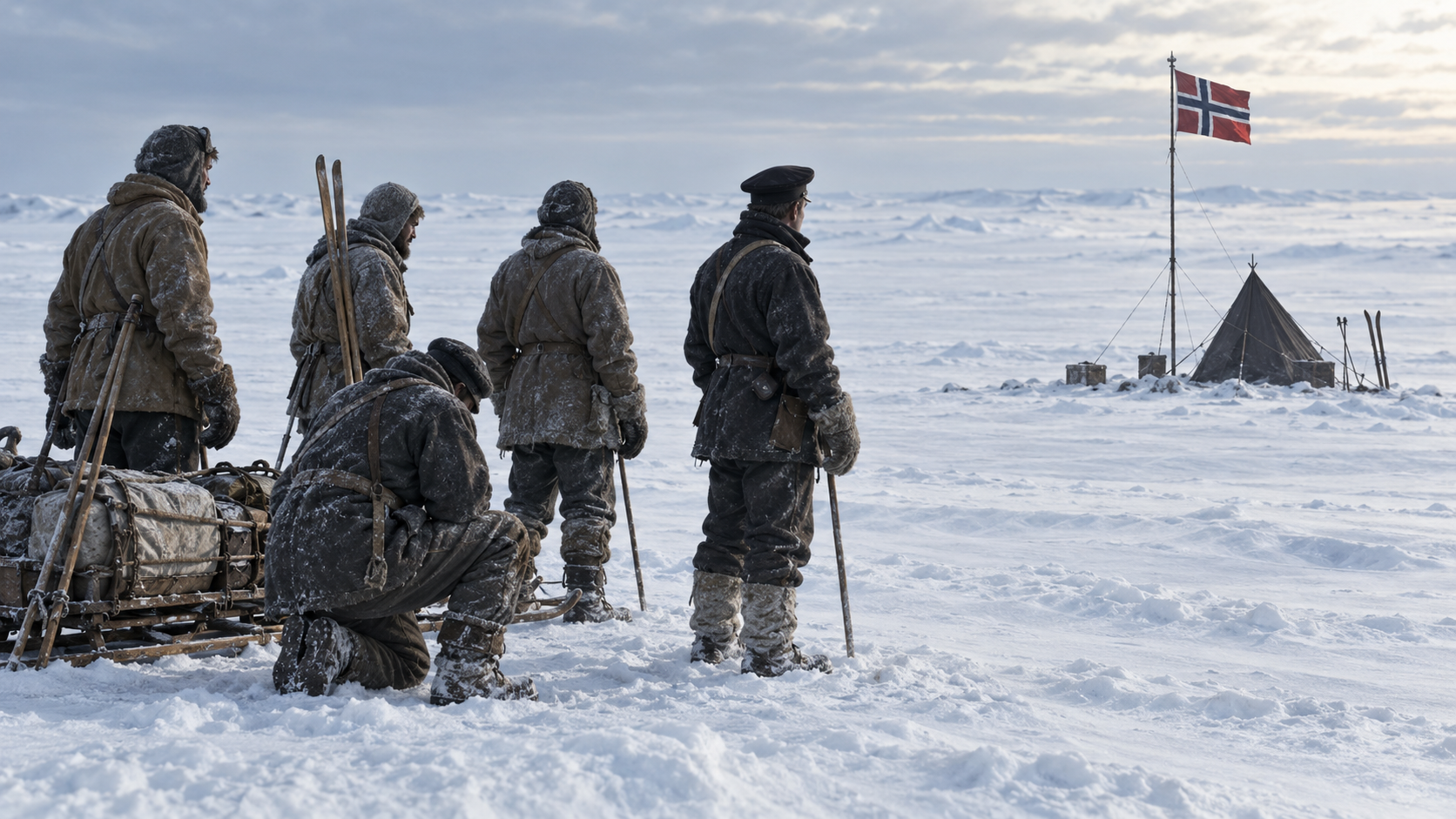
On January 17, 1912, Robert Falcon Scott and four companions reached the South Pole after a punishing journey across Antarctica. There they found a tent and the Norwegian flag left by Roald Amundsen, whose team had arrived more than a month earlier. Scott, Edward Wilson, Henry Bowers, Lawrence Oates, and Edgar Evans had achieved an extraordinary geographic goal but lost the race that had come to define public expectations. Their photographs and journals captured a moment of exhaustion and disappointment on an immense white plateau. The return to their base would be even harder, and none of the five men survived it.
Scott’s Terra Nova expedition combined exploration with extensive scientific work. Its members studied weather, geology, magnetism, wildlife, and the Antarctic environment, while support teams laid depots for the polar journey. The British party relied on a complex mix of motor sledges, ponies, dogs, skis, and human hauling. Equipment failed, animals struggled, and the final group pulled its own sledge over high, frigid terrain. Amundsen’s smaller Norwegian expedition concentrated more narrowly on the pole and used expert skiing, dog teams, carefully chosen clothing, and a route designed for speed. The contrast later fueled debate about planning, leadership, and national styles of exploration.
Conditions deteriorated as Scott’s party traveled north. Evans died after physical decline and injury; Oates, suffering severe frostbite, walked out of the tent in an effort to spare his companions. Scott, Wilson, and Bowers died in late March, stopped by weather only eleven miles from a supply depot. A search party found their tent in November along with journals, letters, photographs, and scientific specimens they had carried from the Beardmore Glacier. The news reached Britain in 1913 and produced intense mourning. Scott was celebrated as a heroic example of courage and sacrifice, a story that shaped school lessons, memorials, books, and ideas of character for generations.
Modern interpretation is less simple. Historians credit the expedition’s science and the endurance of its members while examining preventable risks, institutional pressure, weather, nutrition, transport choices, and later mythmaking. The men were products of an age that linked exploration to empire and masculine duty, yet their personal records reveal fear, affection, responsibility, and concern for families at home. Their journey still influences how people imagine polar travel, survival, teamwork, and the ethics of extreme adventure. January 17 endures not merely as a lost race, but as the turning point in a human story where ambition, knowledge, environment, and vulnerability met at the edge of endurance.
Scott’s five-man party reached the pole on January 17–18 and discovered that Roald Amundsen’s Norwegian team had arrived in December 1911.
The Terra Nova expedition pursued a broad scientific program as well as the geographic goal, collecting observations and specimens across Antarctica.
Injury, frostbite, hunger, extreme cold, and storms progressively weakened the party. Evans and Oates died before Scott, Wilson, and Bowers.
The last three died in their tent roughly eleven miles from a supply depot. A search party recovered records and scientific specimens months later.
Britain memorialized the men as models of courage and sacrifice, turning the expedition into a powerful national story.
Later historians have examined planning choices, logistics, leadership, weather, science, and imperial culture, producing a more complex understanding of the journey.
Explore more of “This Day in Lifestyles”
Discover more moments in everyday life, design, education, travel, food, fashion, and culture. Each story connects a calendar date with an event that changed how people lived.