

On This Day in Lifestyles: January 20, 1885
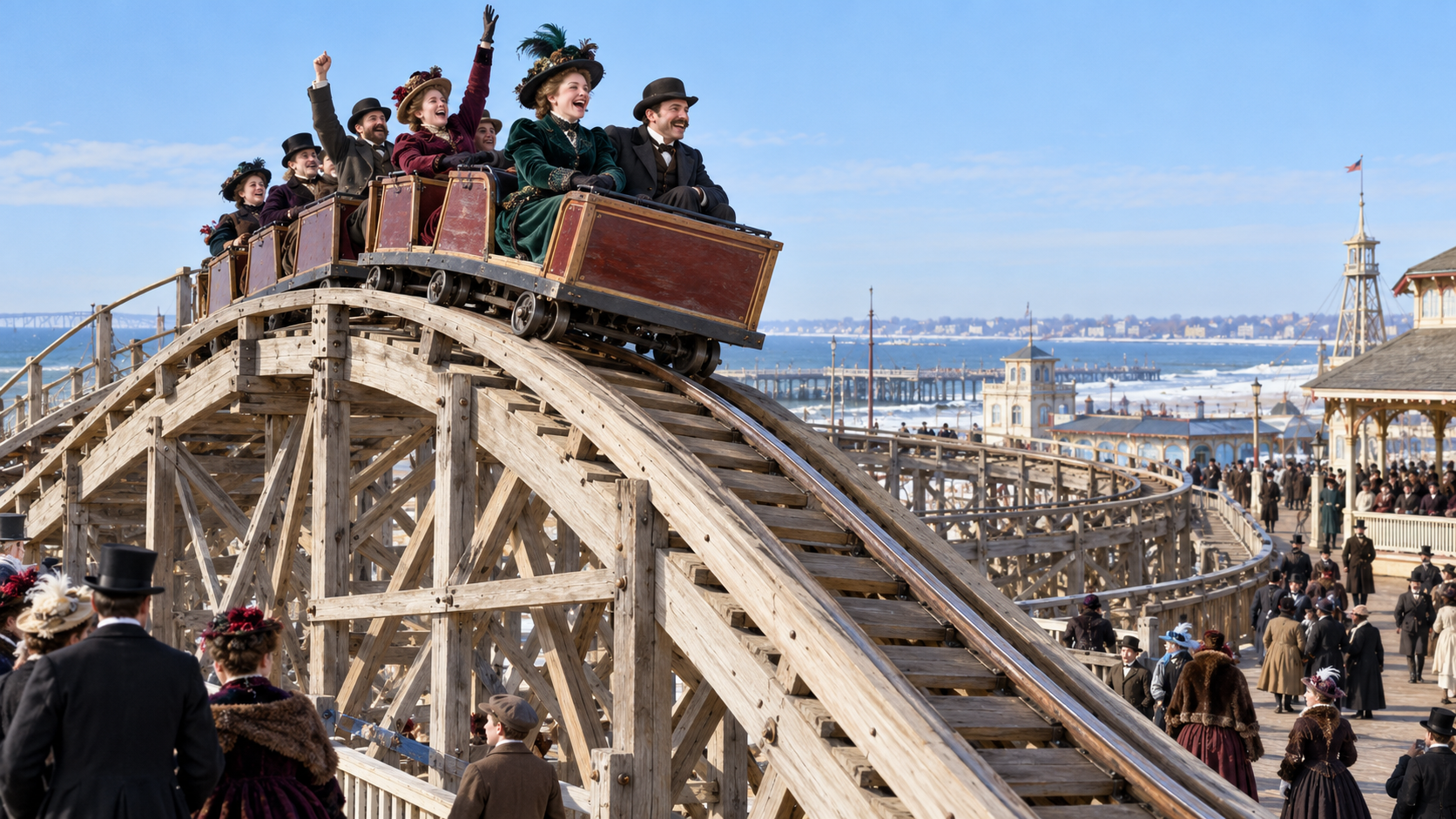
On January 20, 1885, LaMarcus Adna Thompson received a United States patent connected with his “switchback railway,” an early roller coaster that helped turn gravity-powered travel into organized public amusement. Thompson had opened a ride at Coney Island the previous summer. Passengers sat in benches on a small car, coasted along an elevated track, then transferred or switched direction for the return. The speed was mild by modern standards, but the unusual height, motion, and view of the seaside created an experience people were willing to pay for. A transportation principle became a compact machine for suspense, laughter, and repeatable leisure.
Gravity rides had older precedents, including Russian ice slides and mine or scenic railways, so no single patent represents the absolute beginning of the roller coaster. Thompson’s importance lay in making the idea commercially practical and culturally respectable for a mass audience. He promoted scenic pleasure as much as speed, later building elaborate railways with tunnels, painted landscapes, and theatrical effects. The rides arrived as industrial cities were developing scheduled leisure, public transit, and amusement districts. Workers and families could travel to a park, buy a ticket, and briefly experience controlled danger without leaving the urban world.
Competition quickly pushed designers toward steeper drops, continuous circuits, faster turns, and stronger restraint systems. Electric lighting extended park hours, while steel construction in the twentieth century enabled new shapes and smoother tracks. Roller coasters became anchors for amusement parks, boardwalks, and destination resorts. Their appeal combines engineering with the body’s automatic reactions: anticipation during the climb, a sense of weightlessness over a hill, acceleration, fear, and relief. Riders also perform the experience together, screaming, laughing, and retelling it afterward. The line, the car, and the souvenir photograph all become parts of a social ritual.
Modern coasters use computer modeling, magnetic launches, precise braking, and layered safety systems, yet they preserve the simple promise of Thompson’s era: gravity can turn a short track into a memorable story. The industry must balance novelty with accessibility, maintenance, noise, cost, and the reality that not every body can ride comfortably. Historic wooden coasters remain valued for their rhythm and craftsmanship, while record-setting machines chase speed and height. The 1885 patent matters because it helped standardize a new kind of leisure—engineered excitement that ordinary people could purchase by the minute and share in public. That blend of engineered motion, managed risk, and shared excitement remains central to theme-park culture and the way families plan leisure time together.
Thompson’s early switchback railway carried small cars along elevated gravity tracks and required a return journey in the opposite direction.
Earlier slides and rail rides existed, but Thompson helped package the experience as a safe, repeatable, ticketed attraction for a large urban audience.
Coney Island offered workers and families accessible leisure reached by city transit, with rides, beaches, food, lights, and spectacle in one district.
The coaster combined scenic views with controlled risk, letting riders feel fear and exhilaration within a designed and supervised environment.
Continuous tracks, steel structures, advanced restraints, magnetic launches, and computer controls expanded what designers could build.
The social pattern remains familiar: anticipation in line, a shared physical rush, and a story riders tell after they return to the platform.
Explore more of “This Day in Lifestyles”
Discover more moments in everyday life, design, education, travel, food, fashion, and culture. Each story connects a calendar date with an event that changed how people lived.