

On This Day in Lifestyles: January 18, 1778
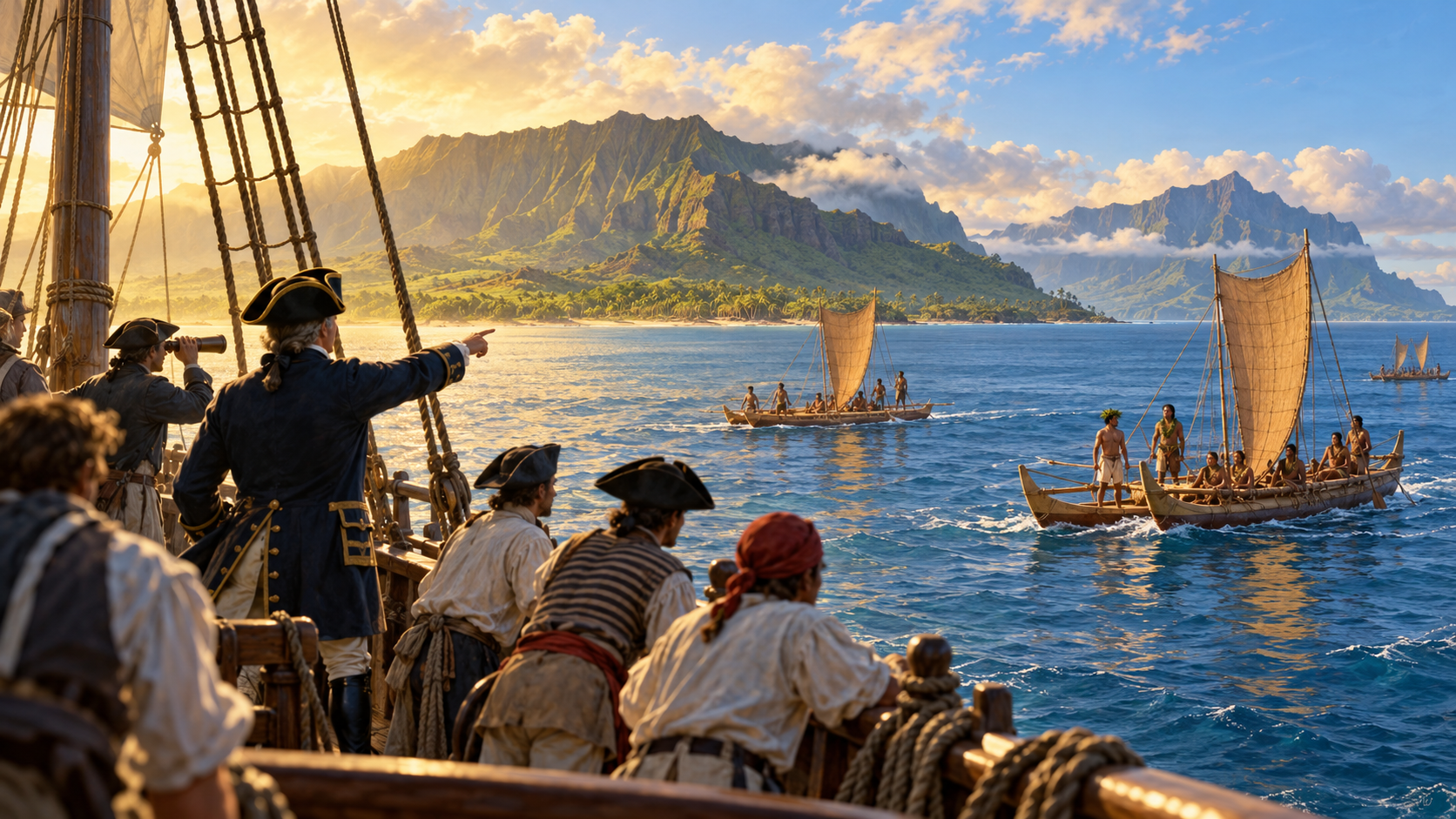
On January 18, 1778, sailors in James Cook’s third Pacific expedition sighted Oʻahu and then Kauaʻi. The ships Resolution and Discovery were traveling north in search of a route toward the Northwest Passage. Winds carried them toward Kauaʻi, where the expedition made contact and later went ashore near Waimea. Europeans would call the archipelago the Sandwich Islands, but Native Hawaiians had settled, named, governed, cultivated, and traveled among the islands for centuries. The date marks the beginning of sustained European contact, not the discovery of an unknown place, and its consequences reached into nearly every part of Hawaiian life.
Hawaiian society supported large communities through sophisticated systems of farming, fishing, land stewardship, navigation, exchange, religion, and political authority. Long-distance Polynesian voyaging had created and maintained those island worlds. Cook’s arrival brought a meeting between peoples with different languages, technologies, customs, and assumptions. Hawaiians exchanged food and goods with the crews, while Europeans valued fresh water, provisions, geographic knowledge, and iron. Encounters were shaped by curiosity and negotiation as well as misunderstanding. Cook’s journals and charts made the islands more visible to foreign powers and merchants, turning a brief stop into an opening for accelerating global traffic.
The material exchange carried profound risks. Foreign ships introduced new tools, weapons, animals, plants, and commercial relationships, but they also brought diseases to which Hawaiians had little immunity. Population loss, outside trade, missionary activity, whaling, plantation agriculture, and foreign political pressure transformed land use and social organization over the following century. Hawaiians adapted creatively, adopting literacy and selected technologies while defending language, governance, and cultural practices. These choices occurred amid growing inequality and coercion. Cook returned to Hawaiʻi in 1779 and was killed at Kealakekua Bay after relations deteriorated, an event often remembered more widely than the lives and perspectives of the island communities involved.
January 18 matters because it began a sustained relationship that cannot be reduced to a heroic exploration story. For travelers today, Hawaiʻi is often marketed as scenery and leisure, yet its beaches, valleys, foods, music, language, and hospitality exist within a living Indigenous homeland shaped by colonization and resilience. Responsible remembrance centers Native Hawaiian history and avoids treating Western arrival as the start of the islands’ past. The sighting connected Hawaiʻi to expanding global networks that brought opportunity, upheaval, and loss. It asks modern visitors and readers to understand encounter from both sides of the horizon and to recognize that everyday culture survived by changing without surrendering its deepest roots.
Cook’s expedition sighted Oʻahu and Kauaʻi while searching for the Northwest Passage. It later anchored near Waimea on Kauaʻi.
Native Hawaiians had inhabited and governed the islands for centuries, supported by Polynesian navigation, agriculture, fishing, exchange, and stewardship.
Early encounters involved trade, curiosity, negotiation, and misunderstanding. Iron and provisions were especially important exchange items.
Foreign contact also introduced diseases, species, weapons, religious movements, and commercial systems that rapidly altered population and land use.
The date represents sustained European contact, not the discovery of an empty or unknown place. Language matters when describing the event.
Native Hawaiian culture remains living and adaptive. Understanding tourism and island life requires attention to sovereignty, colonization, resilience, and stewardship.
Explore more of “This Day in Lifestyles”
Discover more moments in everyday life, design, education, travel, food, fashion, and culture. Each story connects a calendar date with an event that changed how people lived.