

On This Day in Lifestyles: January 19, 1915
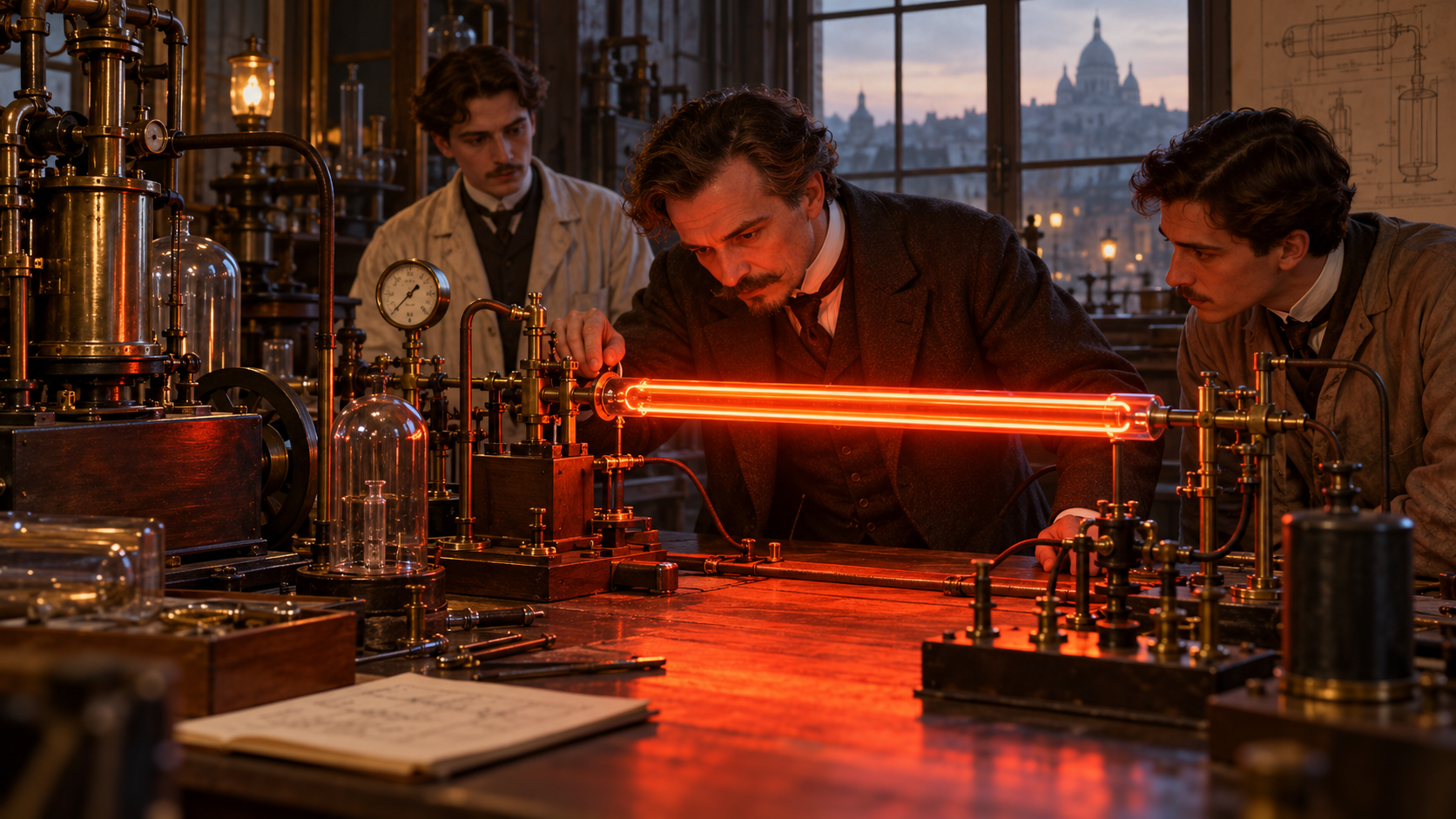
On January 19, 1915, Georges Claude’s United States patent for a system of illumination by luminescent tubes was published. Claude, a French engineer and industrialist, had demonstrated neon lighting publicly in Paris in 1910 and developed methods for making sealed gas-filled tubes bright and dependable. When high voltage excited neon inside a glass tube, the gas produced an intense orange-red glow. Skilled workers could bend the glass into letters, borders, and images, turning electric light into drawing. The patent helped establish a technology that would change how businesses announced themselves and how people experienced city streets after dark.
Glowing gas tubes were part of a broader scientific and commercial story. Researchers had experimented with electrical discharge in gases long before Claude, and different gases or fluorescent coatings could produce a range of colors. The practical challenge was creating pure gases, durable electrodes, reliable seals, and a manufacturing process suitable for everyday use. Claude’s companies licensed the system internationally. In the United States, early installations drew attention precisely because they looked unlike ordinary incandescent bulbs. A line of light could float across a dark facade, remain visible through rain or distance, and form a name or symbol without a painted surface.
During the 1920s and 1930s, neon signs became fixtures of theaters, hotels, diners, pharmacies, service stations, and roadside businesses. Their color and motion helped merchants compete for attention in growing automobile cities. Sign makers developed a specialized craft that combined design, glass bending, electrical work, and maintenance. Neon came to signify modernity, nightlife, abundance, and sometimes danger. It illuminated commercial districts from Times Square to Las Vegas, while smaller signs made a neighborhood café or repair shop recognizable after sunset. The same technology could feel glamorous, practical, intimate, or overwhelming depending on its scale and setting.
Many historic signs disappeared as businesses closed, regulations changed, and cheaper plastic or LED systems spread. Preservationists and contemporary artists have renewed interest in genuine glass-tube neon because its warm glow, slight variation, and handmade curves differ from digital imitation. Modern cities now debate energy use, light pollution, safety, heritage, and the character of commercial streets. The 1915 patent did more than protect a device; it helped create a visual language for nighttime life. A century later, a neon window sign still communicates in an instant that a place is open, active, and waiting behind the glass.
Claude publicly demonstrated neon lighting in Paris in 1910. His U.S. Patent 1,125,476 described a practical system for illuminating with luminescent gas tubes.
Neon naturally glows orange-red when electrically excited; other gases and later coatings expanded the palette available to sign makers.
Creating signs required glass bending, gas handling, electrodes, transformers, lettering, design, installation, and repair—work that became a specialized trade.
Unlike rows of bulbs, a continuous tube could outline words and pictures, making storefront messages readable from far away at night.
Neon shaped theaters, diners, hotels, pharmacies, roadside commerce, and famous entertainment districts, becoming a symbol of urban nightlife.
LEDs are cheaper and more efficient, but artists and preservationists value traditional neon’s handmade form, distinctive warmth, and local history.
Explore more of “This Day in Lifestyles”
Discover more moments in everyday life, design, education, travel, food, fashion, and culture. Each story connects a calendar date with an event that changed how people lived.