

On This Day in Tech: November 26, 2011
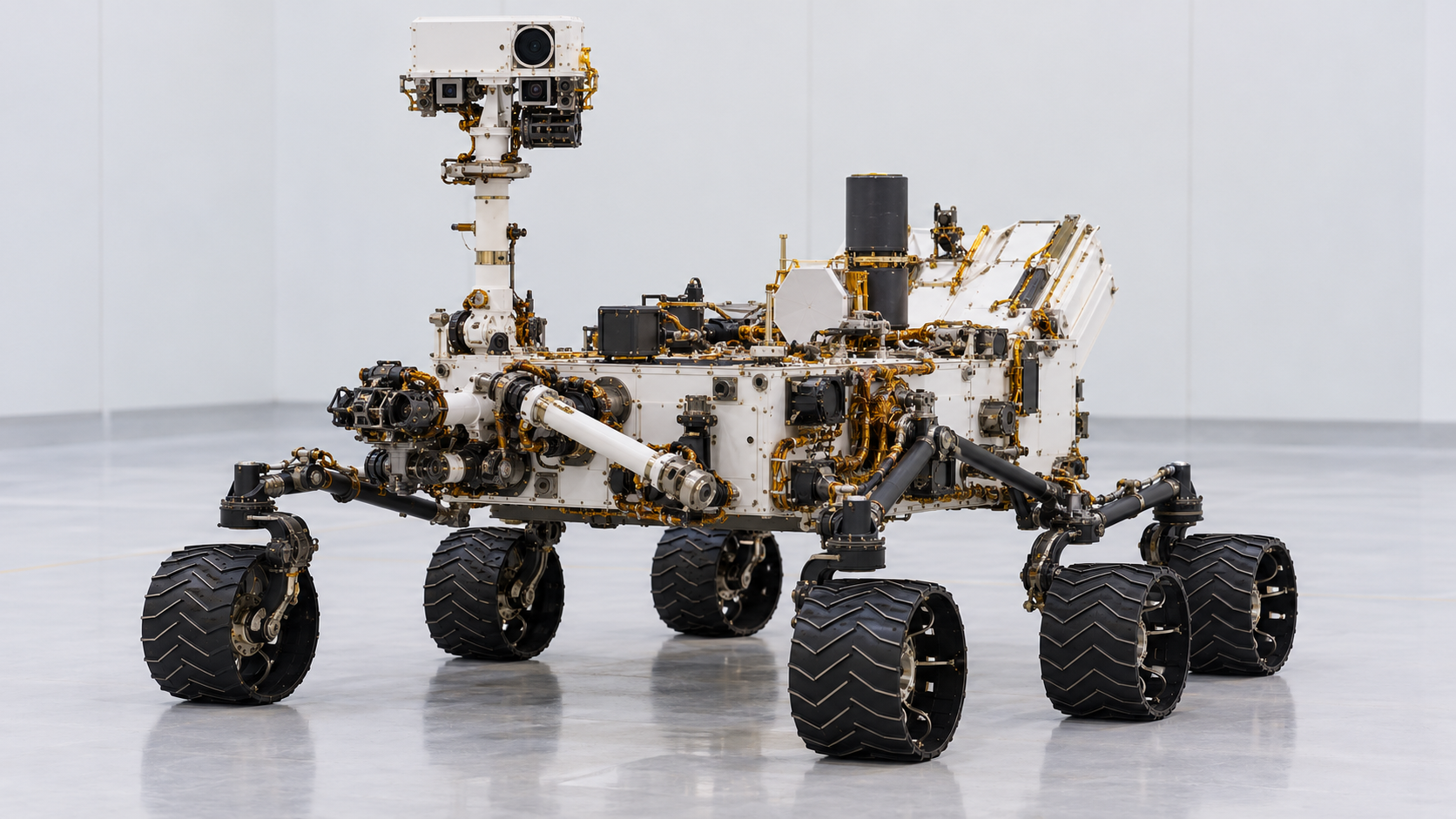
On November 26, 2011, NASA launched the Mars Science Laboratory mission, carrying the Curiosity rover, from Cape Canaveral Air Force Station in Florida. An Atlas V rocket lifted the spacecraft away from Earth and began its journey toward Mars. The mission was managed by the Jet Propulsion Laboratory, with contributions from multiple scientific and engineering teams. Curiosity was a mobile laboratory intended to investigate whether the planet had once offered environments suitable for microbial life. Launch was the start of an interplanetary trip, not the rover’s arrival or its first day of scientific driving on the Martian surface.
Earlier robotic missions had established evidence that water had affected Mars, but understanding habitability required more than identifying a wet location. Scientists wanted to study rocks, minerals, and chemical ingredients together, looking for clues about the conditions in which they formed. Curiosity carried cameras, analytical instruments, and a robotic arm with tools for examining and sampling material. Its internal laboratories could study prepared samples, while other instruments gathered information from nearby targets and the surrounding environment. The rover used a radioisotope power system rather than relying on broad solar panels, allowing a different approach to the daily energy demands of its work.
Getting that equipment to its destination created a demanding sequence of separate problems. The rocket had to place the spacecraft on an appropriate departure path, and the cruise stage then supported navigation and operations during the months-long crossing. Arrival would require atmospheric entry, heat protection, parachute deployment, powered descent, and the sky-crane maneuver that lowered the rover on cables. Curiosity was too heavy for engineers simply to repeat the airbag landing method used by smaller earlier rovers. None of those later steps had been accomplished by the new mission when it left Florida, however successful the launch itself had been.
Curiosity landed in Gale Crater in August 2012 and subsequently examined rocks and sediments associated with ancient environments. Its findings supported the conclusion that parts of Mars had once provided conditions that could have supported microbial life. That is different from discovering living organisms or proving that life actually developed there. The mission’s continuing work linked observations made from orbit with measurements taken directly from rocks on the ground. November 26 marks the departure of the spacecraft that made those investigations possible. It illustrates how a scientific question becomes a complete engineering project, combining a launch vehicle, interplanetary navigation, an unusual landing system, carefully selected instruments, and years of coordinated operations.
Curiosity departed Florida aboard an Atlas V on November 26, 2011. The launch and the August 2012 landing were distinct mission milestones.
The scientific objective concerned past habitability. Evidence of a suitable environment is not the same as evidence that organisms existed there.
A larger rover could carry substantial sample-analysis equipment. Its size also required a landing approach different from earlier airbag systems.
Successful departure did not eliminate the risks of cruise and arrival. Navigation, atmospheric entry, and powered descent still lay ahead.
Measurements in Gale Crater connected geological features with the chemistry of ancient environments. The mission studied local evidence rather than the entire planet at once.
The sky-crane system paired precision control with a heavy scientific payload. Its later performance helped inform another generation of Mars rover missions.
Explore more of "On This Day ..."
Discover more events from the same date across news, politics, technology, sports, and other fields. Each link highlights significant moments that shaped history on different fronts.