

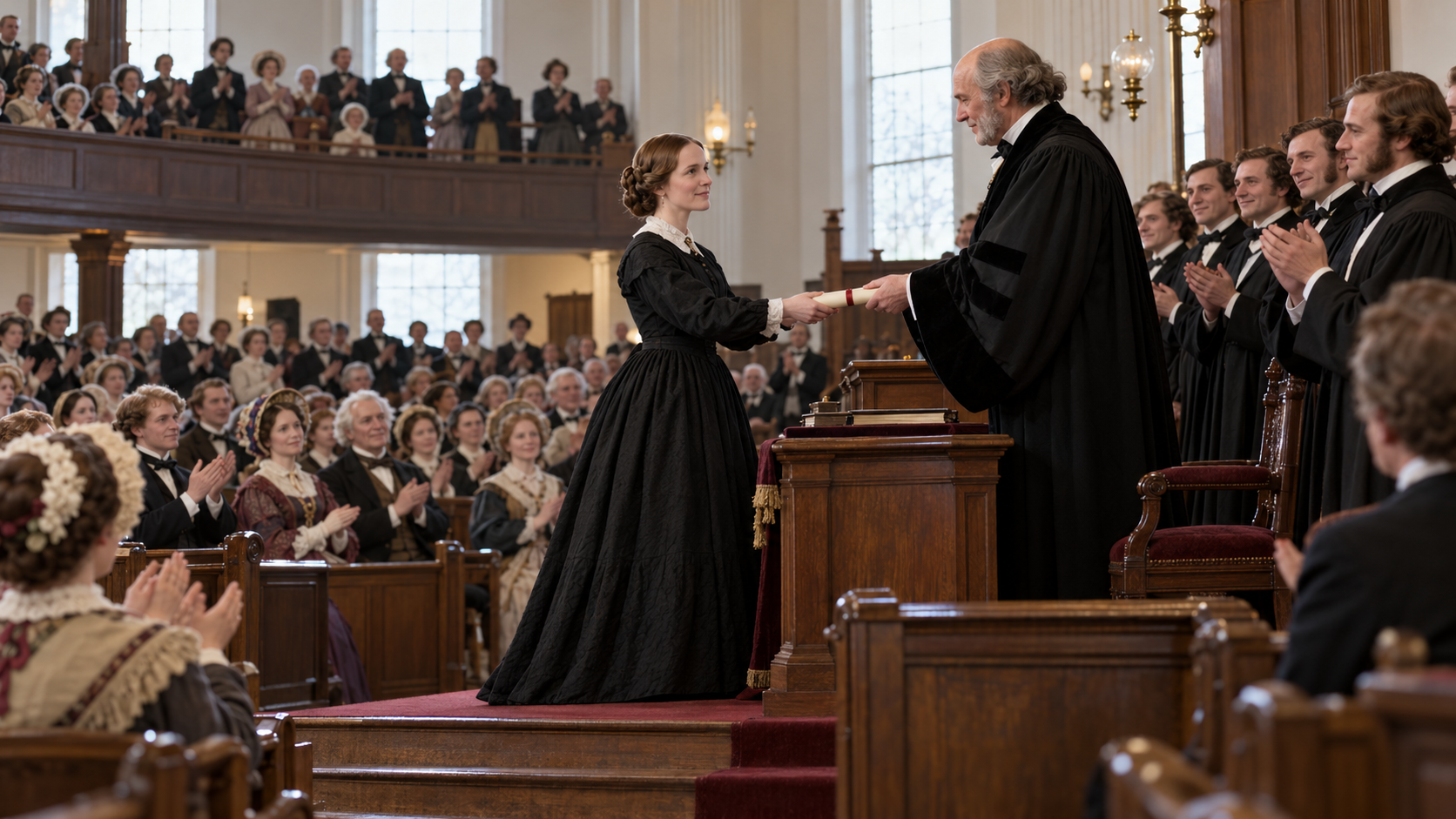
On This Day in Lifestyles: January 23, 1849
On January 23, 1849, Elizabeth Blackwell received a medical degree from Geneva Medical College in New York, becoming the first woman in the United States to earn an M.D. from a recognized medical school. Her graduation was more than a personal achievement. It challenged assumptions about who could study science, treat patients, and hold professional authority. Newspapers reported on the unusual occasion, and Blackwell suddenly became a public example of a woman entering a field that schools, hospitals, and professional societies had largely reserved for men.
Blackwell’s path was filled with barriers. Medical colleges repeatedly rejected her applications before Geneva admitted her, reportedly after the male students voted on the question. Once enrolled, she faced isolation as well as restrictions on clinical instruction. She studied anatomy, chemistry, diagnosis, and patient care while navigating a culture that often treated her ambition as improper. Her persistence demonstrated that exclusion was social, not intellectual. By completing the same academic requirements as her classmates and graduating at the top of her class, she made a direct case for women’s access to rigorous professional education.
A degree did not remove every obstacle. Hospitals were reluctant to appoint a woman physician, and many patients had never encountered one. Blackwell continued her training in Europe, returned to New York, and eventually helped establish the New York Infirmary for Indigent Women and Children with her sister Emily Blackwell and physician Marie Zakrzewska. The institution offered care to underserved patients and practical experience to women doctors and nurses. She later supported a medical college for women and promoted public health, hygiene, and preventive medicine as essential parts of everyday well-being.
Blackwell’s graduation helped widen the imaginable future for generations of students. Women still faced quotas, discrimination, and uneven opportunities long after 1849, and equality in medicine remains unfinished. Yet the landscape of health care changed as more women became physicians, researchers, teachers, and leaders. Patients gained broader choices of caregivers, while medical education slowly became more representative of the communities it served. On this day, one diploma became a landmark in the long effort to connect talent with opportunity and to make professional life open to people once excluded from it. Blackwell’s example also mattered outside medicine. It encouraged advocates who were pressing colleges and professional schools to judge applicants by ability rather than gender, and it gave families a visible model of education leading to public service. Her career made institutional access feel possible, even when that access remained difficult.
Elizabeth Blackwell earned her M.D. from Geneva Medical College on January 23, 1849.
Her achievement made her the first woman in the United States to receive a medical degree from a recognized school.
Admission, clinical training, hospital appointments, and professional acceptance were all restricted by prevailing ideas about women's roles.
Blackwell's work showed that women could meet the same academic and clinical standards as male physicians.
Blackwell helped create an infirmary that served women and children while providing experience to women medical professionals.
Her career linked access to education with better care, public health, and wider opportunity in professional life.
Explore more of “This Day in Lifestyles”
Discover more moments in everyday life, design, education, travel, food, fashion, and culture. Each story connects a calendar date with an event that changed how people lived.