

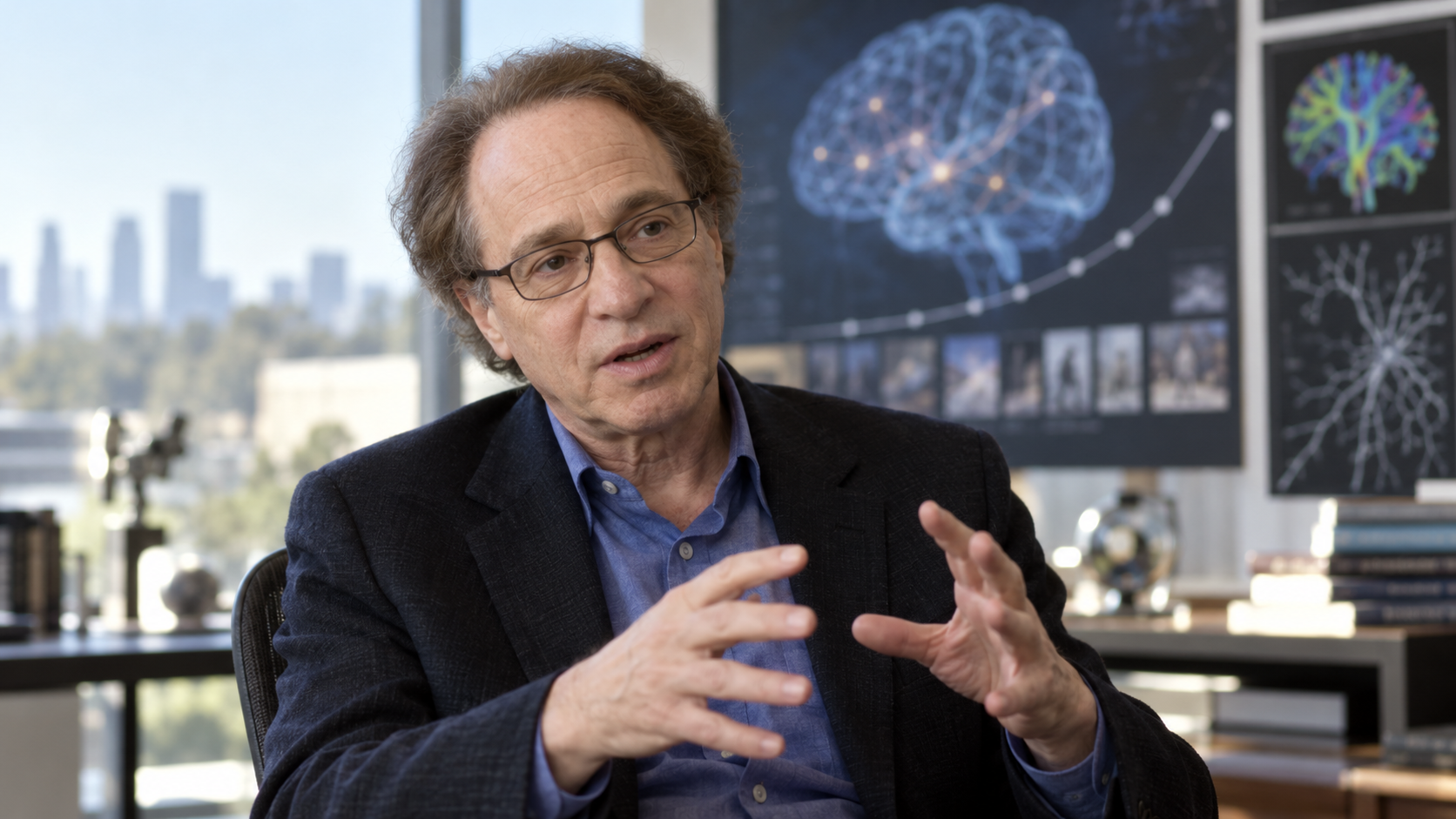
“The capability of information technology doubles each year.”
Ray Kurzweil made this statement in a 2015 interview while explaining what he calls the law of accelerating returns. He argued that many measures connected to information technology—such as computing price-performance, storage, communication, and biological data processing—have improved along exponential curves. A repeated doubling is easy to underestimate because early increases appear modest before compounding becomes dramatic. Kurzweil used that pattern to explain why devices can become both more capable and less expensive over relatively short periods, opening applications that were impractical when the same function required rare, costly equipment.
The sentence is a broad summary, not a physical law that every technology obeys at an identical annual rate. Measures vary, curves slow, markets intervene, and one technical improvement may depend on advances elsewhere. Computing performance does not automatically double the quality of education, medicine, institutions, or daily life. New capability can also create congestion, energy demand, security exposure, and unequal access. Exponential charts are most useful when their metric, time period, and assumptions are explicit. Otherwise a precise-looking curve can turn into an unsupported claim that all progress is inevitable.
Kurzweil’s central insight remains powerful: people often reason linearly about processes that compound. That error affects planning for storage, network traffic, model training, and falling sensor costs. It can cause institutions to wait too long before preparing for a capability or to assume an early prototype will improve at a constant, modest pace. The opposite error is extrapolating a trend indefinitely while ignoring bottlenecks, regulation, economics, or user needs. Forecasting requires both the momentum of an information process and the constraints surrounding its deployment.
The current AI boom demonstrates both sides of the lesson. Improvements in compute, data, algorithms, and infrastructure produced capabilities that many observers underestimated, yet further progress is not guaranteed to arrive on a single schedule or translate evenly into value. Kurzweil’s quote invites disciplined attention to rates of change. Track the right measures, expect compounding to surprise, and update plans as evidence arrives. Exponential growth can make the future feel predetermined, but technology still enters society through budgets, products, laws, labor, and environmental limits. Understanding the curve is a starting point for judgment, not a replacement for it. Comparing forecasts with later evidence is essential; otherwise memorable predictions survive while quiet misses disappear from the story. Organizations should preserve those comparisons when deciding which trend truly deserves investment today and which does not.
Kurzweil used the sentence while explaining his law of accelerating returns, a view that key measures of information technology improve through repeated exponential gains.
He connected the pattern to rising capability and falling cost, arguing that compounding improvements allow applications that earlier generations of hardware could not support affordably.
Repeated doubling can produce large changes after several cycles, so linear intuition often underestimates the speed with which information technologies may cross practical thresholds.
The annual rate is not universal or permanent. Metrics differ, physical and economic bottlenecks matter, and technical capability does not translate automatically into social benefit.
AI, storage, networking, and sensors all reward planning that notices compounding trends. Organizations can be unprepared when a capability shifts from costly demonstration to routine tool.
Sound forecasting pairs trend data with constraints and frequent revision. It neither dismisses exponential change nor treats a curve as destiny independent of institutions and deployment.
Explore more "Quotes of The Day"
Discover more notable quotes from influential voices across politics, science, business, technology, sports, and culture. Each quote offers insight into how ideas, beliefs, and decisions shape the world around us.