

On This Day in Tech: December 8, 2010
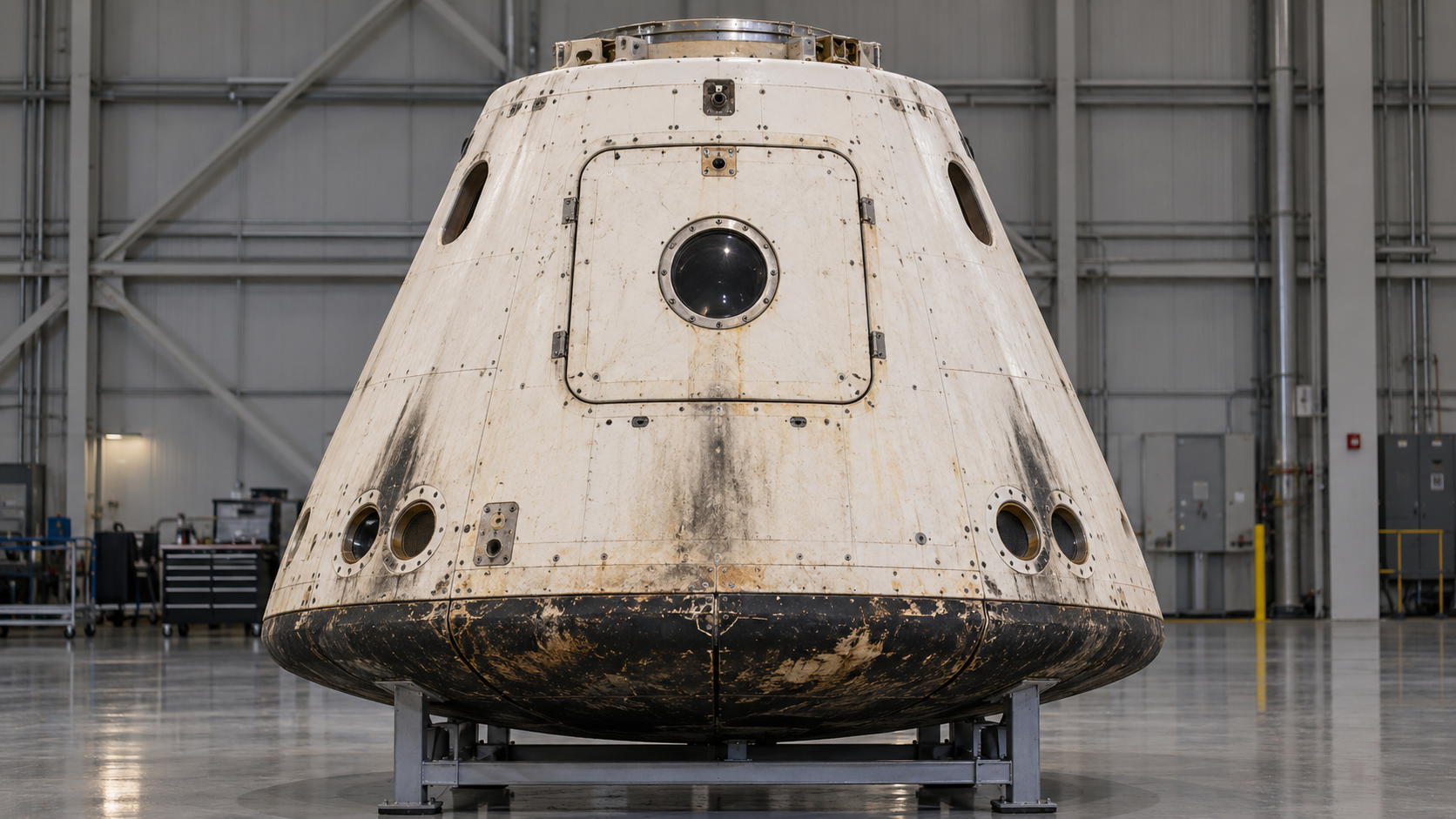
On December 8, 2010, SpaceX launched its first Dragon capsule into orbit aboard a Falcon 9 rocket from Cape Canaveral Air Force Station in Florida. After a brief orbital mission, the uncrewed spacecraft reentered the atmosphere, descended by parachute, and splashed down in the Pacific Ocean, where a recovery team retrieved it. The flight was part of NASA’s Commercial Orbital Transportation Services program, usually called COTS. It demonstrated that a commercially developed spacecraft could complete the demanding sequence of orbital flight and controlled return. It did not carry astronauts or visit the International Space Station, achievements belonging to later missions and different stages of development.
The test connected two vehicles with different jobs. Falcon 9 supplied the propulsion needed to reach orbit, while Dragon had to function independently after separation, orient itself, execute a deorbit maneuver, and survive the return. The launch was Falcon 9’s second flight and Dragon’s first orbital flight. NASA’s partnership approach supported the development of commercial cargo transportation rather than simply reproducing an earlier government spacecraft. The December demonstration therefore tested both a hardware system and a development arrangement in which a private company designed and operated vehicles against agreed technical milestones.
Returning safely required managing extreme aerodynamic heating. Dragon used a heat shield made with PICA-X, SpaceX’s adaptation of a heat-shield material developed through NASA research. The protective system was designed to absorb and shed heat as the capsule crossed the atmosphere. NASA-supported aircraft observations also gathered thermal imagery and telemetry during the return, helping engineers compare actual behavior with predictions. Those measurements mattered because a successful splashdown alone could not reveal everything about temperatures, margins, and the performance of individual parts. Parachutes and recovery operations then completed a chain that began with launch and passed through several very different physical environments.
The result supported continued development toward cargo service for the space station. Later Dragon flights would demonstrate rendezvous, station operations, and delivery and return of supplies; the December 2010 mission had a narrower scope. It also should not be confused with Falcon 9 booster landings, which were a separate reuse challenge, or with the later Crew Dragon spacecraft. The anniversary highlights the value of demonstrating an entire transportation cycle rather than only reaching space. A useful orbital vehicle must provide dependable navigation, power, communications, thermal protection, descent, and recovery as an integrated system. The first Dragon flight supplied practical evidence that those elements could work together, while leaving additional tests before routine station service could be established.
COTS stood for Commercial Orbital Transportation Services. Its development partnerships were intended to establish new ways of delivering cargo to low Earth orbit.
The December test paired the second Falcon 9 launch with the first Dragon orbital flight. The rocket's flight count and the capsule's flight count were not the same.
Dragon returned to the Pacific rather than landing on a runway. A heat shield, parachutes, recovery boats, and supporting operations all formed part of the transport system.
NASA's aircraft observations supplied measurements of the reentry environment. They complemented the company's onboard instrumentation and the physical inspection of the recovered capsule.
An orbital return was an important milestone, but it did not certify every maneuver needed near a crewed station. Those operations required additional demonstrations.
The original cargo capsule differed visibly and operationally from later Crew Dragon vehicles. This anniversary concerns the 2010 C1 test, not a crew launch or booster landing.
Explore more of "On This Day ..."
Discover more events from the same date across news, politics, technology, sports, and other fields. Each link highlights significant moments that shaped history on different fronts.