

On This Day in Tech: December 14, 1962
On December 14, 1962, NASA’s Mariner 2 spacecraft flew past Venus and returned measurements to Earth, completing the first successful mission to another planet. Built and operated by the Jet Propulsion Laboratory, the uncrewed probe had launched from Cape Canaveral in August aboard an Atlas-Agena rocket. Its encounter with Venus was a flyby, not a landing or an entry into orbit around the planet. Scientific instruments scanned the cloud-covered world while the spacecraft continued along a path around the Sun. The milestone demonstrated that navigation, communications, power, and scientific equipment could function together across an interplanetary journey.
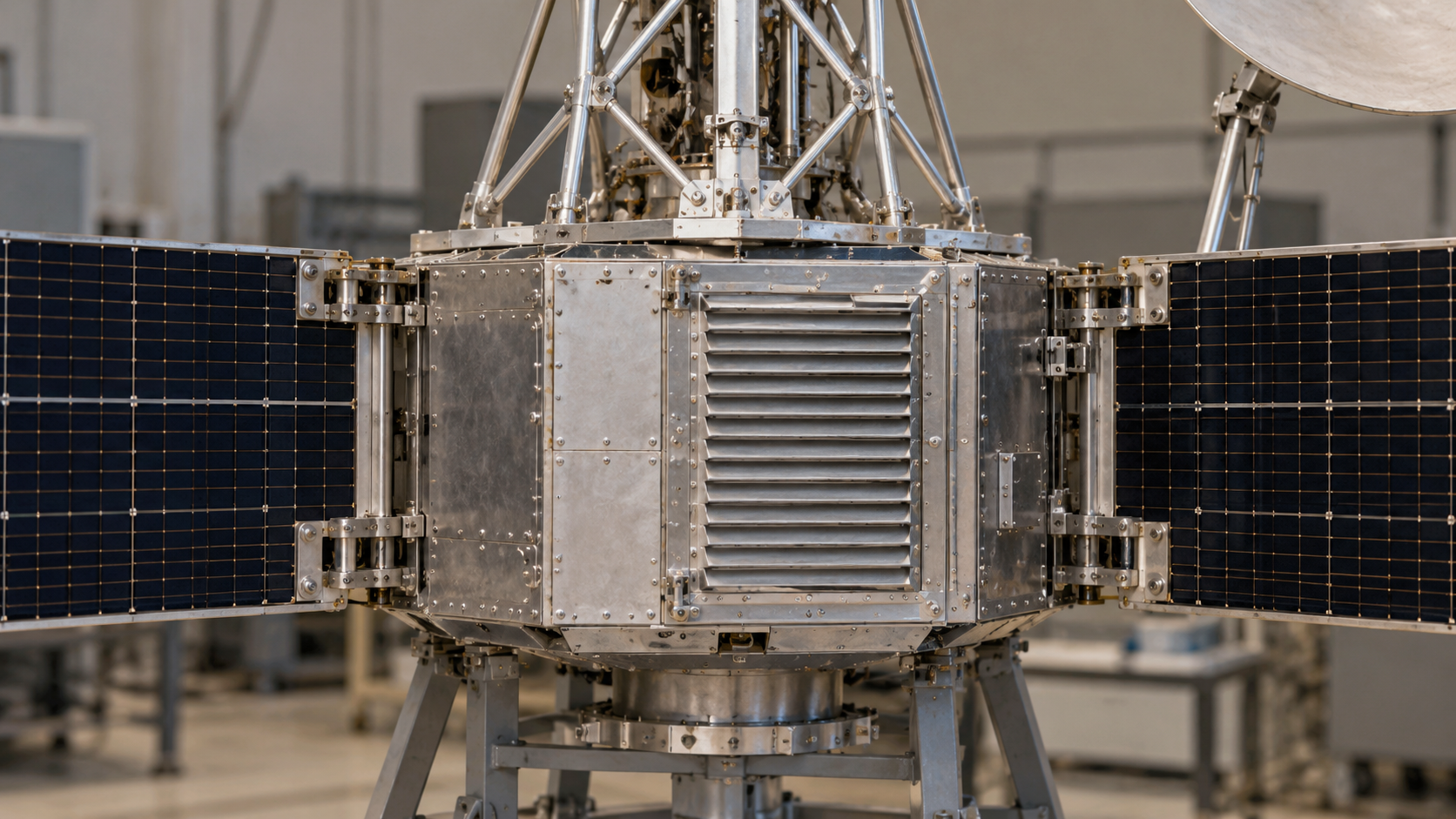
The mission followed the failure of Mariner 1, whose launch vehicle had been destroyed after departing from its intended path. Mariner 2 carried a compact set of instruments within the limitations imposed by the available launcher. Two solar panels supplied power, a radio linked the probe with Earth, and a lightweight structure supported sensors and antennas. Because Venus’s thick clouds concealed the surface, the payload emphasized measurements rather than ordinary photography. It carried infrared and microwave radiometers along with equipment for investigating magnetic fields, particles, and the space environment. There was no television camera waiting to send close-up pictures of cities or landscapes beneath the clouds.
Reaching the planned encounter required a course correction and continued attention to the spacecraft’s condition. During the cruise, Mariner 2 experienced orientation problems, rising temperatures, and the failure of one solar panel. The remaining panel received more sunlight as the probe moved inward toward Venus. When difficulties with the encounter sequencer appeared, controllers used radio commands to begin the observations. The successful passage was therefore not evidence that every component had worked perfectly from launch onward. It reflected a combination of robust design, automatic recovery, ground tracking, and operational decisions that preserved the mission despite important faults.
The returned measurements strengthened the conclusion that Venus was an extremely hot world rather than a hospitable tropical counterpart to Earth. The mission also collected information during the journey, including observations relevant to the solar wind. Its limited instruments and brief encounter did not provide a complete account of Venus’s atmosphere or surface, and later orbiters and landers would investigate questions the flyby could not resolve. Contact with Mariner 2 ended in January 1963. December 14 remains a technological anniversary because it changed planetary exploration from a proposed capability into a demonstrated one: a spacecraft could be sent toward another world, survive a long cruise, make useful measurements there, and communicate the results back to people who remained on Earth.
Venus's cloud cover helped determine the scientific payload. Radiometers could investigate conditions without relying on visible-light surface photographs.
The lightweight spacecraft combined a central bus, solar panels, antennas, and an open instrument-support structure. Its appearance differed greatly from a modern planetary rover.
Mariner 2 followed the unsuccessful Mariner 1 launch. The two missions should not be combined into a claim that the first launch attempt reached Venus.
Ground controllers helped preserve the encounter after problems with onboard sequencing. The flight's success included operational responses to faults, not flawless hardware.
Flyby data can answer important questions while leaving others open. Passing a planet once provides a different record from repeated orbital measurements or direct surface sampling.
The spacecraft continued in solar orbit after the encounter. Its achievement was the successful investigation of a planet from a passing trajectory, not a Venus landing.
Explore more of "On This Day ..."
Discover more events from the same date across news, politics, technology, sports, and other fields. Each link highlights significant moments that shaped history on different fronts.