

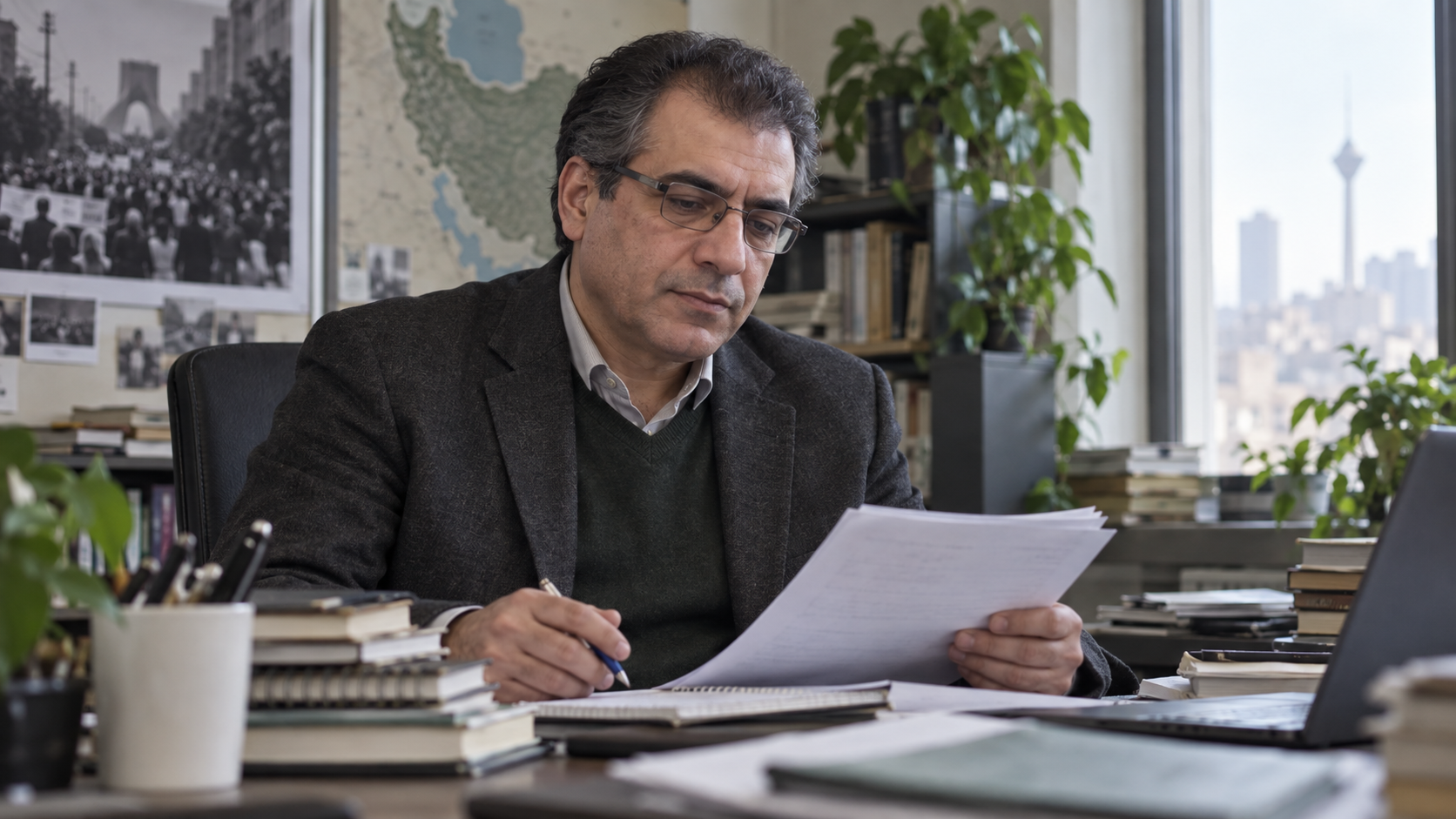
“The regime is battling a legitimacy crisis and so considers a free press as an enemy.”
Iranian journalist Siamak Ghaderi made this observation in his prepared speech for the Committee to Protect Journalists’ 2014 International Press Freedom Awards. A longtime reporter and editor at the official IRNA news agency, he later published independent reporting and commentary on his own blog. After covering protests and challenging official claims, he was arrested in 2010, sentenced to four years in prison and lashes, and released in 2014. His quote explains a recurring pattern: a government uncertain of public consent may describe scrutiny as an attack on the state rather than respond to the substance of the reporting.
Journalists should test claims of legitimacy through observable conduct. Elections, courts, public services, protest rights, and access to information provide evidence about whether institutions accept meaningful accountability. Official statements deserve accurate quotation, but they should be compared with law, enforcement, budgets, and testimony from people affected by policy. Reporters need to distinguish criticism of a government from hostility toward a population or country. That distinction prevents authorities from using patriotic language to avoid questions about their own decisions.
When independent reporting is labeled propaganda, method becomes a form of protection. Newsrooms should maintain source notes, authenticated documents, publication timelines, legal review, and a clear record of requests for comment. Sensitive contacts require compartmented access and realistic explanations of risk. Editors should state what remains unknown and correct errors promptly; unsupported certainty gives officials an opening to discredit stronger findings. Collaborative publication and mirrored archives can keep evidence available if a site is blocked or a reporter is detained.
Ghaderi’s case also illustrates the distance between constitutional promises and daily enforcement. A right written in law has limited value when vague charges, closed proceedings, physical punishment, or selective prosecution deter its use. Coverage should follow cases beyond arrest, tracking hearings, detention conditions, appeals, release terms, and continuing restrictions. International advocacy can increase visibility, while reporters closest to the case and their families should help decide which publicity is safe and useful. The quote remains relevant because attacks on the press often reveal a deeper institutional weakness. Confident governments can answer evidence with evidence and tolerate criticism without turning disagreement into criminal suspicion. Public trust cannot be manufactured by silencing contrary accounts; it grows when records are open, errors can be challenged, and officials accept scrutiny as part of governing. A free press is not an enemy of legitimate authority. It is one of the mechanisms by which authority demonstrates that it deserves legitimacy.
Ghaderi used the sentence in his 2014 CPJ speech after imprisonment for independent reporting and commentary that challenged official claims and covered public protest.
Legitimacy can be evaluated through elections, courts, services, protest rights, open records, enforcement patterns, and the treatment of evidence-based criticism.
Source notes, authenticated documents, legal review, comment requests, mirrored archives, case follow-up, and locally guided advocacy protect reporting under hostile conditions.
Explore more "Quotes of The Day"
Discover more notable quotes from influential voices across politics, science, business, technology, sports, and culture. Each quote offers insight into how ideas, beliefs, and decisions shape the world around us.