

On This Day in Health: August 7, 1948
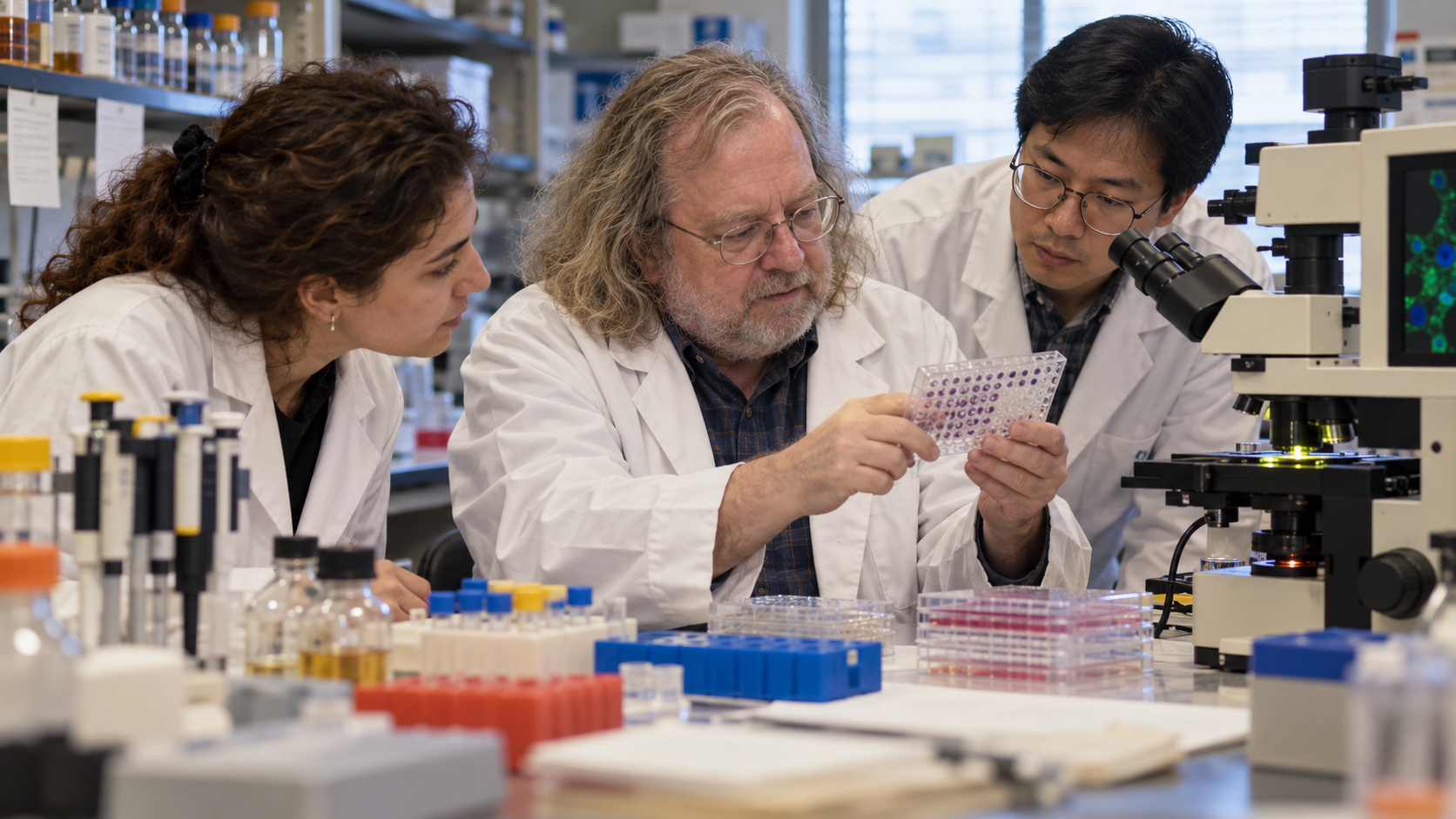
James Patrick Allison was born in Alice, Texas, on August 7, 1948. His father was a physician, and his mother died of lymphoma when Allison was young, experiences that placed medicine and cancer close to his early life. He studied microbiology at the University of Texas at Austin and completed a doctorate in biological science. Allison chose laboratory research rather than clinical practice, concentrating on the immune system’s T cells. These cells can recognize threats and coordinate attacks, but their activity is controlled by molecular signals that prevent harmful overreaction. Understanding those controls became the question that shaped his career.
During the 1980s and 1990s, Allison helped clarify how T cells are activated. His laboratory studied CTLA-4, a protein on T cells that many researchers initially thought might help stimulate immune responses. Allison and others showed instead that CTLA-4 acts as an inhibitory signal, comparable to a brake that restrains T-cell activity. He then asked a daring question: if an antibody blocked that brake, could the immune system attack cancer more effectively? In mouse experiments, blocking CTLA-4 allowed immune responses to eliminate tumors and create lasting protection. The strategy differed from conventional treatments because it targeted immune regulation rather than attacking tumor cells directly.
Translating the result into patient care required years of antibody development and clinical testing. The drug ipilimumab, which blocks CTLA-4, produced durable responses in a subset of people with advanced melanoma. In 2011, the U.S. Food and Drug Administration approved it for metastatic melanoma. Other therapies targeting immune checkpoints such as PD-1 and PD-L1 followed, and combinations expanded the approach to more cancers. Checkpoint inhibitors do not help every patient and can release immune activity against healthy organs, so clinicians must recognize and manage potentially serious side effects. Even with those limits, the treatments established immunotherapy as a major form of cancer care.
Allison shared the 2018 Nobel Prize in Physiology or Medicine with Tasuku Honjo for discoveries that led to cancer therapy by inhibiting negative immune regulation. Their work showed how basic research on cell signaling could become a new therapeutic principle. It also changed the goals of oncology: some patients with advanced disease experienced responses that continued long after treatment. Researchers now study biomarkers, resistance, combinations, and new checkpoints to extend those benefits safely. Allison’s birthday marks a shift in how cancer can be treated. Rather than focusing only on the tumor, medicine learned to adjust the immune system’s own controls and give T cells a better chance to act.
Allison was born in Alice, Texas, on August 7, 1948, studied microbiology, and built a research career around the signals that control T-cell activity.
His laboratory helped show that CTLA-4 is an inhibitory checkpoint, functioning as a brake that limits immune responses and protects against excessive activation.
Blocking CTLA-4 with an antibody released that brake in mouse experiments, allowing T cells to reject tumors and produce lasting immune protection.
The resulting drug ipilimumab became the first approved therapy to block an immune checkpoint and improved survival for some patients with advanced melanoma.
Checkpoint therapy has expanded to multiple cancers, although responses vary and excessive immune activation can cause serious inflammation in healthy organs.
Allison and Tasuku Honjo shared the 2018 Nobel Prize for establishing inhibition of negative immune regulation as a new principle of cancer treatment.
Explore more of "On This Day ..."
Discover more events from the same date across news, politics, technology, sports, and other fields. Each link highlights significant moments that shaped history on different fronts.