

On This Day in Health: August 6, 1881
Alexander Fleming was born near Darvel in Ayrshire, Scotland, on August 6, 1881. After moving to London as a young man, he entered St. Mary’s Hospital Medical School and trained as a physician and bacteriologist. He joined the research group led by Almroth Wright, where he studied infection, immunity, and the limits of antiseptics. Service in the Royal Army Medical Corps during the First World War exposed him to severe wound infections and strengthened his interest in treatments that could kill harmful bacteria without damaging human tissue. In 1922 he described lysozyme, a naturally occurring antibacterial enzyme found in tears and other secretions, an early sign of his careful attention to unexpected biological effects.
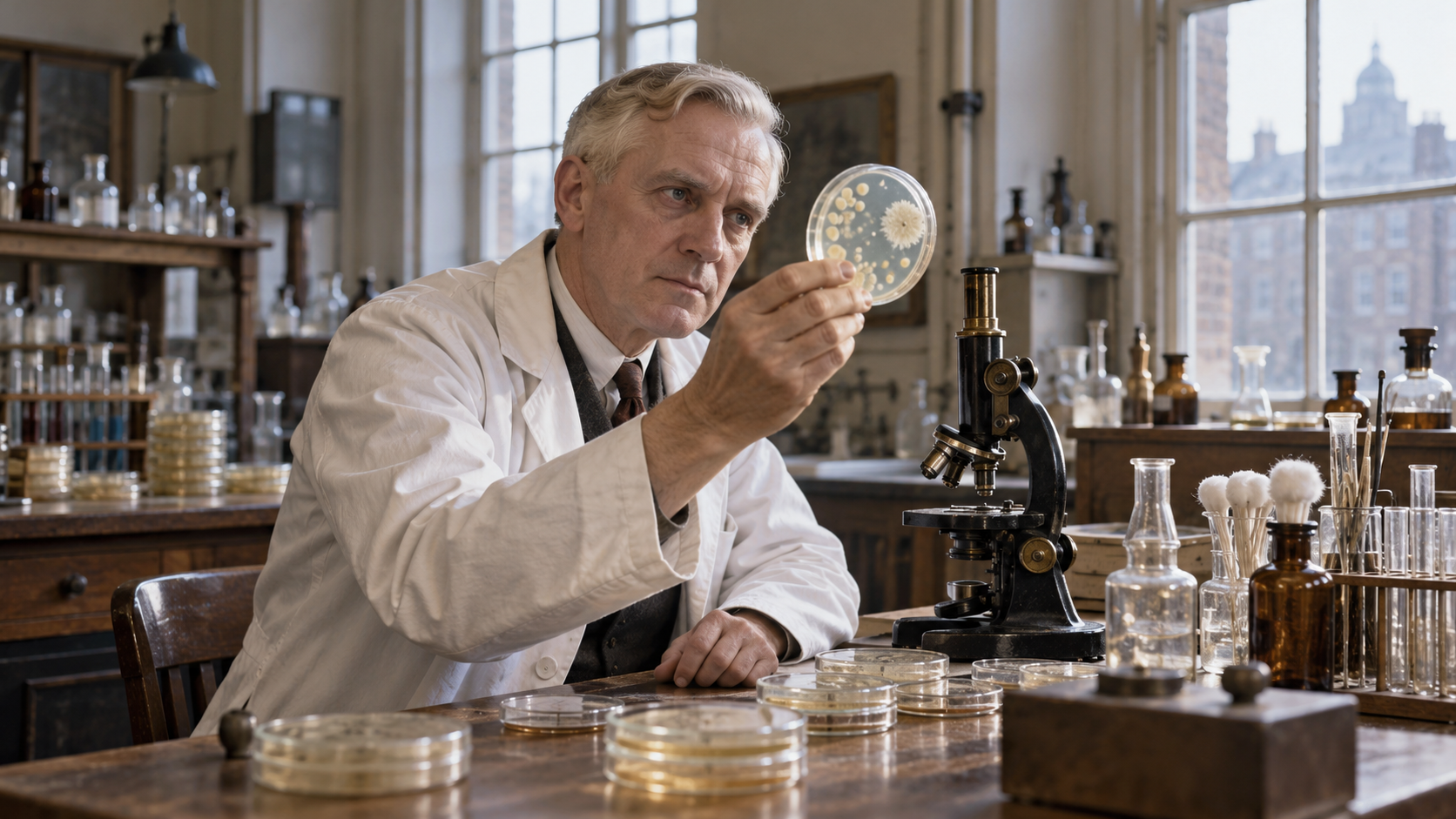
Fleming’s best-known observation came in 1928. After a mold contaminated a culture plate of staphylococci in his St. Mary’s laboratory, he noticed a clear zone where nearby bacteria had been destroyed. He identified the mold as belonging to the Penicillium group and called its antibacterial substance penicillin. Fleming tested its effects on several bacteria and published his findings in 1929. The material was difficult to isolate, purify, and stabilize, however, and he did not turn it into a practical drug. His contribution was the recognition that a mold product could selectively inhibit disease-causing bacteria and might have therapeutic value.
A decade later, Howard Florey, Ernst Chain, Norman Heatley, and a larger Oxford team developed methods to extract and test penicillin as a medicine. British and American laboratories, governments, hospitals, and manufacturers then collaborated to scale production during the Second World War. Clinical use showed that penicillin could cure infections that had often been deadly, including bacterial wound infections and septicemia. Fleming, Florey, and Chain shared the 1945 Nobel Prize in Physiology or Medicine. The award recognized connected stages of discovery and development, underscoring that a laboratory observation became a treatment through sustained work by many people.
Fleming’s birthday marks the life behind one of medicine’s defining transitions. Antibiotics made surgery, childbirth, trauma care, and treatment of bacterial disease far safer, but their success also created a new responsibility. Fleming understood that inadequate exposure could favor resistant bacteria, a problem now central to global health. Penicillin does not treat viruses, and bacteria continue to evolve resistance when antibiotics are overused or misused. The history therefore carries two lessons: curiosity can reveal a powerful therapy in an ordinary laboratory, and preserving that therapy requires careful science, manufacturing, diagnosis, prescribing, and public stewardship. Fleming’s work began the antibiotic era, while the team effort that followed made its benefits available to patients.
Fleming was born in rural Ayrshire on August 6, 1881, moved to London, and trained at St. Mary’s Hospital Medical School before specializing in bacteriology.
His wartime medical service and early work on lysozyme focused his attention on infection and on substances that could harm bacteria without injuring human tissue.
In 1928 he noticed that a contaminating Penicillium mold created a bacteria-free zone on a culture plate and named the active substance penicillin.
Fleming published the observation, but the Oxford team led by Florey and Chain later purified, tested, and developed penicillin into a usable medicine.
Wartime collaboration enabled mass production, and Fleming, Florey, and Chain shared the 1945 Nobel Prize for the discovery and development of penicillin.
The antibiotic era transformed care, while antimicrobial resistance now makes accurate diagnosis, appropriate prescribing, and responsible use essential to preserving its gains.
Explore more of "On This Day ..."
Discover more events from the same date across news, politics, technology, sports, and other fields. Each link highlights significant moments that shaped history on different fronts.