

On This Day in Business: February 5, 1919
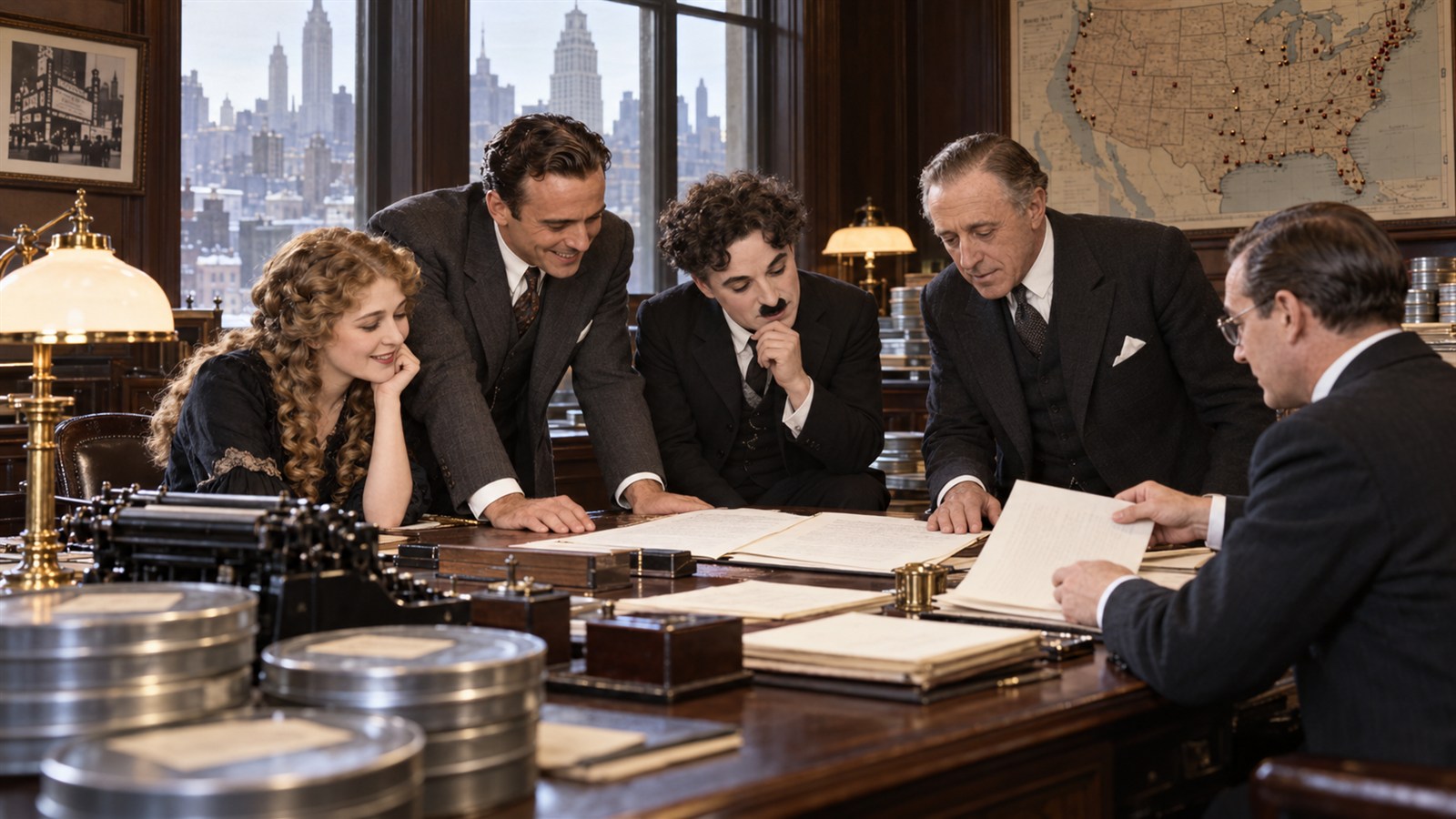
On February 5, 1919, Mary Pickford, Douglas Fairbanks, Charlie Chaplin and D. W. Griffith created United Artists. All four were among the most powerful names in silent film, yet the established studio and distribution system still limited how independently they could finance, release and profit from their work. Their new company would distribute pictures made by its partners and other producers rather than employ a large roster under a conventional factory-style studio. The arrangement promised creative autonomy, ownership participation and a more direct connection between a successful artist and the market for a film.
The founders brought complementary assets. Pickford and Fairbanks had enormous popular followings and sophisticated control of their screen identities. Chaplin combined global fame with ownership of his production process, while Griffith carried prestige as a director and producer. By pooling their bargaining power, they could challenge distributors whose national theater relationships were difficult for an individual filmmaker to duplicate. United Artists provided an umbrella under which independent productions could reach exhibitors while their creators retained more authority than a standard contract normally allowed.
The model also exposed the difficulty of coordinating star entrepreneurs. United Artists needed a steady release schedule, but its founders worked slowly, pursued separate priorities and were not always eager to supply enough pictures. The company lacked the integrated theater chains and continuous production pipelines of larger competitors. Even so, it survived by adapting, distributing films from independent producers and later backing important projects that did not fit comfortably inside other studios. Its identity became less a single production house than a flexible route to market for creators who assembled financing and talent around individual films.
The February agreement changed Hollywood's business imagination. It showed that valuable talent could organize distribution instead of merely negotiating with it, and that a company could be structured around project ownership rather than permanent mass production. Later independent studios, producer-led companies and filmmaker financing arrangements drew on the same desire to protect control and share upside. United Artists did not eliminate the power of large distributors, and its history included repeated ownership changes and financial crises. Its founding nevertheless remains a defining act of vertical rebalancing: four creators used their brands and audience demand to claim a larger role in how films were financed, marketed and monetized. The founders also made personal reputation a form of capital. Their names reassured exhibitors and audiences before the new company possessed a long record of its own, showing how talent brands can help an organization borrow trust during its earliest and most vulnerable stage.
Silent-film stars had enormous public value but still depended on established studios and distributors to reach theaters across the country.
Mary Pickford, Douglas Fairbanks, Charlie Chaplin and D. W. Griffith combined fame, production experience and negotiating power in a shared venture.
On February 5, 1919, the four created United Artists as a distributor intended to give producers greater ownership and creative authority.
The company offered independent films a route to exhibitors without requiring creators to surrender the degree of control common in studio contracts.
Irregular output and the founders' separate priorities made operations difficult, forcing United Artists to broaden its relationships with outside producers.
Its creator-led structure became an enduring model for project companies, independent studios and talent seeking a larger share of distribution economics.
Explore more of "On This Day ..."
Discover more events from the same date across news, politics, technology, sports, and other fields. Each link highlights significant moments that shaped history on different fronts.