

On This Day in Business: February 15, 1903
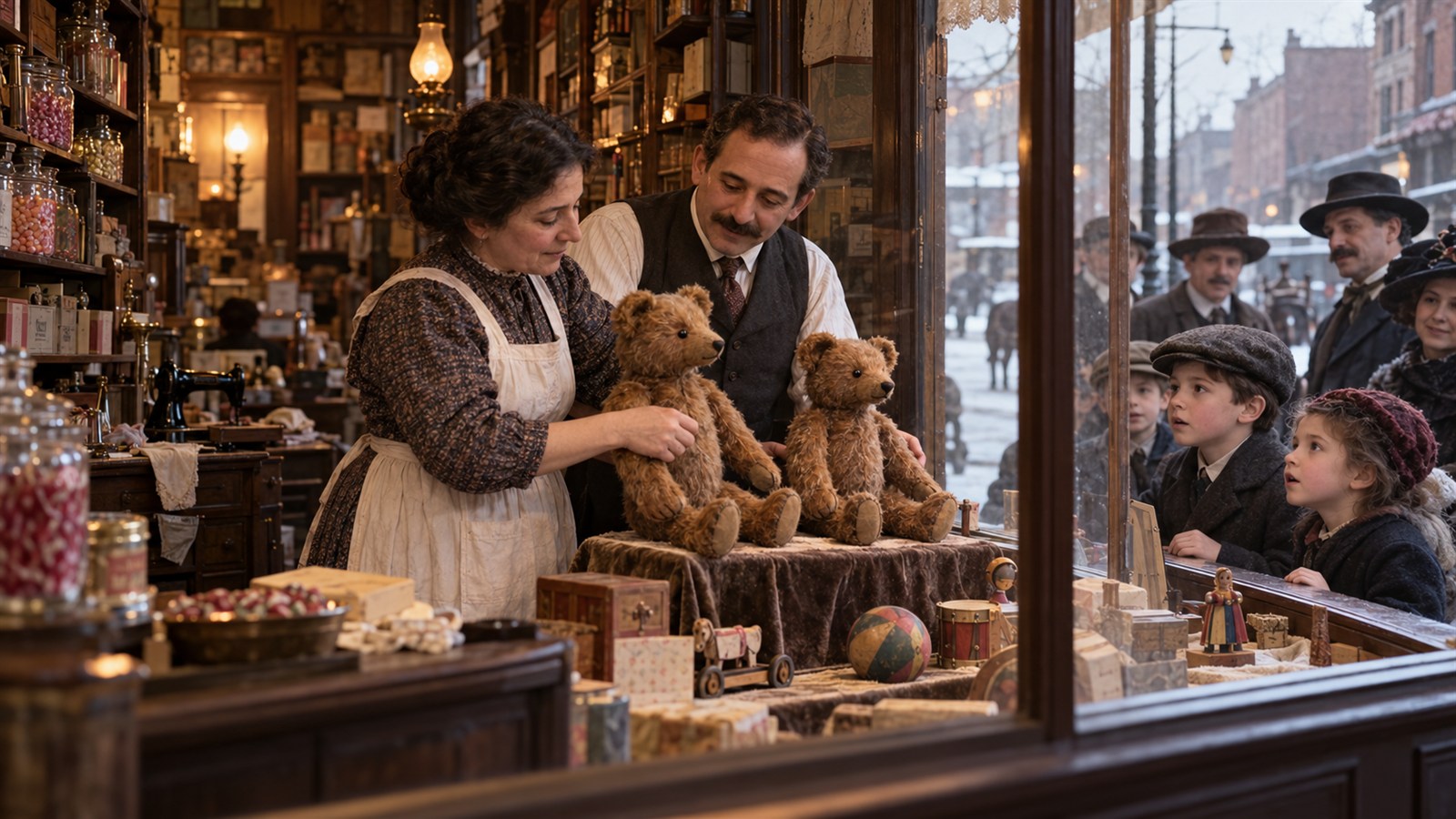
On February 15, 1903, Brooklyn shopkeeper Morris Michtom placed handmade stuffed bears in his window and advertised them as Teddy bears. The product drew on a widely circulated political cartoon by Clifford Berryman showing President Theodore Roosevelt refusing to shoot a captive bear during a 1902 hunting trip. According to family accounts, Morris and his wife Rose created a soft bear after seeing the cartoon and received permission to use Roosevelt's nickname. Their small candy and novelty shop suddenly had an object whose story customers already understood.
The Michtoms were not alone in developing a jointed toy bear. In Germany, Margarete Steiff's company and her nephew Richard were creating their own bear design at roughly the same time. The parallel origins show how new consumer categories can emerge from different sources when materials, manufacturing and cultural imagery align. In Brooklyn, initial demand exceeded what Rose could sew by hand. The couple moved toward factory production and built the Ideal Novelty and Toy Company, transforming a topical shop-window item into a repeatable product line.
The bear's appeal combined news, personality and emotional use. It referenced a president yet did not require buyers to support a political position. Its soft, child-sized form invited attachment, while the name made it easy to remember and discuss. Mass production lowered cost and retailers could offer variations without losing the recognizable category. Teddy bears soon appeared in songs, books, advertising and homes around the world. The product became an early example of how a story circulating in media could generate merchandise with a life much longer than the original event.
February 15 is significant because the sale joined a cultural moment to entrepreneurial execution. The Michtoms noticed an image, adapted it into a physical object, tested demand in their own storefront and expanded only when buyers responded. Their success also raises enduring questions about origin claims and intellectual property: several makers contributed to the modern teddy bear, and the nickname drew value from a public figure and a newspaper cartoon. What is clear is the commercial pattern. A small retailer used rapid prototyping, narrative branding and flexible production to create a category that became emotionally durable. More than a century later, toy companies still seek that same combination of recognizable character, comforting design and a story customers want to carry home. Retail display was crucial to the experiment. The window allowed passersby to understand the product without an advertising campaign, and direct requests gave the couple immediate market evidence. The shop itself functioned as showroom, research channel and early distribution point.
A 1902 political cartoon about Theodore Roosevelt and a captive bear supplied a widely recognized story that a small retailer could translate into merchandise.
Morris and Rose Michtom sewed soft bears for their Brooklyn shop while Germany's Steiff company independently developed a jointed bear design.
On February 15, 1903, Michtom displayed and sold the toy under the memorable Teddy bear name associated with the president.
Strong demand pushed the couple beyond hand sewing and helped them establish the Ideal Novelty and Toy Company for larger-scale production.
The bear moved easily through retail, publishing, music and advertising because its simple form supported many sizes, prices and interpretations.
Its endurance shows how fast experimentation, narrative branding and emotional usefulness can turn a topical novelty into a permanent consumer category.
Explore more of "On This Day ..."
Discover more events from the same date across news, politics, technology, sports, and other fields. Each link highlights significant moments that shaped history on different fronts.