

On This Day in Health: August 20, 1897
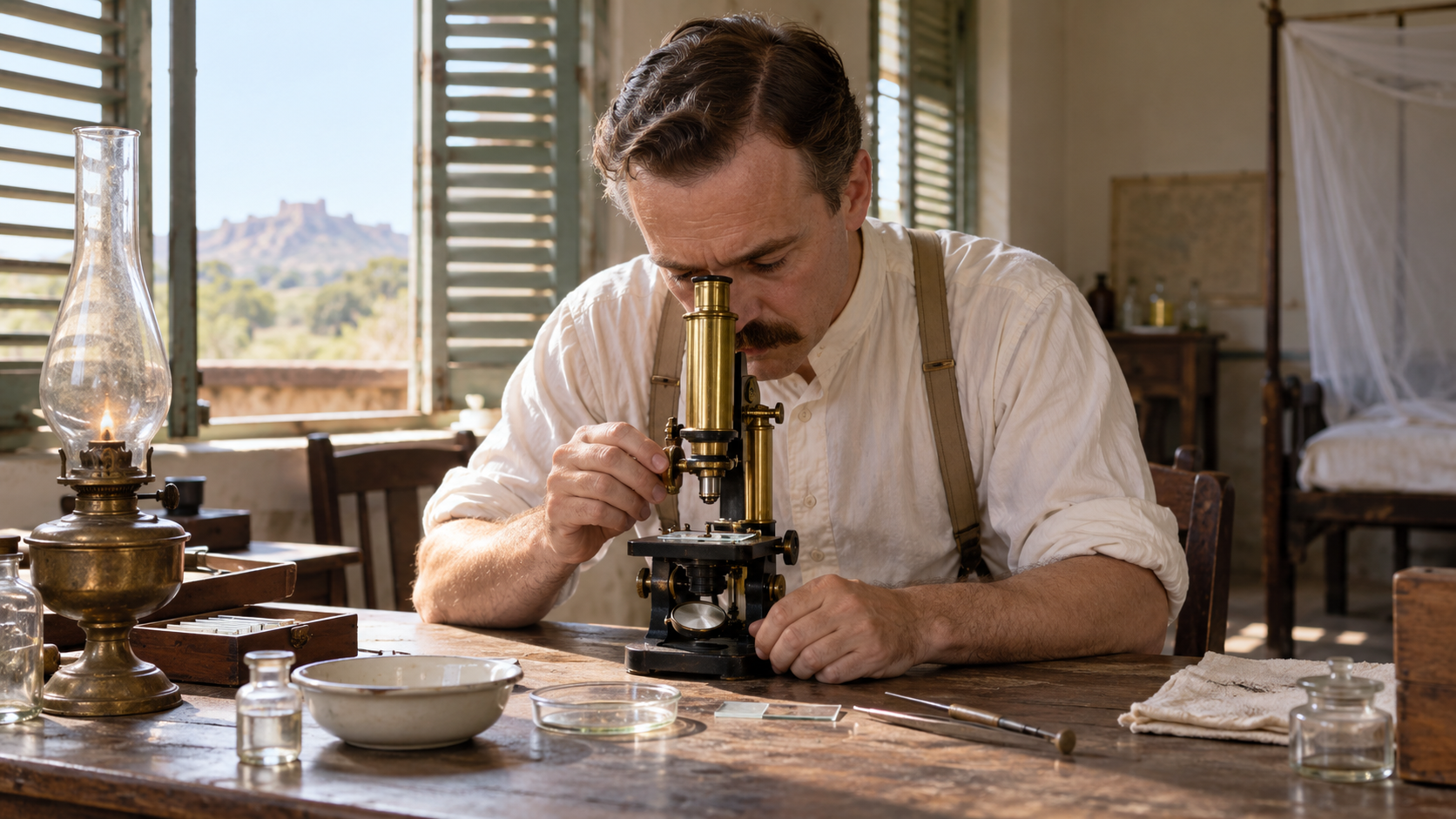
On August 20, 1897, British Army surgeon Ronald Ross examined a mosquito in Secunderabad, India, and found pigmented bodies in its stomach wall after it had fed on a patient with malaria. Ross believed the structures were a developing stage of the malaria parasite. He called the date Mosquito Day. The observation did not yet reveal the entire human transmission cycle, but it supplied a crucial link between parasites seen in blood and their development inside a particular kind of mosquito. It followed years of frustrating experiments and guidance from physician Patrick Manson.
Malaria’s parasite had been identified in human blood by Alphonse Laveran in 1880, and Manson argued that a mosquito might serve as an intermediate host. Ross struggled because he knew little entomology and often worked with mosquito species that could not support the relevant parasite. In August 1897, he used dapple-winged mosquitoes, now recognized as anophelines, and dissected them on successive days after feeding. The pigmented cells he saw on August 20 resembled material associated with malaria in blood, suggesting that the organism continued its development in the insect.
Ross later used bird malaria to demonstrate a fuller mosquito-parasite cycle, including movement toward the salivary glands. Italian researchers including Giovanni Battista Grassi, Amico Bignami, and Giuseppe Bastianelli then established that human malaria was transmitted by Anopheles mosquitoes. Ross received the 1902 Nobel Prize in Physiology or Medicine, but the complete history belongs to a network of patients, assistants, Indian laboratory workers, mentors, and competing European teams. Early experiments also occurred before modern standards for informed consent and research ethics, a limitation that should not be hidden.
The August 20 finding changed malaria prevention by making the vector an actionable target. Bed nets, screening, drainage, larval control, indoor insecticides, prompt diagnosis, effective medicines, and surveillance all draw on the transmission cycle. No single tool is sufficient, and mosquitoes and parasites can develop resistance. Vaccines now add another layer of protection for children in some high-burden settings. Malaria still causes enormous preventable illness and death, especially in Africa. Ross’s microscope observation mattered because it connected a hidden parasite to a visible insect and turned a biological insight into strategies communities could use, refine, and combine. The discovery also sharpened a distinction central to epidemiology: mosquitoes do not merely carry contaminated material on their surface; the parasite undergoes essential development inside the vector. That biological dependence explains why season, species, temperature, and insect survival alter transmission and why entomological surveillance can reveal risk before hospital case counts rise.
Ross was stationed in Secunderabad and, after years of unsuccessful work, used dapple-winged mosquitoes that had fed on a patient with malaria.
On August 20, 1897, he observed pigmented bodies in a mosquito’s stomach wall and linked them to development of the malaria parasite.
The finding built on Laveran’s identification of the blood parasite and Manson’s mosquito hypothesis, while later teams completed the human transmission evidence.
Ross’s bird-malaria experiments traced additional stages, and Italian researchers demonstrated transmission of human malaria by Anopheles mosquitoes.
The research predated modern consent standards and depended on patients, assistants, technicians, and colonial institutions often minimized in traditional accounts.
Vector knowledge supports nets, screening, environmental management, insecticides, surveillance, treatment, and now vaccines, all combined according to local conditions.
Explore more of "On This Day ..."
Discover more events from the same date across news, politics, technology, sports, and other fields. Each link highlights significant moments that shaped history on different fronts.